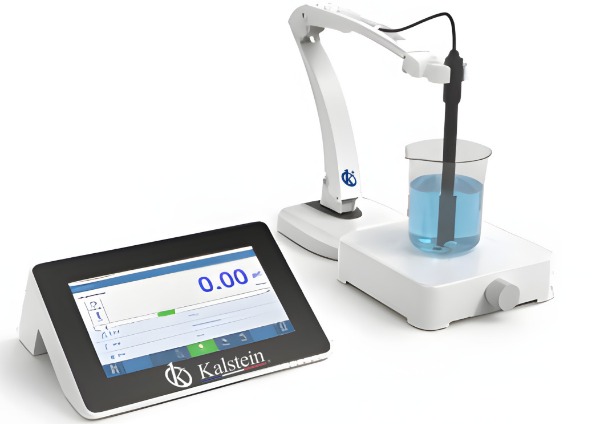
How to Adapt the YR06616 pH Meter for Clinical, Industrial, Food, Veterinary, and Educational Applications
The YR06616 pH Meter is a versatile multiparameter device designed for a range of laboratory and industrial applications. Its high precision makes it suitable for various sectors, including clinical, industrial, food, veterinary, and educational environments. Understanding how to adapt the YR06616 for these different applications can enhance its usability and ensure accurate results. This article will guide you through the sector-specific adaptations of the YR06616 pH Meter, providing insights into best practices and recommended protocols.
Technical Specifications of the YR06616
Model | YR06616 |
Measurement Range | Conductivity: 0.000 μS/cm – 2000 mS/cm (K=10); TDS: 0.00 mg/L – 1000 g/L; Salinity: (0 – 80) ppt; Resistivity: (0 – 100) MΩ·cm |
Resolution | 0.001 / 0.01 / 0.1 / 1 μS/cm; 0.001 / 0.01 / 0.1 / 1 mS/cm |
Accuracy | ±0.5 % |
Temperature Compensation | (0 – 100) ℃, automatic |
Electrode Constant | 0.1 / 1 / 10 cm⁻¹ |
Data Storage | 2000 sets |
Power Supply | DC 12V / 1A |
Protection Grade | IP54 |
Dimensions / Net Weight | 215 × 170 × 37 mm / 600 g |
Standard Accessories | Conductivity electrode (K=1), temperature probe, power adapter, manual |
Clinical Applications of the YR06616
In clinical settings, the YR06616 pH Meter plays a crucial role in monitoring the quality of water used in laboratories and ensuring that tests involving bodily fluids are accurate. Its ability to measure multiple parameters, including pH, conductivity, and temperature, facilitates comprehensive analysis.
The meter's high accuracy of ±0.5% ensures that results conform to Good Laboratory Practice (GLP) standards, which is essential in clinical diagnostics. The automatic temperature compensation feature helps maintain precision, especially in dynamic environments where temperature may fluctuate.
Industrial Applications of the YR06616
Industries such as chemical manufacturing, pharmaceuticals, and environmental monitoring benefit significantly from using the YR06616 pH Meter. The meter's wide measurement range allows for monitoring various processes, from the quality control of raw materials to the assessment of effluent discharges.
For industrial applications, it is crucial to regularly calibrate the YR06616 to account for electrode drift and maintain accuracy. Routine maintenance should also include checking the condition of electrodes and replacing them as necessary to ensure reliable measurements.
Food Industry Adaptations of the YR06616
When utilized in the food industry, the YR06616 pH Meter is essential for quality control processes. Accurate pH measurement is vital in ensuring food safety and compliance with health regulations. The meter can be adapted for testing food samples, beverages, and water used in production.
Key protocols include regular calibration and ensuring that the electrodes are food-safe; this ensures that no contamination occurs during testing. The YR06616's ability to store up to 2000 data sets facilitates comprehensive record-keeping necessary for audits and compliance checks.
Veterinary Use of the YR06616
The veterinary field requires precise measurements when assessing animal health. The YR06616 pH Meter can be used to evaluate the quality of water supplied to livestock, as well as in clinical labs for diagnostic testing.
By adapting the YR06616 for veterinary use, practitioners can ensure that water quality meets the health standards required for different animal species. Calibration and maintenance protocols similar to those in clinical settings apply here to maintain measurement integrity.
Educational Uses of the YR06616
In educational environments, the YR06616 serves as a valuable teaching tool for students learning about pH measurement and water quality analysis. Its user-friendly interface and large color touchscreen simplify data interpretation, making it easier for students to engage with the material.
Integrating the YR06616 into laboratory curricula allows educators to demonstrate practical applications of theoretical concepts. Regularly scheduled maintenance and operational checks are essential to ensure optimal functionality, providing students with a reliable learning experience.
Frequently Asked Questions
What parameters can the YR06616 measure?
The YR06616 can measure conductivity, TDS (Total Dissolved Solids), salinity, resistivity, and temperature, all in one device, making it a multiparameter solution for various applications.
Is the YR06616 suitable for professional and educational use?
Yes, the YR06616 is designed for laboratories, industries, universities, and research centers, meeting demanding technical requirements and Good Laboratory Practice (GLP) standards.
Does the YR06616 feature automatic temperature compensation?
Yes, it includes automatic temperature compensation in a range from 0 to 100 °C, ensuring accurate readings despite temperature variations.
How are measurement data stored and exported from the YR06616?
The YR06616 can store up to 2000 data sets with timestamps, sample IDs, and sensor identification, allowing for automatic data export via USB.
What types of electrodes are compatible with the YR06616?
The YR06616 is compatible with conductivity electrodes that have constants of 0.1, 1, and 10 cm⁻¹, allowing for various measurement ranges and applications.
How often should the YR06616 be calibrated?
As with any professional measurement device, periodic calibration is recommended to maintain the accuracy and reliability of results.
If you are looking for a fusion of innovation and quality, you have come to the right place. At Kalstein, we offer you the luxury of exploring our exclusive catalog of laboratory equipment. We manufacture every device to the highest standards of excellence. Our intuitive and seamless online purchasing channels are designed for your convenience, securing the most competitive prices. Hesitate no longer — we bring science to life, it is time to become part of our community.