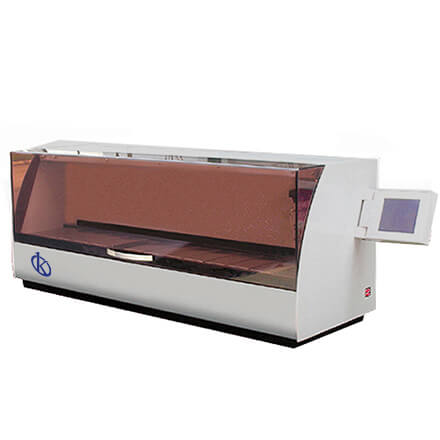
How Can Automatic Slide Stainers Enhance University Research Projects?
In the realm of academic research, especially within university settings, productivity and precision are paramount. Automatic slide stainers play a critical role in facilitating efficient workflows, enhancing reproducibility, and ensuring high-quality results. With their ability to automate tedious staining processes, these devices allow researchers to focus more on analysis and interpretation rather than manual labor. This article delves into the various applications of automatic slide stainers in university research and academic projects, highlighting key features, benefits, and comparative analyses of leading models in the market.
Understanding the Role of Automatic Slide Stainers in Academic Research
Automatic slide stainers are essential for laboratories engaged in histopathology, cytology, and other research fields requiring precise tissue staining. These devices streamline the staining process, reduce human error, and ensure consistent results across multiple samples, which is vital for thesis-grade reproducibility and multi-user scheduling in academic environments.
In addition, automatic slide stainers support simultaneous processing, allowing researchers to handle a higher throughput of samples. This efficiency is particularly beneficial in large-scale studies or when preparing for presentations and publications, as it enables researchers to generate results more rapidly while maintaining quality standards.
Comparison of Available Models
| Model | Processing Capacity | Unique Feature | Best Suited For |
|---|---|---|---|
| YR435 | 72 slides simultaneously | Smart water flow system | High-efficiency staining in extensive projects |
| YR435-1 | 400 slides per hour | Multi-module electronic design | Conventional and special staining needs |
| YR436-1 | 15 tanks for various reagents | Compact design for optimal workflow | Small labs or tight spaces |
Features that Enhance Efficiency in Academic Projects
Automatic slide stainers come equipped with numerous features that directly enhance their usability in academic research. For instance, the YR435 model's smart water flow system ensures that the water used in each step is clean, significantly improving reagent efficiency and waste reduction. This is particularly important in research environments where budget constraints may limit reagent availability.
Moreover, touchscreen interfaces, such as those found on the YR435-1, allow for easy program selection and monitoring, making it user-friendly for lab personnel. This ease of use is essential in educational settings, where multiple users may utilize the device.
Common Mistakes and How to Avoid Them
One common mistake when using automatic slide stainers is improper calibration of the staining protocols. Each model, such as the YR436-1, comes with specific guidelines and settings that must be adhered to for optimal performance. Failing to adjust these can lead to inconsistent results.
Another error is overlooking maintenance schedules. Regular upkeep is vital to ensure that the devices operate smoothly and last longer. Researchers should document usage patterns and create a maintenance log to prevent unexpected breakdowns that can disrupt project timelines.
Exploring Applications in University Research
In university research, automatic slide stainers are employed across various disciplines, including biology, medicine, and environmental science. In biological studies, for instance, stained slides enhance the visualization of cellular structures, aiding in the understanding of complex biological processes.
In clinical research, these stainers facilitate the preparation of samples for histopathological examination, allowing for more thorough investigation into disease mechanisms. This application is crucial for thesis projects, where detailed analysis and presentation of findings are expected.
Cost-Benefit Analysis of Automatic Slide Stainers in Academia
When considering the investment in automatic slide stainers, it's essential to analyze the return on investment (ROI) based on the specific needs of the lab. For instance, the initial purchase cost of the YR435-1 at around USD 10,600 may seem high, but its ability to process 400 slides per hour can significantly reduce labor costs over time.
Comparatively, manual staining may require more personnel and time, translating to higher operational costs. Thus, a thorough cost-benefit analysis should include factors like labor savings, reagent efficiency, and time saved in processing.
Frequently Asked Questions
How does an automatic slide stainer improve productivity in university research?
An automatic slide stainer like the YR435-1 improves productivity by enabling simultaneous processing of multiple slides, thus reducing manual workload and allowing researchers to focus on analysis rather than preparation.
What are the most critical features to consider when selecting an automatic slide stainer for academic projects?
Critical features include processing capacity, ease of use, and the ability to handle various staining protocols. For example, the YR436-1 offers multiple reagent tanks for enhanced flexibility, making it ideal for diverse academic applications.
Which automatic slide stainer is best suited for small university labs?
The YR436-1 is best for small university labs due to its compact design and efficient processing capabilities, allowing for optimal workflow without taking up much space.
How can automatic slide stainers help maintain consistency in research results?
Models like the YR435 offer automated protocols that reduce human error, ensuring that each sample is processed under identical conditions, which is crucial for the validity of research findings.
What is the expected lifespan of an automatic slide stainer in a research setting?
Typically, an automatic slide stainer like the YR435 can last several years with proper maintenance and calibration, contributing to long-term efficiency in research practices.
How much does an automatic slide stainer cost for academic institutions?
Prices for automatic slide stainers can vary; for instance, the YR435-1 is priced at approximately USD 10,600, which should be justified by productivity gains and improved research outcomes.
What maintenance practices are essential for automatic slide stainers?
Essential maintenance practices include regular cleaning of tanks and components, calibration, and adherence to the manufacturer’s guidelines. This helps ensure models like the YR436-1 operate at peak efficiency.
What role do automatic slide stainers play in thesis-grade research quality?
Automatic slide stainers, like the YR435, help achieve thesis-grade quality by providing reproducible and reliable staining results, which are critical for validating research findings in academic work.
If you are looking for a fusion of innovation and quality, you have come to the right place. At Kalstein, we offer you the luxury of exploring our exclusive catalog of laboratory equipment. We manufacture every device to the highest standards of excellence. Our intuitive and seamless online purchasing channels are designed for your convenience, securing the most competitive prices. Hesitate no longer — we bring science to life, it is time to become part of our community.