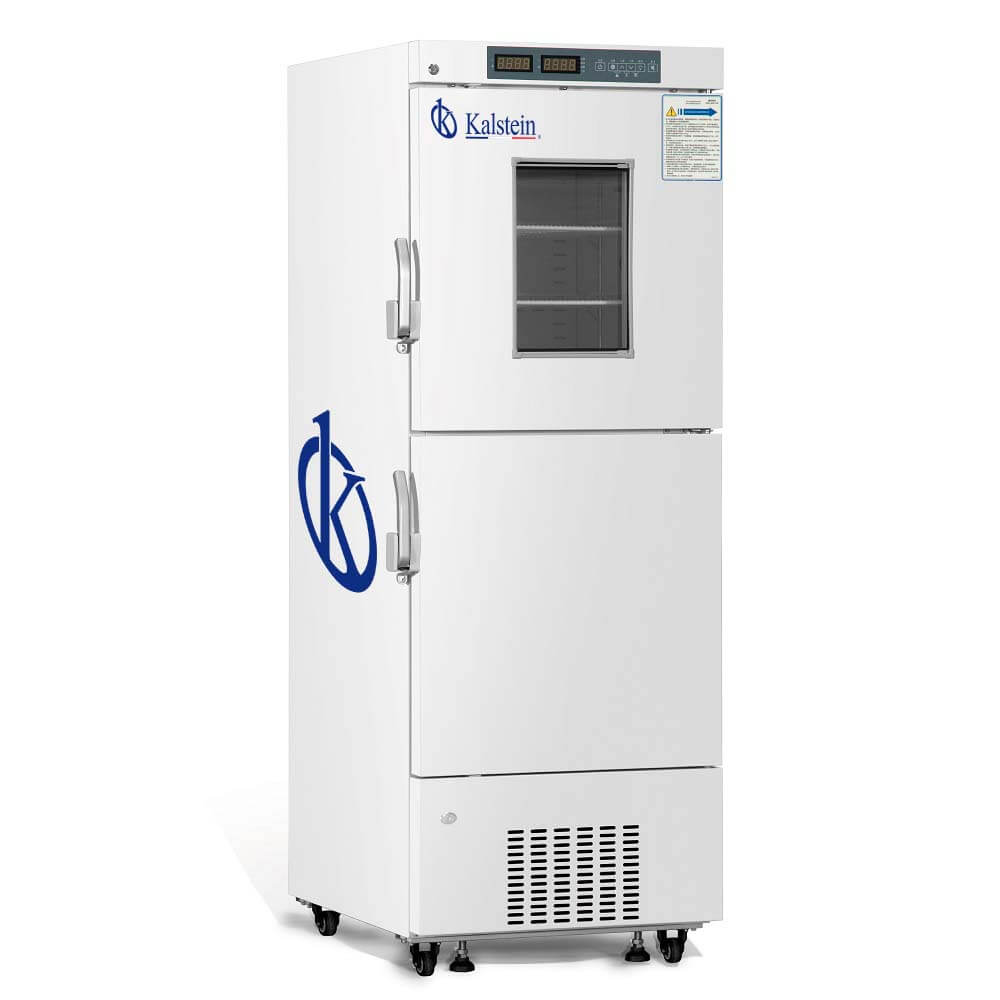
How Combined Freezers Enhance University Research Projects
In the realm of academic research, the storage of biological materials, reagents, and samples is critical. Combined freezers play a pivotal role in ensuring that these materials are preserved under optimal conditions. This article delves into the significance of combined freezers in university research projects, exploring their various applications and benefits.
Understanding the Role of Combined Freezers in Research
Combined freezers are designed to offer dual functionality, providing both refrigeration and freezing capabilities. This versatility is essential in university settings where different materials require specific temperature conditions. For instance, vaccines must be stored at low temperatures, while certain biological samples need to be kept at slightly higher refrigeration settings.
These systems are not only about temperature management but also about ensuring compliance with various standards and regulations, enhancing the integrity of research outputs. The dual temperature zones allow researchers to manage space efficiently while maintaining quality and reliability in their experiments.
Key Features of Combined Freezers for University Applications
When selecting a combined freezer for academic use, several features should be considered:
- Temperature Range: The ability to maintain both freezing and refrigeration temperatures is critical.
- Energy Efficiency: Models with lower energy consumption help reduce operational costs.
- Capacity: Sufficient space for various samples, reagents, and biological materials.
- Control Systems: Reliable temperature control systems ensure consistent performance.
- Compliance: Adherence to standards such as ISO 17025 is essential for research integrity.
Comparison of Available Models
| Model | Cooling Method | Temperature Range | Best For | Price (USD) |
|---|---|---|---|---|
| YR05320 | Direct Cooling | -20°C to -40°C (F), 2°C to 8°C (R) | Storing plasma and biological materials | 1415.00 |
| YR05321 | Direct Cooling | -10°C to -25°C (F), 2°C to 8°C (R) | Hospitals and blood stations | 1060.00 |
| YR05321-1 | Direct Cooling | -10°C to -25°C (F), 2°C to 8°C (R) | Blood transfusion centers and laboratories | 745.00 |
Applications in University Research
The applications of combined freezers in university research are diverse. They are essential for preserving biological samples, storing reagents, and ensuring the integrity of experimental results.
For example, the YR05320 model is particularly suited for research institutions where plasma storage is critical, offering a robust capacity of 368 liters designed for various biological materials. On the other hand, the YR05321 model, with its dual independent cooling systems, is highly beneficial in laboratories where different temperature settings for various materials are necessary.
Common Mistakes and How to Avoid Them
When purchasing combined freezers for academic purposes, several common mistakes can occur:
- Neglecting Energy Efficiency: Choosing models with high energy consumption can lead to unexpected operational costs. Always check the kWh ratings.
- Overlooking Temperature Range: Ensure the chosen model meets the specific temperature requirements of your stored materials.
- Ignoring Compliance Needs: Not all models meet rigorous standards; make sure to verify compliance with ISO 17025 for laboratory settings.
Benefits of Using Combined Freezers in Academic Settings
Combining refrigeration and freezing in one unit can lead to significant benefits for university laboratories:
- Space Efficiency: Less floor space is required compared to having separate units.
- Cost-Effectiveness: Lower overall costs due to energy savings and reduced need for multiple units.
- Workflow Optimization: Streamlined access to different storage conditions can enhance laboratory workflows.
Frequently Asked Questions
What is the temperature range for combined freezers used in academic research?
The temperature range for combined freezers varies by model. For instance, the YR05320 has a range of -20°C to -40°C for freezing and 2°C to 8°C for refrigeration, making it suitable for academic research requiring precise temperature control.
How do combined freezers help in university laboratory compliance?
Combined freezers like the YR05321 are designed to meet various compliance standards such as ISO 17025, which is crucial for maintaining the integrity of research results in university laboratories.
What factors should be considered when selecting a combined freezer for a lab?
Key factors include the temperature range, energy efficiency, capacity, and compliance with relevant standards. Models like the YR05321-1 offer dual cooling systems, which can be advantageous for labs needing different temperature settings.
How much energy does a combined freezer consume in a laboratory setting?
Energy consumption varies by model; for example, the YR05320 consumes approximately 4.15 kWh per 24 hours, making it important to consider energy efficiency when selecting a unit for laboratory use.
What are the best practices for maintaining combined freezers in research labs?
Regular maintenance, including checking seals, cleaning condenser coils, and monitoring temperature settings, ensures optimal performance. Following a maintenance schedule can help prevent issues in models like the YR05321.
Can combined freezers support multiple users in a university setting?
Yes, combined freezers can support multiple users by providing distinct temperature zones, as seen in models like the YR05321, which allows for independent temperature control for different samples.
What is the average cost of combined freezers suitable for university research?
The costs vary; for example, the YR05321-1 is priced at around $745, making it a budget-friendly option for university research while still offering essential features.
How can I integrate a combined freezer into my laboratory's workflow?
Integrating a combined freezer involves assessing your laboratory's specific needs, such as sample types and temperature requirements. Models like the YR05320 can be easily incorporated into existing workflows due to their versatility.
If you are looking for a fusion of innovation and quality, you have come to the right place. At Kalstein, we offer you the luxury of exploring our exclusive catalog of laboratory equipment. We manufacture every device to the highest standards of excellence. Our intuitive and seamless online purchasing channels are designed for your convenience, securing the most competitive prices. Hesitate no longer — we bring science to life, it is time to become part of our community.