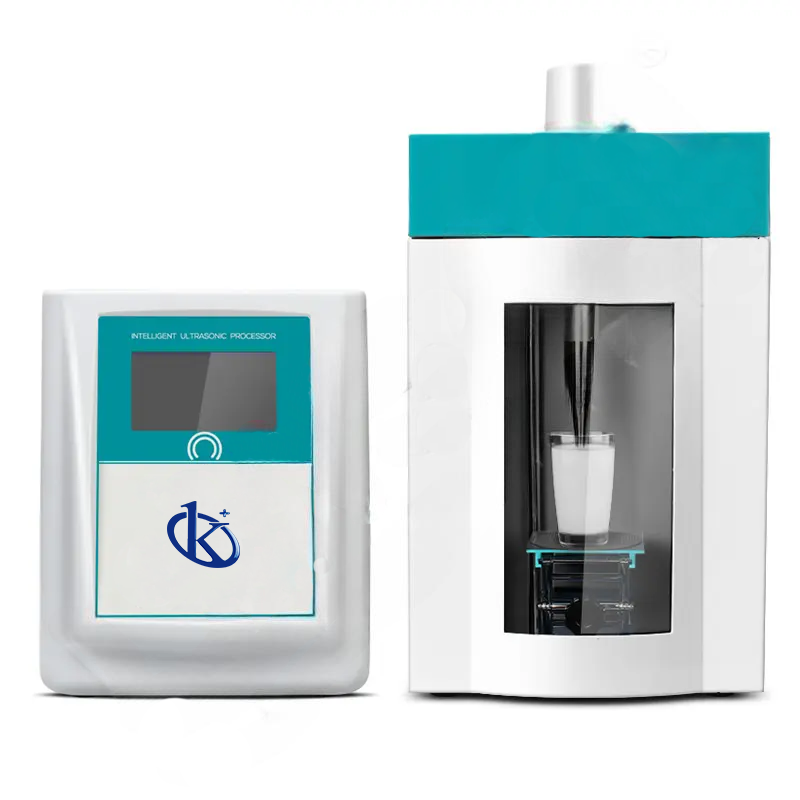
Comparative Analysis of Ultrasonic Homogenizers: Choosing the Best Option
Ultrasonic homogenizers are integral tools within laboratory settings, particularly for applications requiring the dispersion, emulsification, or mixing of samples at a microscopic level. This article provides a comparative analysis of various models, focusing on their technical specifications, unique features, and practical applications. By understanding the nuances between models, lab professionals can make an informed decision that aligns with their experimental needs and operational goals.
Understanding Ultrasonic Homogenizers and Their Applications
Ultrasonic homogenizers utilize ultrasound technology to produce high-frequency sound waves that create intense shear forces within a liquid medium. These forces effectively break down particles, resulting in a stable emulsion or dispersion. Common applications include pharmaceutical formulations, food processing, and chemical analysis, where uniformity and consistency of sample composition are critical.
In laboratories, the choice of an ultrasonic homogenizer depends on factors such as sample volume, desired particle size reduction, and specific processing requirements. Each model offers distinct advantages, making it essential to compare and contrast their features based on the intended application.
Comparison of Available Models
| Model | Power (W) | Mixing Capacity (ml) | Frequency Range (KHz) | Price (USD) | Best For |
|---|---|---|---|---|---|
| YR05015 | 1.5 – 150 | 0.1 – 150 | 20 – 25 | 756.00 | Small sample volumes |
| YR05016 | 2-5 – 250 | 0.1 – 300 | 20 – 25 | 882.00 | Medium sample capacity |
| YR05017 | 10 – 650 | 0.1 – 500 | 20 – 25 | 1050.00 | Research applications |
| YR05018 | 10 – 900 | 0.1 – 600 | 20 – 25 | 1281.00 | High viscosity samples |
| YR05019 | 20 – 1200 | 1 – 1000 | 20 – 25 | 1785.00 | Large sample volumes |
| YR05020 | 50 – 1800 | 1 – 1200 | 20 – 25 | 2058.00 | Industrial applications |
Common Mistakes and How to Avoid Them
When selecting an ultrasonic homogenizer, common mistakes include inadequate consideration of sample volume, not verifying power requirements, and overlooking the specific application needs. For instance, opting for a model like YR05020 for small batch processing may lead to unnecessary costs and over-specification. It is crucial to assess the intended use case and match it with the appropriate model specifications.
Another frequent oversight is underestimating the importance of frequency range, which can impact the efficiency of homogenization. Ensure to review each model's frequency capabilities, as devices with more appropriate resonance for your application can significantly enhance performance.
Technical Comparisons: A Deep Dive
Understanding Power Output and Its Implications
The power output of ultrasonic homogenizers is a key factor that impacts their performance. For example, the YR05019 model offers a continuous power range of 20 to 1200W, making it suitable for larger volumes and high-intensity applications. In comparison, models such as the YR05015 with a lower power range are best for small-scale homogenization.
Sample Capacity Versus Application Needs
Different models cater to varying sample capacities. For instance, if your research involves processing samples up to 600 ml, the YR05018 model would be ideal. However, for applications that require processing smaller amounts, the YR05015 model would suffice. Understanding the fit between the model’s capacity and your specific needs is crucial for optimal performance.
Frequency Range and Its Role in Homogenization
The frequency range of an ultrasonic homogenizer can affect the efficiency of particle size reduction. Models like YR05015 and YR05020 operate within 20-25 kHz frequencies, which is generally suitable for effective homogenization. Selecting a model with the right frequency for your specific application ensures optimal results and minimizes energy waste.
Frequently Asked Questions
Which ultrasonic homogenizer model is best for pharmaceutical applications?
The YR05019 model is particularly well-suited for pharmaceutical applications due to its high power output of 20-1200W and a mixing capacity of up to 1000 ml. Its efficiency in creating stable emulsions ensures that pharmaceutical formulations meet stringent quality standards.
How does the power of an ultrasonic homogenizer affect its performance?
The power of an ultrasonic homogenizer directly influences its ability to process samples effectively. For example, the YR05020 with a power range of 50-1800W is ideal for high-volume industrial applications, while lower-powered models like the YR05015 are designed for smaller quantities.
What is the typical lifespan of an ultrasonic homogenizer?
The lifespan of ultrasonic homogenizers can vary, but with proper maintenance, models like the YR05016 can last several years. Regular calibration and checks on the ultrasonic probe can help extend the equipment's longevity significantly.
What factors should I consider when choosing an ultrasonic homogenizer?
When selecting an ultrasonic homogenizer, consider factors such as sample volume, required power output, frequency range, and specific application needs. For instance, if you require processing small volumes, a model like YR05015 would be appropriate.
Are there ultrasonic homogenizers suitable for high viscosity samples?
Yes, the YR05018 model is designed to handle high viscosity samples efficiently. Its robust power output and mixing capacity make it a reliable choice for challenging homogenization tasks.
How do I ensure the selected model meets ISO 17025 standards?
To ensure compliance with ISO 17025 standards, choose models like the YR05017 that provide accurate control features and are designed for predictable performance. Regular calibration and documentation of results will also help meet compliance requirements.
What is the cost range for purchasing ultrasonic homogenizers?
The cost for ultrasonic homogenizers varies significantly based on features and specifications. The YR05015 model starts at around 756.00 USD, while more advanced models like the YR05020 can cost up to 2058.00 USD, depending on capabilities and configurations.
How can I maintain my ultrasonic homogenizer for optimal performance?
Regular maintenance is key to ensure optimal performance of ultrasonic homogenizers. This includes periodic cleaning, checking the ultrasonic probe for wear, and following a calibration schedule. Models like the YR05016, designed with user-friendly interfaces, help facilitate easy maintenance practices.
If you are looking for a fusion of innovation and quality, you have come to the right place. At Kalstein, we offer you the luxury of exploring our exclusive catalog of laboratory equipment. We manufacture every device to the highest standards of excellence. Our intuitive and seamless online purchasing channels are designed for your convenience, securing the most competitive prices. Hesitate no longer — we bring science to life, it is time to become part of our community.