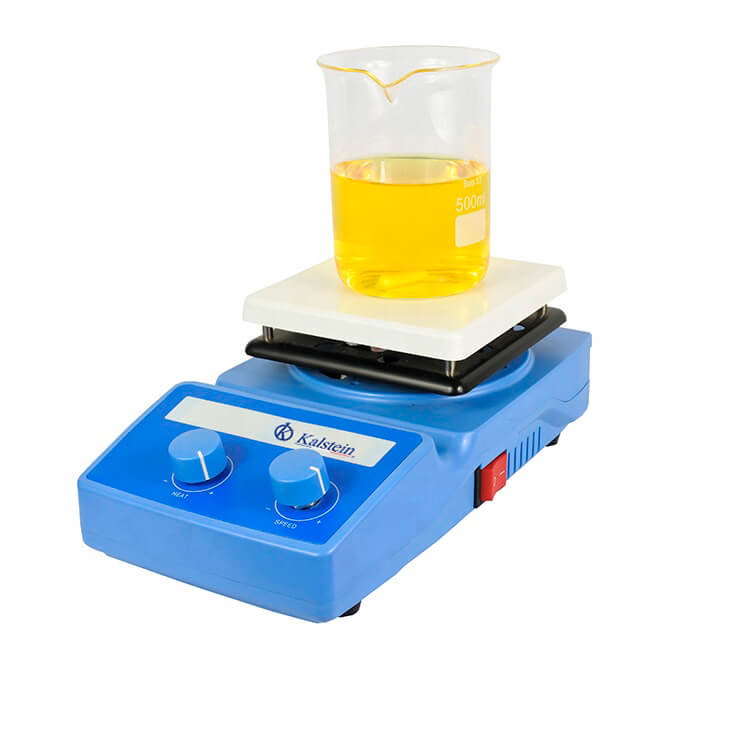
Cost-Benefit Analysis of Analog Ceramic Top Hotplate Stirrers in Laboratories
The choice of laboratory equipment significantly impacts operational efficiency, research quality, and overall costs. Among the crucial devices in any laboratory are Analog Ceramic Top Hotplate Stirrers, which aid in mixing and heating samples. This article delves into the cost-benefit analysis of various models in this category, providing laboratory professionals with insights into their return on investment (ROI), operational costs, and how to select the right model for their specific needs.
Understanding Cost-Benefit Analysis in Laboratory Settings
A cost-benefit analysis (CBA) is a systematic approach to estimating the strengths and weaknesses of alternatives in order to determine the best option in terms of benefits relative to costs. In laboratory settings, this entails evaluating not only the initial purchase price of equipment but also ongoing operational costs, maintenance, and potential savings over time. Understanding the total cost of ownership (TCO) can enable laboratory managers to make informed decisions that enhance productivity while controlling expenses.
Factors Influencing the Cost-Benefit Analysis
Several factors influence the cost-benefit analysis of Analog Ceramic Top Hotplate Stirrers. These include:
- Initial investment (CAPEX)
- Operational expenses (OPEX)
- Energy consumption
- Maintenance costs
- Durability and lifespan of the equipment
- Compliance with laboratory standards
By thoroughly assessing these factors, laboratories can optimize their equipment choices for better financial outcomes.
Comparison of Available Models
| Model | CAPEX (USD) | Heating Capacity | Best for |
|---|---|---|---|
| YR02933 | 125.00 | Not specified | Basic laboratory heating needs |
| YR02934 | 152.00 | Ambient to 325°C | Small-scale chemistry and biology applications |
| YR02935 | 190.00 | Ambient to 380°C | General laboratory use with higher capacity |
| YR02936 | 265.00 | Ambient to 400°C | Advanced applications needing precise temperature control |
Quantitative Breakdown of Costs and Benefits
Understanding the quantitative aspects of cost and benefit is essential for making informed decisions. Below is a breakdown comparing the total costs and potential benefits over a typical lifespan of the equipment.
| Model | Initial Cost (USD) | Estimated Lifespan (Years) | Annual Maintenance Cost (USD) | Potential Savings (USD) |
|---|---|---|---|---|
| YR02933 | 125 | 5 | 20 | 50 |
| YR02934 | 152 | 7 | 25 | 75 |
| YR02935 | 190 | 10 | 30 | 100 |
| YR02936 | 265 | 10 | 35 | 120 |
Common Mistakes and How to Avoid Them
When conducting a cost-benefit analysis, laboratories often fall into common traps. Here are some mistakes to avoid:
- Neglecting to include OPEX in the analysis, leading to underestimating total costs.
- Failing to consider the equipment's lifespan, which can skew ROI calculations.
- Not comparing similar models on a like-for-like basis, making it difficult to draw accurate conclusions.
- Overlooking energy consumption, which can significantly impact operational costs.
By being aware of these pitfalls, laboratory managers can make more informed equipment choices that enhance overall efficiency.
Addressing Energy Consumption in Laboratory Settings
Energy consumption is a vital aspect of the cost-benefit analysis. Each model's efficiency can affect operational costs significantly. For example, models like YR02935 and YR02936 provide robust performance while managing energy use effectively, which can lead to lower utility bills and a reduced carbon footprint. Calculating the energy consumption per operation can provide insights into long-term costs and sustainability.
Frequently Asked Questions
How can I calculate the ROI of an Analog Ceramic Top Hotplate Stirrer?
To calculate ROI, consider the total costs (initial investment plus maintenance) versus the total benefits (savings and increased productivity). For instance, an investment in YR02934 at $152 could yield significant savings over time, particularly if it reduces heating time in experiments.
What factors should I consider for operational costs of hotplate stirrers?
Key factors include the initial purchase price, energy consumption during operation, maintenance costs, and the expected lifespan of the device. For instance, comparing YR02935 with a higher capacity can reveal efficiency savings in larger labs.
Which Analog Ceramic Top Hotplate Stirrer is best for energy efficiency?
YR02936 is designed for advanced applications and includes features that help minimize energy consumption while maintaining high performance, making it a great choice for labs focused on efficiency.
How do I determine the total cost of ownership for hotplate stirrers?
Total cost of ownership (TCO) includes the initial purchase price, operational expenses, and maintenance costs over the equipment’s lifespan. For example, considering YR02933’s low initial cost and minimal maintenance can illustrate a favorable TCO for basic applications.
What are the specific benefits of using PID control in hotplate stirrers?
PID control allows for precise temperature regulation, ensuring consistent heating and improved results in experiments. Models like YR02934 utilize PID control effectively to optimize heating processes, which is critical in sensitive biological applications.
What is the expected maintenance cost for Analog Ceramic Top Hotplate Stirrers?
Typical maintenance costs range from $20 to $35 annually, depending on the model and usage frequency. For instance, YR02935 with its robust design might incur lower maintenance costs compared to other models.
How does model choice affect productivity in a laboratory?
Choosing the right model affects throughput, time efficiency, and the quality of results. High-performance models like YR02936 can substantially improve throughput and reduce waiting times, directly impacting laboratory productivity.
What are the energy consumption metrics for Analog Ceramic Top Hotplate Stirrers?
Energy consumption varies by model; for example, YR02935 may consume around 750W during operation. Understanding energy metrics helps labs optimize their operational costs and reduce environmental impact.
If you are looking for a fusion of innovation and quality, you have come to the right place. At Kalstein, we offer you the luxury of exploring our exclusive catalog of laboratory equipment. We manufacture every device to the highest standards of excellence. Our intuitive and seamless online purchasing channels are designed for your convenience, securing the most competitive prices. Hesitate no longer — we bring science to life, it is time to become part of our community.