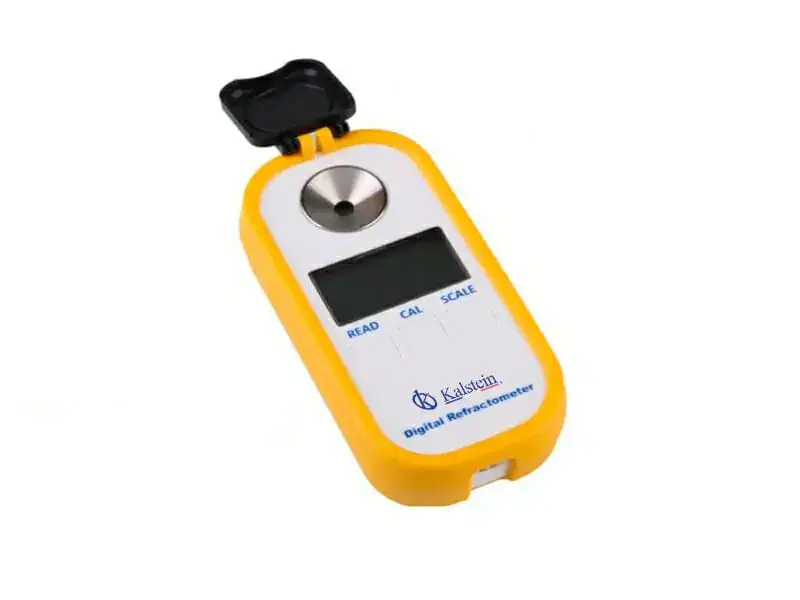
Digital BRIX+ Salinity Refractometer: Practical Usage Guide 2026
Digital BRIX+ Salinity Refractometers are essential tools in laboratory settings for measuring the concentration of soluble solids and salinity in aqueous solutions. This guide provides laboratory professionals with a comprehensive understanding of how to effectively use these devices, their applications, and best practices for 2026.
What is it used for in 2026
In 2026, Digital BRIX+ Salinity Refractometers are primarily used to measure the concentration of sugars and salinity in various solutions, including fruit juices, syrups, and seawater. These devices offer precise measurements that are crucial for quality control and formulation in food and beverage industries, as well as environmental monitoring. By leveraging their capabilities, laboratories can ensure that their processes meet the stringent quality standards required for production.
History and evolution of the technology
The technology behind refractometers has evolved significantly since its inception. Originally developed in the 19th century, early refractometers were analog devices that required manual adjustments and interpretations. The introduction of digital technology in the late 20th century revolutionized these instruments, allowing for automatic temperature compensation and improved accuracy. Today, models such as the Digital BRIX+ Salinity Refractometers represent the culmination of decades of advancements in optical measurement technology, incorporating user-friendly interfaces and enhanced functionalities.
How to use it step by step
Using a Digital BRIX+ Salinity Refractometer involves a straightforward process:
- Calibration: Begin by calibrating the device according to the manufacturer’s instructions, ensuring accurate measurements.
- Sample Preparation: Prepare the sample by ensuring it is homogeneous and free from bubbles or particulates.
- Measurement: Place a few drops of the sample on the prism of the refractometer.
- Cover and Read: Close the cover to eliminate ambient light interference and take the reading from the display.
- Record Results: Document the readings promptly for consistency and further analysis.
Best techniques and protocols
To achieve the most accurate results, consider the following best techniques and protocols:
- Always use distilled water for calibration to eliminate impurities.
- Maintain a consistent sample temperature within the recommended range prior to measurement.
- Clean the prism thoroughly between samples to prevent cross-contamination.
- Use the same measurement technique for every sample to ensure comparability.
Practical applications by laboratory type
Digital BRIX+ Salinity Refractometers find applications across various laboratory types:
- Food and Beverage Laboratories: Used for quality control in sugar content and salinity of products.
- Aquaculture Laboratories: Essential for monitoring salinity levels in water to support aquatic life.
- Chemical Laboratories: Useful in analyzing the concentration of solutions for chemical reactions.
Regulations, standards and certifications
In 2026, laboratories must adhere to several regulations and standards when using refractometers:
- ISO 13485: Standards for medical devices, ensuring reliability and safety.
- FDA regulations relevant to food safety for measurements in food laboratories.
- Local environmental regulations for monitoring salinity in aquaculture settings.
Comparison with alternative technologies
While Digital BRIX+ Salinity Refractometers are widely used, alternative technologies also exist:
- Conductivity Meters: Measure ionic content in solutions but may not differentiate between types of ions.
- Density Meters: Provide density measurements, which can indirectly indicate concentration levels but require density-specific calibration.
Comparison of available models
| Model | Best for | Key specs | Recommended use case |
|---|---|---|---|
| YR05961 | Brix measurement | 0-50% Brix, ±0.2% | Juice and syrup analysis |
| YR05962 | Salinity measurement | 0-280‰, ±0.2% | Water salinity monitoring |
| YR05963 | Salinity measurement | 0-280‰, ±2‰ | General salinity testing |
| YR05964 | Density measurement | 1.000-1.217, ±0.002 | Concentration of solutions |
| YR05965 | Refractive index | 1.3330-1.4200 nD, ±0.0003 nD | Optical analysis of solutions |
Common mistakes and how to avoid them
To prevent inaccuracies, avoid these common mistakes:
- Neglecting calibration before measurements — always calibrate before use.
- Using impure samples that can skew results — ensure samples are clean.
- Ignoring temperature variations between samples and room temperature — maintain temperature consistency.
Maintenance, calibration and good practices 2026
Regular maintenance and calibration are vital:
- Calibrate before each use or daily, depending on usage frequency.
- Clean the prism with a soft cloth after each measurement.
- Store the device in a protective case to avoid dust and damage.
Cost-benefit analysis 2026
In 2026, investing in Digital BRIX+ Salinity Refractometers offers significant benefits:
- Accuracy: High precision measurements reduce the risk of errors in quality control.
- Efficiency: Automated features save time compared to manual methods.
- Versatility: Can be used across different laboratory types and applications.
Frequently asked questions
How often should I calibrate my Digital BRIX+ Salinity Refractometer?
Calibration should be done before each use or at least once daily depending on the frequency of measurements to ensure accuracy.
What type of samples can I measure with these refractometers?
You can measure a variety of samples including fruit juices, syrups, seawater, and various aqueous solutions for both sugar content and salinity.
Can I use the refractometer for both Brix and salinity measurements?
Yes, certain models are designed to measure both Brix and salinity. It is essential to choose the right model based on your specific needs.
What should I do if my readings seem off?
If your readings are inaccurate, check the calibration and ensure that the sample is clean and free from bubbles or particulates.
Are there specific environmental conditions to consider while using the refractometer?
Yes, it is best to use the refractometer in a stable temperature environment and avoid direct sunlight to ensure accurate readings.
How do I maintain my Digital BRIX+ Salinity Refractometer?
Regular cleaning of the prism, calibration prior to use, and proper storage in a protective case are key maintenance practices for your refractometer.
Where can I request a quote for purchasing a Digital BRIX+ Salinity Refractometer?
You can request a quote through our communications channels to get the best pricing for your laboratory needs.
If you are looking for a fusion of innovation and quality, you have come to the right place. At Kalstein, we offer you the luxury of exploring our exclusive catalog of laboratory equipment. We manufacture every device to the highest standards of excellence. Our intuitive and seamless online purchasing channels are designed for your convenience, securing the most competitive prices. Hesitate no longer — we bring science to life, it is time to become part of our community.