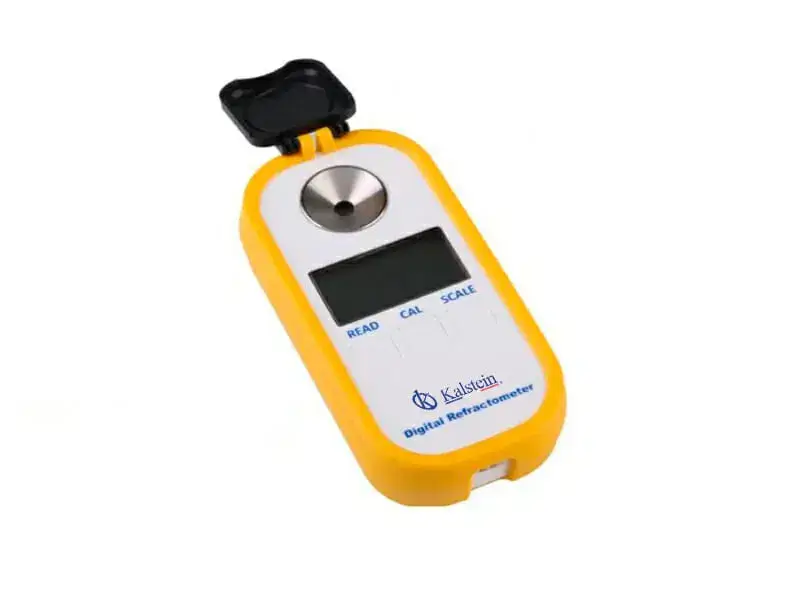
Digital BRIX+ Salinity Refractometers: A Comparative Overview of Market Technologies
In laboratory settings, precision in measuring soluble solids and salinity is crucial for various applications, from food and beverage industries to environmental monitoring. Digital BRIX+ Salinity Refractometers are designed to provide accurate measurements of sugar content and salinity, ensuring high-quality results. This article will compare multiple models within this subcategory, analyzing their specifications and performance to determine their suitability for specific laboratory needs.
Understanding Digital BRIX+ Salinity Refractometers
Digital BRIX+ Salinity Refractometers serve a vital role in measuring the concentration of soluble solids in mixtures. They are essential for determining sugar levels in products like fruit juices and syrups, alongside salinity measurements for solutions such as seawater. These devices utilize automatic temperature compensation (ATC) for accuracy, eliminating the need for manual corrections within specified temperature ranges.
Comparison of Available Models
| Model | Measurement Range | Minimum Division | Accuracy | Best for |
|---|---|---|---|---|
| YR05961 | Brix: 0-50% | 0.10% | ±0.2% | Fruit juices and syrups |
| YR05962 | Salinity: 0-280‰ | 0.10% | ±0.2% | Brine solution analysis |
| YR05963 | Salinity: 0-280‰ | 1‰ | ±2‰ | General saline solution measurement |
| YR05964 | Density: 1.000-1.217 | 0.001 | ±0.002 | Density calibrations |
| YR05965 | Refractive Index: 1.3330-1.4200nD | 0.0001nD | ±0.0003nD | Precise refractive index measurements |
Key Applications of Digital BRIX+ Salinity Refractometers
The applications of Digital BRIX+ Salinity Refractometers extend across various sectors. In the food industry, these devices are essential for quality control in products like juices and sauces, where sugar concentration directly impacts flavor and preservation. Moreover, they are pivotal in environmental labs for analyzing seawater salinity, aiding in ecological studies and conservation efforts.
Technical Specifications That Matter
When selecting a Digital BRIX+ Salinity Refractometer, consider technical specifications such as measurement range, minimum division, and accuracy. For instance, the YR05961 model excels in Brix measurements, providing accurate readings for sugar content, while the YR05962 is specifically designed for salinity, making it ideal for marine and environmental applications.
Common Mistakes and How to Avoid Them
One of the most common mistakes when using Digital BRIX+ Salinity Refractometers is neglecting to calibrate the device regularly. Calibration ensures measurement accuracy and reliability. Additionally, using the refractometer outside its specified temperature range can lead to erroneous results. Always refer to the user manual for calibration guidelines and operational temperature limits.
Frequently Asked Questions
What are the primary differences between Digital BRIX+ Salinity Refractometers and traditional methods?
Digital BRIX+ Salinity Refractometers, like the YR05961, offer automated temperature compensation and digital readouts, enhancing ease of use compared to traditional methods. They provide quicker results and greater accuracy, making them suitable for high-throughput laboratories.
How does automatic temperature compensation (ATC) improve measurement accuracy?
Automatic temperature compensation allows Digital BRIX+ Salinity Refractometers, such as the YR05962, to adjust readings based on the temperature of the sample. This feature eliminates the need for manual corrections, ensuring consistent and accurate measurements across varying conditions.
What industries benefit most from Digital BRIX+ Salinity Refractometers?
Industries such as food and beverage, agriculture, and environmental science benefit significantly from Digital BRIX+ Salinity Refractometers. For example, the YR05963 model is frequently used in marine biology studies to assess salinity levels in water samples.
How often should I calibrate my Digital BRIX+ Salinity Refractometer?
Calibration frequency for Digital BRIX+ Salinity Refractometers depends on usage and environmental conditions. It is recommended to calibrate at least once a month or before critical measurements to ensure accuracy, particularly for models like YR05961 and YR05962.
What factors should I consider when selecting a Digital BRIX+ Salinity Refractometer?
When selecting a Digital BRIX+ Salinity Refractometer, consider measurement range, accuracy, and specific applications. For instance, if you need to measure both Brix and salinity, the YR05961 and YR05962 models would be ideal selections due to their broad range capabilities.
Can Digital BRIX+ Salinity Refractometers be used for educational purposes?
Yes, Digital BRIX+ Salinity Refractometers are excellent tools for educational purposes, allowing students to conduct experiments in food science and environmental studies. Models like YR05964 can help students understand density and refractive index concepts in physics and chemistry.
What are the maintenance requirements for Digital BRIX+ Salinity Refractometers?
Maintaining Digital BRIX+ Salinity Refractometers involves regular calibration, cleaning the prism with a soft cloth, and ensuring the device is stored in a suitable environment. Following these practices ensures longevity and reliability of models like YR05965.
If you are looking for a fusion of innovation and quality, you have come to the right place. At Kalstein, we offer you the luxury of exploring our exclusive catalog of laboratory equipment. We manufacture every device to the highest standards of excellence. Our intuitive and seamless online purchasing channels are designed for your convenience, securing the most competitive prices. Hesitate no longer — we bring science to life, it is time to become part of our community.