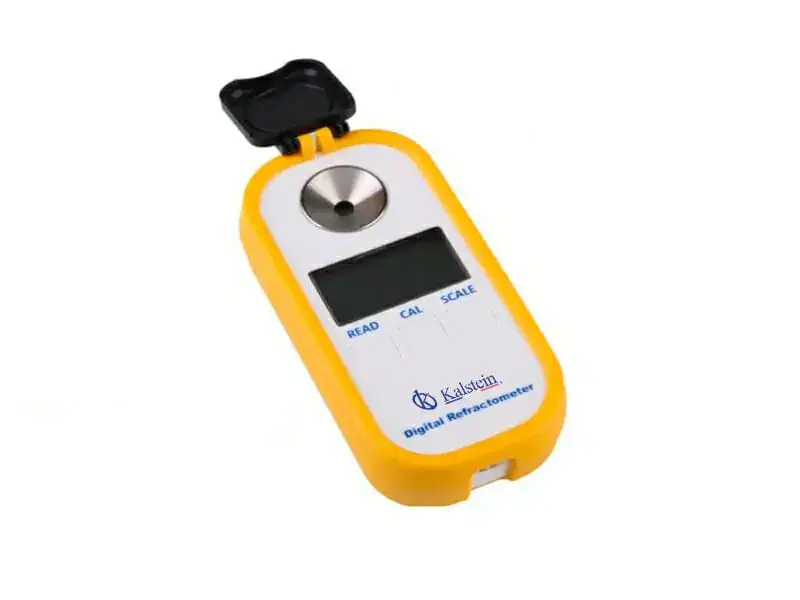
How Digital Salinity Refractometers Enhance University Research Projects?
Digital salinity refractometers play a crucial role in university research and academic projects, particularly in the fields of environmental science, marine biology, and agricultural studies. These devices help researchers measure the salinity of solutions quickly and accurately, ensuring the quality of their experiments. In this article, we will delve into the applications of digital salinity refractometers in academic settings, compare several models, examine common mistakes, and address frequently asked questions to provide a comprehensive understanding of their significance in research.
Applications of Digital Salinity Refractometers in University Research
The use of digital salinity refractometers in academic research allows for precise analysis of salinity in various solutions, such as seawater and soil samples. They are essential for experiments aimed at understanding ecosystems, evaluating the impact of salinity on plant growth, and examining water quality in different environments. By providing reliable data, these refractometers enable researchers to draw meaningful conclusions and support their findings with solid evidence.
For example, in marine biology, researchers can utilize these devices to monitor salinity levels in marine habitats, contributing to studies on climate change and ocean health. In agricultural research, understanding salinity levels allows for better management of irrigation practices and crop health.
Comparison of Available Models
| Model Code | Measurement Range | Minimum Division | Accuracy | Temperature Compensation | Best Application |
|---|---|---|---|---|---|
| YR05953 | 0.0--28.0% | 0.10% | ±0.1% | Yes (0-40°C) | General research and seawater analysis |
| YR05954 | 0--280‰ | 1‰ | ±1‰ | Yes (0-40°C) | Agricultural studies and soil research |
| YR05955 | 1.000-1.217 | 0.001 | ±0.002 | Yes (0-40°C) | Density studies in various solutions |
| YR05956 | 1.3330--1.3900 nD | 0.0001 nD | ±0.0003 nD | Yes (0-40°C) | Index of refraction for solution analysis |
| YR05957 | 0—100‰ | 1‰ | ±2‰ | Yes (0-40°C) | High salinity solutions in laboratory settings |
| YR05958 | 0--57‰ | 1‰ | ±2‰ | Yes (0-40°C) | Clinical and environmental applications |
| YR05959 | 1.000-1.070 | 0.001 | ±0.002 | Yes (0-40°C) | General density measurements |
| YR05960 | 1.3330--1.3530 nD | 0.0001 nD | ±0.0003 nD | Yes (0-40°C) | Index of refraction measurements |
Common Mistakes and How to Avoid Them
When using digital salinity refractometers in academic research, there are common mistakes that can lead to inaccurate results. One such mistake is not calibrating the refractometer before use. Calibration ensures that the device provides accurate readings based on known standards. Another error involves not allowing the sample to reach the appropriate temperature for measurement; this can affect the accuracy of salinity readings due to temperature variations.
To avoid these mistakes, researchers should follow the manufacturer's calibration instructions carefully and ensure proper sample temperature. Additionally, maintaining clean lenses and sample areas can prevent contamination, which might skew results. Using the right model for specific applications is also critical; for example, YR05954 is ideal for agricultural studies due to its broader measurement range.
Frequently Asked Questions
What features should I look for in a digital salinity refractometer for academic research?
When choosing a digital salinity refractometer for academic research, look for features such as accuracy, a wide measurement range, and automatic temperature compensation (ATC). For instance, the YR05954 model has a significant measurement range of 0–280‰ and includes ATC, making it suitable for various applications in university projects.
How can digital salinity refractometers improve data reliability in research?
Digital salinity refractometers enhance data reliability by providing quick, accurate, and reproducible measurements. Models like the YR05953 offer precise salinity readings with minimal user error, ensuring that research findings are based on dependable data. This is especially crucial in studies with strict reproducibility requirements.
Which digital salinity refractometer is best for environmental monitoring?
The YR05957 model is well-suited for environmental monitoring, as it measures salinity levels in ranges up to 100‰. Its precision and temperature compensation features allow for reliable data collection in various environmental conditions.
How do I calibrate my digital salinity refractometer before use?
To calibrate your digital salinity refractometer, follow the manufacturer's instructions, which typically involve using standard calibration solutions. For accurate results, regularly calibrate models like YR05954 before performing measurements, especially in critical research applications.
What is the significance of automatic temperature compensation in salinity measurement?
Automatic temperature compensation (ATC) is vital because salinity readings can be significantly affected by temperature changes. Models like YR05956 incorporate ATC, allowing researchers to obtain accurate readings across a range of temperatures without manual corrections, thereby simplifying the process.
Which model is optimal for mixed solution analysis in laboratories?
The YR05955 model is optimal for mixed solution analysis as it provides accurate density measurements, crucial for studying the properties of mixed solutions. Its high precision allows researchers to analyze complex mixtures effectively.
How does salinity impact research outcomes in agricultural studies?
Salinity directly impacts plant growth and soil health in agricultural studies. By using models like YR05954, researchers can measure salinity levels accurately, helping to assess the effects of different salinity conditions on crop yields and soil management practices.
What are the best practices for maintaining digital salinity refractometers in research labs?
Best practices for maintaining digital salinity refractometers include regularly cleaning the sample area, calibrating before use, and storing them in protective cases. This maintenance routine ensures the longevity and accuracy of instruments like the YR05953, ultimately benefiting research quality.
If you are looking for a fusion of innovation and quality, you have come to the right place. At Kalstein, we offer you the luxury of exploring our exclusive catalog of laboratory equipment. We manufacture every device to the highest standards of excellence. Our intuitive and seamless online purchasing channels are designed for your convenience, securing the most competitive prices. Hesitate no longer — we bring science to life, it is time to become part of our community.