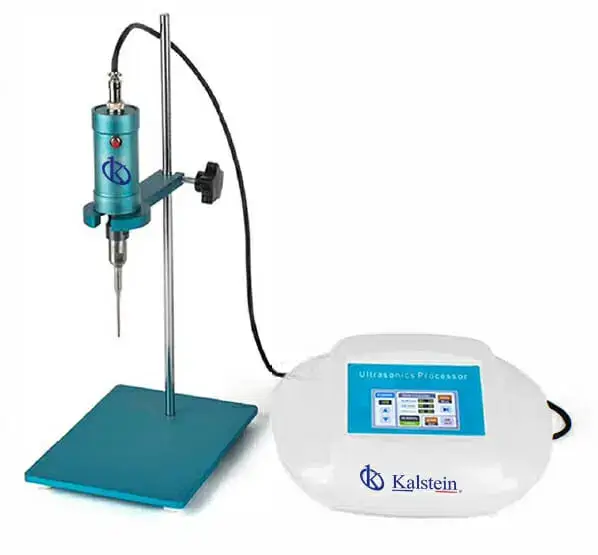
Energy Sustainability and Environmental Footprint Reduction in Ultrasonic Homogenizers 2026
The advancement of laboratory technologies has led to a significant focus on sustainability and minimizing environmental footprints. Ultrasonic homogenizers, specifically, have emerged as a powerful tool in laboratories for effective liquid processing while also contributing to energy efficiency. This article will explore how ultrasonic homogenizers, including various models, align with energy sustainability goals and reduce the environmental impact of laboratory operations.
Framing Ultrasonic Homogenizers Through Sustainability
Ultrasonic homogenizers utilize high-frequency sound waves to create cavitation bubbles in liquids, which leads to the homogenization or emulsification of samples. These devices not only improve sample preparation but also have the potential to reduce energy consumption compared to traditional mixing techniques. This section discusses the technology’s role in driving energy sustainability and lowering carbon footprints in laboratories.
Comparison of Available Models
| Model | Ultrasonic Power (W) | Frequency (KHz) | Handling Capacity (ml) | Price (USD) | Best for Sustainability |
|---|---|---|---|---|---|
| YR05829 | 5-150 | 19-25 | 0.1-50 | $659.00 | Small sample homogenization |
| YR05830 | 5-250 | 19-25 | 0.5-100 | $659.00 | Versatile laboratory use |
| YR05831 | 5-400 | 19-25 | 0.5-300 | $699.00 | High-volume processing |
| YR05831-op1 | 5-400 | 19-25 | 0.5-300 | $149.00 | Cost-effective option |
| YR05831-op2 | 5-400 | 19-25 | 0.5-300 | $95.00 | Budget-friendly solution |
| YR05832 | 650 | 20-25 | 0.2-500 | $1050.00 | High-performance applications |
Energy Efficiency of Ultrasonic Homogenizers
Ultrasonic homogenizers are known for their efficient energy use, especially when compared to traditional mechanical homogenizers. The energy consumption per operation is significantly lower, which translates to reduced operational costs and a smaller carbon footprint. For example, the YR05829 model provides optimized energy use with its ultrasonic power range, making it suitable for labs aiming to enhance their energy efficiency.
Reducing Water and Reagent Consumption
Another aspect of sustainability in ultrasonic homogenizers is their ability to minimize water and reagent consumption. The precision in sample homogenization often results in lower volumes of solvents needed compared to other methods. Thus, models like the YR05830 can help laboratories achieve their sustainability targets by reducing waste associated with chemical usage.
Cavitation Effect and Environmental Impact
The cavitation effect generated by ultrasonic homogenizers leads to efficient processing of materials, which can help reduce processing times and energy expended in laboratory workflows. This efficiency not only enhances productivity but also aligns with the objectives of reducing the overall environmental impact of laboratory operations.
Lifecycle Assessment of Ultrasonic Homogenizers
Conducting a lifecycle assessment of ultrasonic homogenizers can provide insights into their environmental footprint. This assessment takes into account the entire lifecycle—from production to disposal—highlighting areas for improvement in sustainability practices. Models such as the YR05831 may demonstrate lower lifecycle emissions due to their energy-efficient designs and durable components.
Common Mistakes and How to Avoid Them
In striving for sustainability in the laboratory, common mistakes include overlooking energy consumption metrics when selecting equipment or failing to integrate proper training on sustainable practices for laboratory personnel. It is crucial to consider energy ratings, such as those for the YR05832 model, and to provide thorough training to ensure that efficient practices are followed, thus maximizing the environmental benefits.
Frequently Asked Questions
How do ultrasonic homogenizers contribute to energy sustainability in 2026?
Ultrasonic homogenizers, such as the YR05830 model, significantly reduce energy consumption during sample processing compared to traditional methods. Their high efficiency allows labs to operate with lower power usage, contributing to energy sustainability goals set for 2026.
What are the environmental impacts of ultrasonic homogenizers in laboratory settings?
Ultrasonic homogenizers minimize waste and reduce energy usage, leading to lower overall environmental impacts. Models like the YR05831 are designed to be energy-efficient, which helps laboratories decrease their carbon footprint while maintaining effective processing capabilities.
Which ultrasonic homogenizer model is best for reducing chemical waste?
The YR05830 model is particularly effective at reducing chemical waste due to its precise homogenization capabilities, which require less solvent than traditional methods. This model helps laboratories minimize their environmental impact by lowering reagent consumption.
What is the lifecycle assessment of ultrasonic homogenizers in 2026?
The lifecycle assessment of models such as the YR05832 shows that they have lower emissions throughout their lifecycle, from production to disposal. This model is designed with sustainable practices in mind, making it suitable for environmentally-conscious labs in 2026.
How can we train staff to maximize energy efficiency with ultrasonic homogenizers?
Training staff on best practices for using models like the YR05829 involves emphasizing energy-efficient operation, understanding equipment settings, and recognizing the importance of regular maintenance, which can further reduce energy consumption in lab processes.
What specific features of ultrasonic homogenizers improve their environmental footprint?
Features such as adjustable ultrasonic power and efficient cavitation mechanisms, like those found in the YR05831-op1 model, enhance the environmental footprint of ultrasonic homogenizers by reducing energy and resource consumption during operation.
How much energy can ultrasonic homogenizers save compared to traditional methods?
Ultrasonic homogenizers can save up to 50% more energy than traditional mechanical homogenizers, depending on the model and usage. For instance, the YR05832 model's advanced design allows for significant energy savings during sample processing.
Which model provides the best cost-efficiency for sustainability in laboratories?
The YR05831-op2 model is an excellent choice for labs seeking cost efficiency while maintaining sustainability. At just $95.00, this model delivers effective homogenization with low operational costs, aiding in environmental footprint reduction.
If you are looking for a fusion of innovation and quality, you have come to the right place. At Kalstein, we offer you the luxury of exploring our exclusive catalog of laboratory equipment. We manufacture every device to the highest standards of excellence. Our intuitive and seamless online purchasing channels are designed for your convenience, securing the most competitive prices. Hesitate no longer — we bring science to life, it is time to become part of our community.