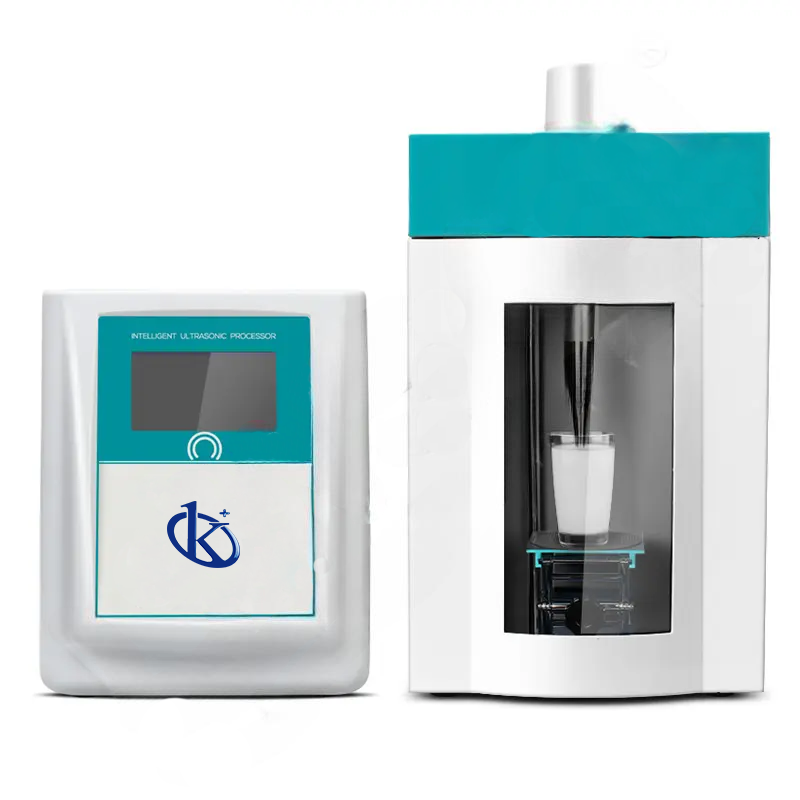
How to Ensure Compliance with ISO/IEC Regulations Using Ultrasonic Homogenizers
In today's laboratory environment, meeting ISO/IEC standards is essential for ensuring quality, reliability, and safety in various testing and analytical processes. Ultrasonic homogenizers play a crucial role in achieving compliance with these standards, particularly for laboratories involved in sample preparation, emulsification, and particle size reduction. This article focuses on how to select the right ultrasonic homogenizer while considering key ISO/IEC regulations.
Understanding ISO/IEC Regulations in Laboratory Settings
ISO/IEC standards provide frameworks for quality management systems that laboratories must adhere to for optimal operational efficiency. Key standards relevant to laboratory operations include ISO 17025, which outlines general requirements for the competence of testing and calibration laboratories, and IEC 61010, which specifies safety requirements for electrical equipment used in measurement, control, and laboratory processes.
Compliance with these regulations ensures that laboratories perform accurate and reliable tests, maintaining their credibility in the industry. Ultrasonic homogenizers can facilitate this by providing consistent and reproducible results, essential for meeting the required quality benchmarks.
Key ISO/IEC Standards Relevant to Ultrasonic Homogenizers
ISO 17025: General Requirements for Testing and Calibration Laboratories
ISO 17025 emphasizes the competence of laboratories to produce valid and reliable results. Utilizing ultrasonic homogenizers that offer precise control of processing parameters (power, time, and frequency) contributes to compliance with this standard, as precision is critical in sample preparation processes.
IEC 61010: Safety Requirements for Electrical Equipment
IEC 61010 sets forth safety requirements for electrical equipment used in laboratories. Ultrasonic homogenizers must adhere to these safety features, including overload protection and automatic fault alarms, ensuring operator safety while maintaining compliance with the regulations.
How Ultrasonic Homogenizers Aid in Compliance
Ultrasonic homogenizers like the YR05015, YR05016, and YR05017 integrate advanced features that ensure regulatory compliance. For instance, the YR05015 model includes PID control and automatic temperature monitoring, which align with the standards set by ISO 17025.
Comparison of Available Models
| Model | ISO/IEC Clauses Covered | Traceability Features | Best for |
|---|---|---|---|
| YR05015 | ISO 17025, IEC 61010 | PID control, temperature detection | Sample preparation for testing laboratories |
| YR05016 | ISO 17025 | Overload protection | Research and development labs |
| YR05017 | ISO 17025 | Automatic alarms | Quality control environments |
| YR05018 | ISO 17025, IEC 61010 | PID control, automatic alarm | Pharmaceutical laboratories |
| YR05019 | ISO 17025 | Temperature control | Cosmetic industry |
| YR05020 | ISO 17025, IEC 61010 | Integrated safety systems | Food testing labs |
Common Mistakes and How to Avoid Them
When selecting an ultrasonic homogenizer, laboratories often overlook the importance of compliance features. Common mistakes include selecting models without adequate safety features or failing to validate calibration with traceable standards. Additionally, neglecting to consider the specific processing requirements of samples can lead to inadequate results.
Benefits of Using Ultrasonic Homogenizers for Compliance
Using ultrasonic homogenizers not only ensures compliance with ISO/IEC standards but also enhances overall laboratory efficiency. Models like the YR05018 provide consistent results across a variety of applications, reducing variability and improving test reliability. The ability to customize parameters allows laboratories to meet specific regulatory requirements effectively.
Best Practices for Implementing Ultrasonic Homogenizers in Compliance
To successfully integrate ultrasonic homogenizers into laboratory workflows, it is essential to establish standard operating procedures (SOPs) that comply with ISO/IEC requirements. Training personnel on proper usage, maintenance, and safety protocols is critical to optimizing performance and achieving compliance.
Frequently Asked Questions
How do ultrasonic homogenizers fit into the ISO 17025 compliance framework?
Ultrasonic homogenizers like YR05015 contribute to ISO 17025 compliance by providing accurate control over sample processing parameters, ensuring reproducibility and reliability in testing results.
What features should I look for in an ultrasonic homogenizer for IEC 61010 compliance?
When selecting an ultrasonic homogenizer for IEC 61010 compliance, look for models such as YR05020 that include safety features like overload protection and automatic fault alarms to ensure operator safety.
Which ultrasonic homogenizer is best for meeting ISO 17025 quality requirements?
The YR05017 is ideal for meeting ISO 17025 quality requirements as it includes temperature monitoring and automatic alarms, ensuring compliance with the necessary standards in a laboratory setting.
How often should I calibrate my ultrasonic homogenizer to maintain compliance?
Calibration frequency for ultrasonic homogenizers like the YR05016 should align with ISO 17025 requirements, typically every six months or as indicated by the manufacturer's guidelines to ensure compliance.
What types of samples can I process with ultrasonic homogenizers while ensuring compliance?
Ultrasonic homogenizers can efficiently process a range of samples, including biological, pharmaceutical, and cosmetic materials, ensuring compliance with standards like ISO 17025 and providing reliable results.
How important is operator training for using ultrasonic homogenizers in compliance?
Operator training is crucial when using ultrasonic homogenizers to ensure compliance with ISO 17025 and IEC 61010, as knowledgeable staff can maximize the device's capabilities and maintain safety standards.
Can ultrasonic homogenizers help reduce costs while ensuring compliance?
Yes, ultrasonic homogenizers like the YR05019 can reduce costs by improving efficiency and reducing waste during sample processing, while still maintaining compliance with ISO/IEC standards.
What documentation is required to prove compliance with ISO/IEC regulations?
To demonstrate compliance with ISO/IEC regulations, laboratories must maintain records of equipment calibration, operator training, and testing results, which ultrasonic homogenizers like YR05018 can help standardize through automated data logging.
If you are looking for a fusion of innovation and quality, you have come to the right place. At Kalstein, we offer you the luxury of exploring our exclusive catalog of laboratory equipment. We manufacture every device to the highest standards of excellence. Our intuitive and seamless online purchasing channels are designed for your convenience, securing the most competitive prices. Hesitate no longer — we bring science to life, it is time to become part of our community.