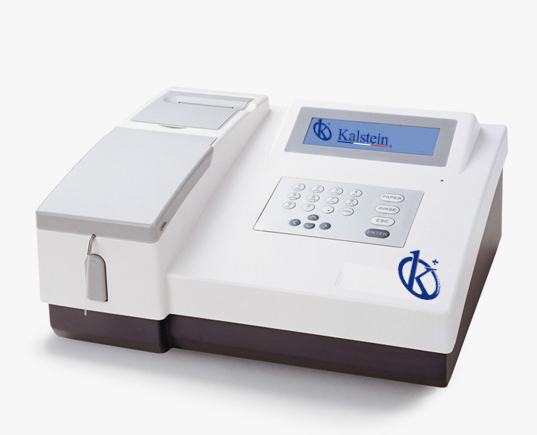
Evaluating ROI and Cost-Benefit Analysis for Laboratory Chemical Analyzers
In laboratory settings, particularly in the realm of chemical analyzers, the evaluation of Return on Investment (ROI) and cost-benefit analysis is paramount. This article delves into how laboratories can effectively assess these metrics to make informed decisions regarding the acquisition and utilization of chemical analyzers. Through a detailed exploration of various models and their applications, laboratory professionals will gain insights into optimizing their investment.
Understanding ROI in the Context of Chemical Analyzers
ROI is a critical metric for laboratories, as it measures the financial return relative to the investment made. In the context of chemical analyzers, ROI can be calculated by comparing the costs of purchasing and maintaining the analyzer against the financial gains derived from its operation. Key factors to consider include initial capital expenditure (CAPEX), operating expenses (OPEX), and the expected lifespan of the equipment.
Capital Expenditure (CAPEX) vs. Operating Expenses (OPEX)
The initial outlay for acquiring a chemical analyzer, such as the Automatic Chemistry Analyzer YR06075, amounts to approximately $12,500. This CAPEX is complemented by ongoing OPEX, which includes costs associated with reagents, maintenance, and staffing. Understanding these costs allows laboratories to forecast their expenditure over the analyzer's lifespan.
Calculating Return on Investment
To determine ROI, laboratories can use the following formula: ROI (%) = (Net Profit / Cost of Investment) x 100. For instance, if a laboratory invests $12,500 in YR06075 and generates an annual profit of $5,000 from its use, the ROI can be calculated to assess the efficiency of that investment.
Advantages of Implementing a Cost-Benefit Analysis
A cost-benefit analysis (CBA) provides a systematic approach to evaluating the economic justification for choosing one analyzer over another. By assessing both the costs and benefits associated with each laboratory model, professionals can make informed decisions that align with their operational objectives.
Identifying Benefits Beyond Financial Metrics
While ROI focuses on financial returns, CBA encompasses broader benefits, such as improved workflow efficiency, enhanced accuracy, and increased throughput. For instance, the Semi-automatic Chemistry Analyzer YR05115 offers fast processing times that can significantly enhance laboratory efficiency, translating into time savings for laboratory staff.
Creating a Cost Matrix for Decision Making
Here’s a sample cost matrix that can assist in evaluating different models against their respective costs and benefits:
| Model | CAPEX (USD) | OPEX (Annual, USD) | Expected Benefits |
|---|---|---|---|
| YR05115 | 800 | 300 | 80 preprogrammed tests, fast results |
| YR06075 | 12500 | 1500 | 560 tests/hour, high precision |
| YR05114 | 950 | 400 | Real-time curve visualization |
| YR06078 | 1100 | 350 | Memory for 10,000 results, touch screen |
Comparison of Available Models
When evaluating chemical analyzers, it is essential to compare the models available to understand their functionalities, costs, and applications. Below is a comparison table that outlines key specifications and features for several models.
| Model | CAPEX (USD) | Cost per Test (USD) | Payback Period (Months) | Best for |
|---|---|---|---|---|
| YR05115 | 800 | 1.00 | 8 | Small laboratories with limited budgets |
| YR05114 | 950 | 1.25 | 10 | Versatile testing environments |
| YR06075 | 12500 | 2.50 | 24 | High-throughput laboratories |
| YR06078 | 1100 | 1.75 | 12 | Flexible testing requirements |
Common Mistakes and How to Avoid Them
Making a poor investment decision regarding chemical analyzers can significantly impact laboratory operations. Here are some common mistakes to avoid:
Neglecting Ongoing Costs
Laboratories often focus solely on CAPEX and ignore OPEX, leading to budget overruns. It's crucial to factor in the costs of reagents, maintenance, and potential downtime when evaluating the total cost of ownership.
Overlooking Performance Metrics
Choosing a model based solely on price can lead to selecting an analyzer that does not meet the laboratory's performance needs. Always assess models based on their throughput, accuracy, and capabilities relevant to your testing requirements.
Frequently Asked Questions
What is the typical ROI for a laboratory investing in chemical analyzers?
The ROI for a laboratory investing in chemical analyzers can vary widely, but models like the Automatic Chemistry Analyzer YR06075 can provide substantial returns when effectively utilized, often achieving payback periods of around 24 months.
How can I assess the cost-effectiveness of different chemical analyzers?
By creating a cost matrix comparing CAPEX, OPEX, and expected benefits, laboratories can assess the cost-effectiveness of various models. For example, comparing YR05115 against higher-cost models may reveal significant savings for limited testing needs.
What factors should be considered when selecting a chemical analyzer?
Factors to consider include initial purchase price, ongoing operating expenses, throughput capability, and the types of tests the analyzer can perform efficiently. For instance, YR06075 is ideal for high-throughput environments.
Which chemical analyzers offer the best performance for small labs?
The Semi-automatic Chemistry Analyzer YR05115 is an excellent choice for small labs due to its low cost and sufficient capabilities for a range of tests without overwhelming the budget.
How do I calculate the cost per test for a chemistry analyzer?
To calculate cost per test, divide the total annual operating costs by the number of tests performed. For example, if YR06078 incurs $1,100 annually and conducts 600 tests, the cost per test is approximately $1.83.
What is the importance of ongoing maintenance for chemical analyzers?
Ongoing maintenance is crucial for ensuring the accuracy and reliability of chemical analyzers. Neglect can lead to increased errors and downtime, which can be costly for laboratories using models like YR05116.
How do different analyzers impact laboratory workflow efficiency?
Laboratory workflow efficiency can be significantly impacted by the throughput capability of analyzers. For instance, the YR06075 can process 560 tests per hour, greatly enhancing laboratory productivity compared to slower models.
What investment should I expect when purchasing a semi-automatic chemistry analyzer?
Investing in a semi-automatic chemistry analyzer like the YR05116 typically involves a CAPEX of around $1,300, alongside ongoing costs for reagents and maintenance, which should be budgeted accordingly.
Conclusion
In conclusion, evaluating ROI and conducting a cost-benefit analysis are essential practices for laboratories contemplating the acquisition of chemical analyzers. By understanding the financial implications as well as the operational benefits, laboratories can make informed decisions that enhance their efficiency and productivity. If you are looking for a fusion of innovation and quality, you have come to the right place. At Kalstein, we offer you the luxury of exploring our exclusive catalog of laboratory equipment. We manufacture every device to the highest standards of excellence. Our intuitive and seamless online purchasing channels are designed for your convenience, securing the most competitive prices. Hesitate no longer — we bring science to life, it is time to become part of our community.