How to Integrate Salinity Refractometers with LIMS for Data Digitalization
In the rapidly evolving landscape of laboratory operations, the integration of salinity refractometers with Laboratory Information Management Systems (LIMS) has become pivotal. This synergy not only enhances operational efficiency but also ensures accurate data management, which is critical for quality control in various industries, including marine, clinical, and research labs.
Understanding Salinity Refractometers
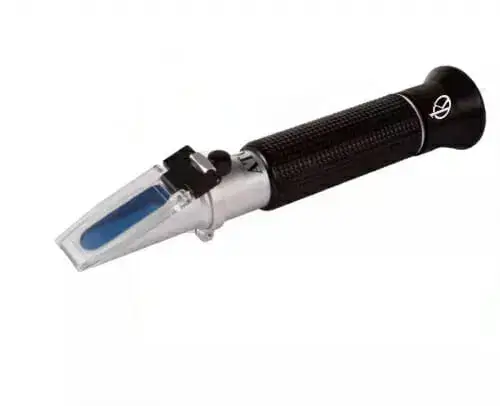
Salinity refractometers are essential tools designed to measure the concentration of salt in water. They play a significant role in ensuring quality control in laboratories dealing with saline solutions. By employing optical technology, these devices provide direct readings of specific gravity and salinity levels, which can help in monitoring and testing water quality for various applications.
Importance of LIMS Integration
LIMS provides a robust framework for managing laboratory data and processes efficiently. By integrating salinity refractometers with LIMS, labs can automate data collection, enhance accuracy, and minimize human error. This integration also facilitates better compliance with regulatory standards by providing an organized data repository that can easily be accessed and analyzed.
Comparison of Available Models
| Model | Measurement Range | Best For | Integration Complexity |
|---|---|---|---|
| YR05887 | 0-4% Salinity (20-40 ppt) | Quality control in marine labs | Moderate |
| YR05888 | 0-4% Salinity (0-40 ppt) | Clinical laboratories | Moderate |
| YR05913 | 0-4% Salinity (20-40 ppt) | Research applications | Low |
| YR05914 | 2-4% Salinity (20-40 ppt) | Industrial applications | High |
Key Features of Salinity Refractometers for LIMS Integration
Each model of salinity refractometer offers unique features that facilitate seamless integration with LIMS. For instance, the YR05887 model is particularly useful for marine quality control, providing precise readings that can easily be recorded in LIMS for compliance and traceability purposes. The models support automatic temperature compensation (ATC), which enhances accuracy under varying environmental conditions.
Overcoming Integration Challenges
Integrating salinity refractometers with LIMS can pose challenges, particularly regarding compatibility and data transfer protocols. It is crucial for laboratories to assess the communication capabilities of their refractometers, such as whether they support HL7 or ASTM protocols. Establishing a clear integration plan that addresses these challenges will result in a smoother transition to a fully digital workflow.
Common Mistakes and How to Avoid Them
Many laboratories overlook the importance of thorough training on LIMS and refractometer operation, leading to data inaccuracies. Additionally, failing to regularly calibrate equipment can result in faulty readings. Regular training sessions and a strict maintenance schedule for all laboratory equipment will help avoid these pitfalls.
Frequently Asked Questions
How does integrating salinity refractometers with LIMS improve data accuracy?
Integrating salinity refractometers like the YR05887 with LIMS allows for real-time data capture, reducing transcription errors. This automated data flow ensures that readings are accurately recorded and easily accessible, enhancing overall data integrity.
What are the key benefits of using LIMS with salinity refractometers?
Using LIMS with salinity refractometers streamlines workflows, improves compliance tracking, and facilitates data analysis. For example, the YR05913 model can provide data that is automatically logged into the LIMS, making reporting and tracking much simpler.
Which protocols are commonly used for LIMS integration with salinity refractometers?
Common protocols include HL7 and ASTM, which are essential for ensuring that data from models like the YR05888 is accurately communicated to the LIMS. Adhering to these protocols is crucial for data integrity and compliance.
How can I ensure my salinity refractometer is compatible with LIMS?
To ensure compatibility, check the refractometer’s technical specifications for supported communication protocols. Models such as the YR05914 often come equipped with the necessary interfaces for seamless integration with LIMS.
What maintenance is required for salinity refractometers connected to LIMS?
Routine maintenance such as calibration and cleaning is necessary to ensure accuracy. For instance, the YR05887 model requires periodic calibration to maintain its precision, especially when integrated with LIMS.
What cost factors should I consider when integrating salinity refractometers with LIMS?
Cost factors include the initial investment in refractometers like the YR05888, ongoing maintenance costs, and potential software licensing fees for the LIMS. A thorough cost analysis should be conducted to understand the total investment required.
How can I get the most out of my LIMS-integrated salinity refractometer?
To maximize efficiency, ensure that staff is adequately trained in both LIMS and refractometer use. Regular data reviews and continuous improvement strategies can enhance the utility of models like the YR05913 in your laboratory.
What challenges might I face during the integration of salinity refractometers with LIMS?
Challenges include compatibility issues and the complexity of data migration. Ensuring that models like the YR05914 are compatible with existing systems is essential for a successful integration.
If you are looking for a fusion of innovation and quality, you have come to the right place. At Kalstein, we offer you the luxury of exploring our exclusive catalog of laboratory equipment. We manufacture every device to the highest standards of excellence. Our intuitive and seamless online purchasing channels are designed for your convenience, securing the most competitive prices. Hesitate no longer — we bring science to life, it is time to become part of our community.