How to Integrate Ultrasonic Homogenizers with LIMS for Data Digitalization
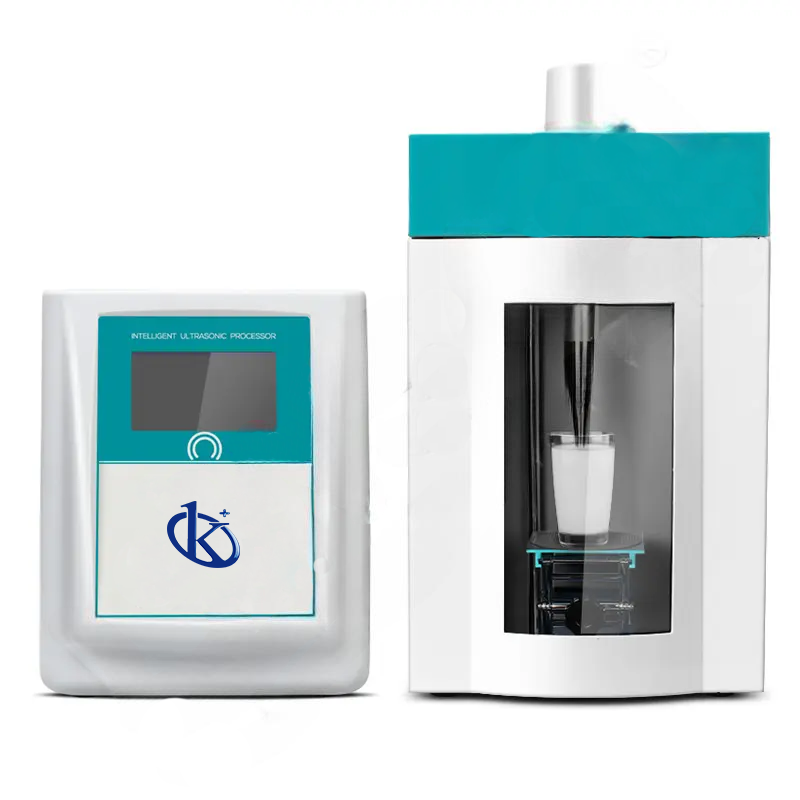
In today’s laboratory environment, the integration of ultrasonic homogenizers with Laboratory Information Management Systems (LIMS) is essential for optimizing data workflows and enhancing efficiency. This article delves into the importance of this integration, specifically focusing on the models available in the ultrasonic homogenizer family. By examining the benefits and technical specifications of these models, laboratory professionals can make informed decisions to streamline their operations.
Understanding Ultrasonic Homogenizers and Their Role in LIMS Integration
Ultrasonic homogenizers, known for their high precision in sample preparation, are indispensable tools in laboratories. These devices function by employing ultrasonic waves to create cavitation bubbles in a liquid, leading to the homogenization of samples. When integrated with LIMS, ultrasonic homogenizers allow for real-time monitoring, data logging, and enhanced traceability, crucial for meeting regulatory standards and improving lab workflows.
Benefits of Integrating Ultrasonic Homogenizers with LIMS
The integration of ultrasonic homogenizers with LIMS provides numerous benefits, including:
- Real-Time Data Monitoring: Enable immediate access to processing parameters such as temperature and power settings, enhancing accuracy.
- Improved Traceability: Each homogenization process can be logged with timestamps and operator details, ensuring compliance with quality standards.
- Automated Reporting: Generate detailed reports automatically, minimizing manual data entry errors.
- Enhanced Workflow Efficiency: Streamline operations by reducing the time taken for data collection and analysis.
Key Models of Ultrasonic Homogenizers and Their LIMS Integration Capabilities
Several models of ultrasonic homogenizers are available, each with unique features suitable for various laboratory needs. The following table compares key specifications and integration capabilities:
| Model | Power (W) | Mixing Capacity (ml) | LIMS Integration Features | Best For |
|---|---|---|---|---|
| YR05015 | 1.5 – 150 | 0.1 – 150 | TFT display, PID control, data printing | Small sample sizes |
| YR05016 | 2-5 – 250 | 0.1 – 300 | Touch screen, data logging | Medium sample sizes |
| YR05017 | 10 – 650 | 0.1 – 500 | Computer communication | Research applications |
| YR05018 | 10 – 900 | 0.1 – 600 | Data alarm, PID control | High-throughput labs |
| YR05019 | 20 – 1,200 | 1 – 1,000 | Overload protection, voice alerts | Advanced applications |
| YR05020 | 50 – 1,800 | 1 – 1,200 | Integration-ready features | Large-scale production |
Common Mistakes and How to Avoid Them
When integrating ultrasonic homogenizers with LIMS, laboratories often encounter several pitfalls. Here are some common mistakes and strategies to mitigate them:
- Neglecting Training: Ensure all personnel are adequately trained to operate both the homogenizers and the LIMS for accurate data entry and integration.
- Overlooking Data Security: Implement protocols to safeguard sensitive data during transfer between devices and LIMS.
- Inadequate Testing: Conduct thorough testing of the integration process to identify potential issues before full implementation.
- Failure to Update Software: Regularly update software to maintain compatibility and access new features that enhance integration capabilities.
Frequently Asked Questions
How can ultrasonic homogenizers like YR05015 help in LIMS integration?
The Ultrasonic Homogenizer YR05015 provides features like data logging and a PID control system that facilitates integration with LIMS, enabling real-time monitoring and efficient data management.
What are the key features of YR05020 for LIMS integration?
The YR05020 model offers integration-ready features that enhance data management capabilities, making it suitable for large-scale production and complex laboratory workflows.
How does the power range of ultrasonic homogenizers affect data processing in LIMS?
The power range of models like YR05019 (20-1,200W) impacts the efficiency of data processing in LIMS, allowing for faster sample processing and more reliable data logging.
What is the mixing capacity of the YR05018 model in a LIMS-integrated environment?
The YR05018 has a mixing capacity of 0.1 to 600 ml, making it versatile for various applications in a LIMS-integrated laboratory setting.
How does LIMS integration improve laboratory efficiency with ultrasonic homogenizers?
LIMS integration enhances laboratory efficiency by automating data collection and reporting processes, reducing manual errors associated with models like YR05016.
Which ultrasonic homogenizer is best for high-throughput labs and LIMS integration?
The YR05018 model, with its capabilities for high sample volume processing, is ideal for high-throughput labs seeking efficient LIMS integration.
What are the benefits of data security in LIMS for ultrasonic homogenizers?
Implementing data security protocols during the integration of ultrasonic homogenizers, such as the YR05015, protects sensitive information and maintains compliance with industry standards.
How does PID control in ultrasonic homogenizers enhance data accuracy in LIMS?
Models like YR05016, featuring PID control, ensure consistent operational parameters, which enhances data accuracy and reliability when integrated with LIMS.
If you are looking for a fusion of innovation and quality, you have come to the right place. At Kalstein, we offer you the luxury of exploring our exclusive catalog of laboratory equipment. We manufacture every device to the highest standards of excellence. Our intuitive and seamless online purchasing channels are designed for your convenience, securing the most competitive prices. Hesitate no longer — we bring science to life, it is time to become part of our community.