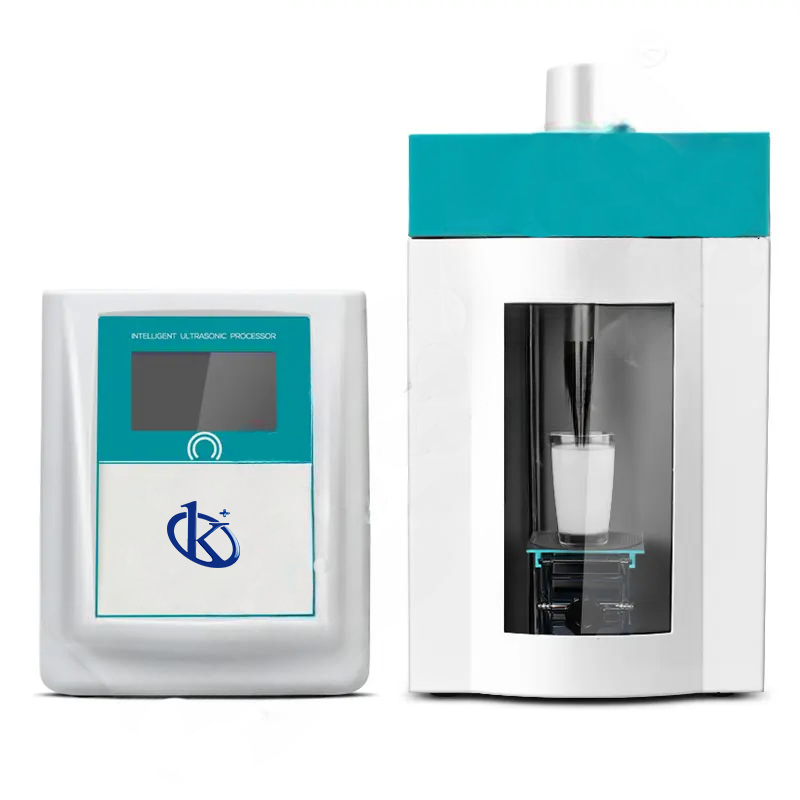
How to Integrate Ultrasonic Homogenizers with LIMS for Enhanced Data Flow
In today's fast-paced laboratory environment, the integration of laboratory equipment with Laboratory Information Management Systems (LIMS) is essential for optimizing data workflows and achieving operational efficiency. Ultrasonic homogenizers, known for their versatility in sample preparation, can significantly enhance laboratory processes when effectively integrated with LIMS. This article delves into the advantages of integrating ultrasonic homogenizers with LIMS, highlighting key models and their specific applications in this context.
Understanding Ultrasonic Homogenizers and Their Role in Laboratories
Ultrasonic homogenizers are used extensively in laboratories for sample preparation, including the emulsification and homogenization of various substances. They utilize high-frequency sound waves to disrupt particles in a liquid, creating a uniform mixture. This technology is critical in applications such as pharmaceuticals, food processing, and materials science, where precise sample preparation is paramount. By integrating ultrasonic homogenizers with LIMS, laboratories can streamline data collection and analysis, ensuring compliance with industry standards.
Benefits of LIMS Integration with Ultrasonic Homogenizers
Integrating ultrasonic homogenizers with LIMS offers numerous benefits, including improved data accuracy, enhanced traceability, and increased efficiency in laboratory workflows. Real-time data capture from ultrasonic homogenizers can provide immediate feedback on sample processing, allowing for quick adjustments as necessary. Furthermore, the ability to store and retrieve data easily enhances compliance with regulatory requirements, such as ISO 17025.
Key Features of Ultrasonic Homogenizers for LIMS Integration
When selecting ultrasonic homogenizers for LIMS integration, consider features such as connectivity options, data output formats, and compatibility with various LIMS software. Many modern ultrasonic homogenizers, such as the YR05015 and YR05020 models, come equipped with advanced user interfaces and communication protocols that facilitate seamless integration with LIMS.
Comparison of Available Models
| Model | Power (W) | Mixing Capacity (ml) | Temperature Range (°C) | Price (USD) |
|---|---|---|---|---|
| YR05015 | 150 | 150 | 0 - 100 | 756.00 |
| YR05016 | 250 | 300 | 0 - 100 | 882.00 |
| YR05017 | 650 | 500 | 0 - 100 | 1050.00 |
| YR05018 | 900 | 600 | 0 - 100 | 1281.00 |
| YR05019 | 1200 | 1000 | 0 - 100 | 1785.00 |
| YR05020 | 1800 | 1200 | 0 - 100 | 2058.00 |
Common Mistakes and How to Avoid Them
When integrating ultrasonic homogenizers with LIMS, laboratories often make common mistakes that can hinder the effectiveness of the integration. One prevalent mistake is failing to ensure the compatibility of the homogenizer's data output formats with the LIMS software. Before implementation, it is essential to verify that the data formats produced by ultrasonic homogenizers like the YR05015 or YR05020 are directly compatible with the LIMS system in use.
Another common error is neglecting proper training for staff on both the ultrasonic homogenizer and LIMS functionalities. Comprehensive training ensures that laboratory personnel can fully leverage the capabilities of both systems, enhancing data accuracy and workflow efficiency.
Key Considerations for Successful LIMS Integration
Successful LIMS integration with ultrasonic homogenizers requires a clear understanding of the laboratory's specific needs. Consider the following factors:
- Data Management: Ensure the LIMS can handle large volumes of data generated by ultrasonic homogenizers.
- Integration Protocols: Identify the necessary communication protocols for seamless data transfer.
- User Training: Invest in training programs for staff to ensure effective utilization of both systems.
- Regulatory Compliance: Verify that the integration supports compliance with relevant regulations like ISO 17025.
Frequently Asked Questions
How can I ensure my ultrasonic homogenizer is LIMS compatible?
To ensure compatibility between your ultrasonic homogenizer and LIMS, check the data output formats of models like YR05020. The homogenizer should support standards recognized by your LIMS, making seamless data transfer possible.
What are the key benefits of integrating ultrasonic homogenizers with LIMS?
Integrating ultrasonic homogenizers with LIMS enhances data accuracy and workflow efficiency. This combination allows for real-time monitoring of sample preparation, ensuring compliance with industry standards like ISO 17025.
Which ultrasonic homogenizer model is best for high-throughput laboratories?
The YR05020 model, with a power of 1800W and a mixing capacity of 1200 ml, is ideal for high-throughput laboratories needing efficient sample preparation integrated with LIMS.
What are the integration protocols for ultrasonic homogenizers with LIMS?
Integration protocols may vary, but common standards include HL7 and ASTM. Models such as YR05018 support various protocols to facilitate seamless connectivity with LIMS.
How does LIMS integration improve data security in laboratories?
Integrating ultrasonic homogenizers with LIMS enhances data security by ensuring that all data generated is stored in a centralized, controlled environment. This reduces the risk of data loss or unauthorized access.
What training is necessary for effective LIMS integration in laboratories?
Laboratories should focus on training staff in data management, software functionalities, and compliance standards. Proper training ensures that users can effectively operate models like YR05016 within the LIMS environment.
What maintenance is required for ultrasonic homogenizers integrated with LIMS?
Regular maintenance checks should be conducted on ultrasonic homogenizers like the YR05019 to ensure optimal performance and reliability as they integrate with LIMS for consistent data flow.
Conclusion
Integrating ultrasonic homogenizers with LIMS is a strategic move for laboratories seeking to enhance productivity and data accuracy. Models such as YR05015, YR05020, and others offer unique features that, when properly utilized, can transform laboratory workflows.
If you are looking for a fusion of innovation and quality, you have come to the right place. At Kalstein, we offer you the luxury of exploring our exclusive catalog of laboratory equipment. We manufacture every device to the highest standards of excellence. Our intuitive and seamless online purchasing channels are designed for your convenience, securing the most competitive prices. Hesitate no longer — we bring science to life, it is time to become part of our community.