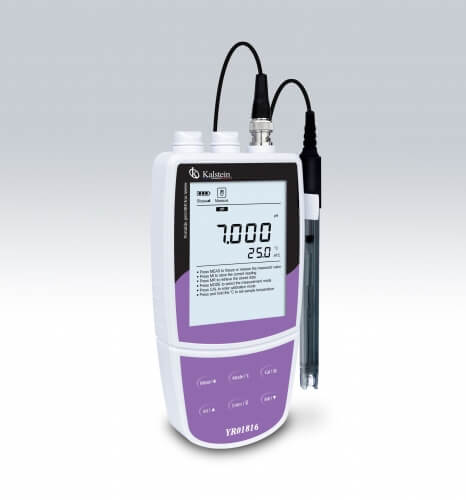
How to Interpret Results and Read Measurements with the YR01817-14 Portable Ammonium Ion Meter
The YR01817-14 Portable Ammonium Ion Meter is an essential tool for professionals who need to assess ammonium ion concentrations in various environments. This article will focus on the interpretation of results and readings obtained from this specific model. With its precision and various configuration options, the YR01817-14 serves a wide range of applications, from clinical labs to environmental monitoring.
Understanding the Functionality of the YR01817-14
The YR01817-14 operates based on the principle of ion-selective electrodes. This methodology allows the meter to provide accurate measurements of ammonium ions (NH4+) present in a solution. An ion-selective electrode selectively responds to the concentration of ammonium ions and provides a voltage output that is proportional to the ion concentration. This voltage is then converted into a readable concentration value displayed on the meter’s LCD screen.
Key features that enhance the functionality include:
- Backlit LCD display for easy reading in various lighting conditions.
- Selectable concentration units: PPM, MG/L, and MOL/L.
- Automatic temperature compensation for accurate readings.
Technical Data of the YR01817-14
| Parameter | Specification |
|---|---|
| Model | YR01817-14 |
| Range of Ion Concentration | 1 × 10⁻⁵ to 1 M, 0.1 to 23000 ppm |
| Resolution | 0.001, 0.01, 0.1, 1 |
| Accuracy | ± 0.5% FS |
| Calibration Points | 2 to 5 points |
| Temperature Compensation Range | 0 to 100 °C / 32 to 212 °F |
| Memory Capacity | Stores up to 500 data sets |
Reading Measurement Results Accurately
Interpreting the measurements provided by the YR01817-14 involves understanding the units of measurement and the significance of the results. The device displays results in several units, offering flexibility depending on the industry requirements. Here’s how to read and interpret the results effectively:
- PPM (parts per million): This is commonly used for low concentration readings. For instance, if the reading is 500 ppm, it indicates that there are 500 parts of ammonium ion per million parts of solution.
- MG/L (milligrams per liter): This unit is frequently used in water quality testing. A reading of 20 mg/L means there are 20 milligrams of ammonium per liter of solution.
- MOL/L (moles per liter): This scientific unit indicates the number of moles of ammonium in one liter of solution, which is crucial for laboratory applications.
It's essential to be aware of the normal ranges for ammonium ion concentrations relevant to your specific application. For example, environmental water sources typically have ammonium levels below 0.5 mg/L, while agricultural runoff may present higher concentrations.
Common Misinterpretations of Results
Operators can often misinterpret results if they are not aware of factors that affect ion measurements. Here are some common misinterpretations:
- Reading Fluctuations: If the measurement fluctuates, it may indicate the presence of interfering substances or that the sensor requires calibration.
- Temperature Impact: Since temperature influences ion activity, failing to consider this can lead to inaccurate readings. Always ensure adequate temperature compensation is engaged.
- Outdated Calibration: Regular calibration is essential for accurate measurements. Operators should note the calibration expiration and recalibrate the device regularly.
Calibration and Maintenance of the YR01817-14
To ensure accurate results, the YR01817-14 requires proper calibration and maintenance. The device supports 2 to 5 points calibration, allowing users to select calibration points based on their specific needs. Calibration solutions range from 0.001 to 10000 M concentrations, ensuring flexibility in multiple settings.
Regular maintenance includes:
- Cleaning the electrode to prevent contamination.
- Storing the ion meter with the protective cap on the electrode.
- Updating the firmware when available for improved functionality.
Environmental and Site Requirements for Using the YR01817-14
When utilizing the YR01817-14, it’s critical to operate within specified environmental conditions to ensure reliable measurements. Here are the requirements:
- Temperature: The device operates efficiently between 0 to 105 °C (32 to 221 °F).
- Humidity: Avoid using the meter in high-humidity environments that may affect performance.
- Power Supply: It requires three AA batteries or a DC 5V power adapter, ensuring consistent power supply for uninterrupted operation.
Sector Adaptations for the YR01817-14
The YR01817-14 is versatile and can be adapted for various sectors, including:
- Clinical Labs: Used for blood serum testing and urine analysis, ensuring complete ammonia monitoring.
- Environmental Monitoring: Ideal for testing in water bodies to assess ammonium pollution levels.
- Agricultural Use: Helpful in soil tests to monitor ammonium levels which can affect crop health.
- Educational Purposes: An excellent tool for students in chemistry labs for practical experiments involving ion concentrations.
Frequently Asked Questions
What is the accuracy of the YR01817-14 Portable Ammonium Ion Meter?
The YR01817-14 offers an accuracy of ± 0.5% FS, ensuring reliable measurements for various applications.
How do I calibrate the YR01817-14?
Calibration can be performed using 2 to 5 points with standards ranging from 0.001 to 10000 M, depending on the desired measurement precision.
What units can the YR01817-14 display?
The device can display results in PPM, MG/L, and MOL/L, offering flexibility based on the user’s requirements.
Can temperature affect the measurements taken by the YR01817-14?
Yes, temperature impacts ion activity; hence, the YR01817-14 features automatic temperature compensation to ensure accuracy.
How often should the YR01817-14 be calibrated?
It is recommended to calibrate the YR01817-14 regularly, particularly before critical measurements or after extended periods of non-use.
What should I do if the readings appear inconsistent?
Inconsistent readings may indicate the need for recalibration, a dirty electrode, or interference from other substances. Cleaning the electrode and recalibrating is advisable.
Is the YR01817-14 suitable for field use?
Yes, the YR01817-14 is designed for portability and can be easily used in outdoor settings, making it ideal for environmental monitoring tasks.
If you are looking for a fusion of innovation and quality, you have come to the right place. At Kalstein, we offer you the luxury of exploring our exclusive catalog of laboratory equipment. We manufacture every device to the highest standards of excellence. Our intuitive and seamless online purchasing channels are designed for your convenience, securing the most competitive prices. Hesitate no longer — we bring science to life, it is time to become part of our community.