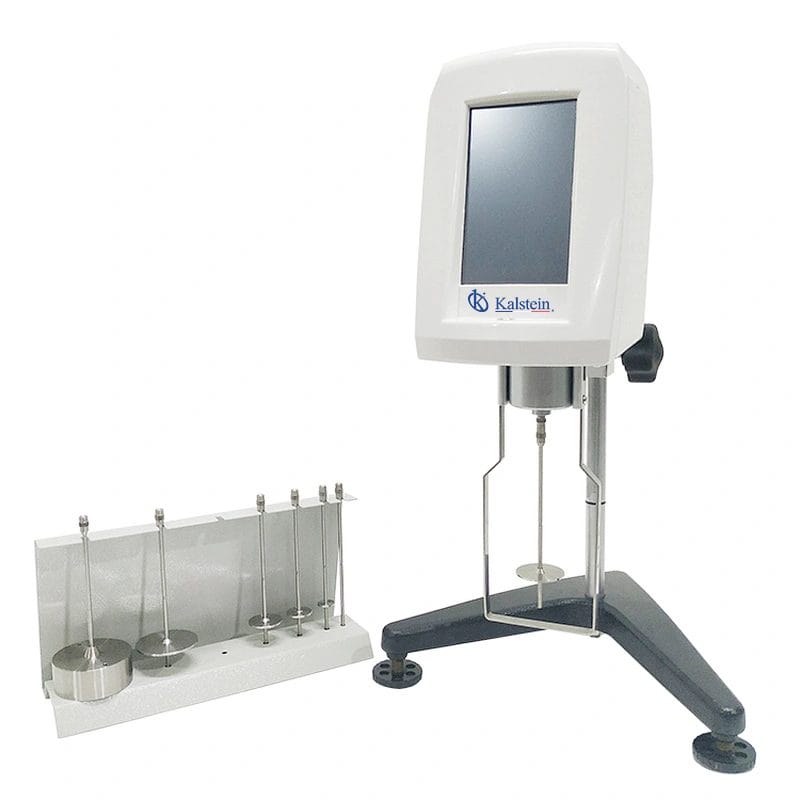
Interpreting Measurement Results with the YR05864 Brookfield Viscometer
The YR05864 Brookfield Viscometer is an essential tool for scientists and technicians who need to measure the viscosity of Newtonian and non-Newtonian fluids accurately. Understanding how to interpret the results from this viscometer is crucial for ensuring reliable data in various applications, including clinical laboratories, industrial processes, and research environments.
Understanding Viscosity Measurements
Viscosity is a measure of a fluid's resistance to flow and deformation. It is crucial to understand the units used in viscosity measurements, which are typically expressed in centipoise (cP) or milliPascal-seconds (mPa·s). The YR05864 can measure a wide range of viscosities, from 1 cP to 2,000,000 mPa·s, making it versatile for different substances.
Viscosity readings can vary based on temperature, shear rate, and the specific characteristics of the fluid being measured. Therefore, it is essential to control these variables to interpret results accurately. Users should refer to the specific viscosity curve established for the fluid under investigation to understand its behavior under varying conditions.
Key Specifications of the YR05864 Brookfield Viscometer
| Model | Measurement Range | Spindles | Rotational Speed | Precision | Reproducibility |
|---|---|---|---|---|---|
| YR05864 | 1-100,000 cP/mPa·s | 0, 1, 2, 3, 4 | 6 / 12 / 30 / 60 rpm/min | ±2% | ±1% |
Reading the Display and Output Data
The YR05864 features a comprehensive 5-inch color touchscreen that displays real-time viscosity readings. Users should familiarize themselves with the display layout to ensure that they can quickly locate key metrics such as viscosity, rotational speed, and spindle selection. The touchscreen allows for intuitive navigation through menus and settings.
When interpreting output data, it’s important to note how viscosity can change under different shear rates. The YR05864 allows users to switch between different spindles and speeds, affecting the viscosity reading. Users should document the spindle and speed for each measurement to maintain consistency in reporting results.
Common Misinterpretations of Viscosity Results
Misinterpretation of viscosity results can lead to significant errors in applications. One common mistake is failing to adjust for temperature. Viscosity is temperature-dependent, meaning that readings could vary significantly if taken at different temperatures. It is advisable to maintain a standardized temperature during testing and to use a temperature probe if necessary.
Another frequent error is neglecting to consider the fluid's behavior under shear. Some fluids exhibit shear-thinning or shear-thickening behavior, which means their viscosity changes with the applied shear force. Understanding these properties is vital for accurate interpretation.
Worked Example: Interpreting Viscosity Data
Consider a scenario where a technician measures the viscosity of a certain polymer solution using the YR05864. The recorded viscosity at 30 rpm is 450 cP using spindle 2 at 25°C. To interpret this result correctly, the technician must note:
- The viscosity reading is dependent on the spindle speed and type.
- The temperature at which the measurement was taken affects the result.
- If the viscosity is expected to change under varying shear, additional measurements should be taken.
By documenting these aspects, the technician can provide a more comprehensive analysis of the fluid's properties.
Understanding Error Bars and Normal Ranges
Error bars represent the variability and uncertainty in a measurement. In viscosity testing, it is critical to define the acceptable limits for readings. The YR05864 allows users to establish tolerances based on historical data and application requirements. Understanding normal ranges is essential for determining if a product meets quality standards.
For instance, if a sample's viscosity reading consistently falls outside the established normal range, it may indicate a formulation issue or variation in the production process. Users should regularly validate their instruments and methods against known standards to ensure accuracy.
Frequently Asked Questions
What is the measurement range of the YR05864 Brookfield Viscometer?
The YR05864 can measure viscosities ranging from 1 to 100,000 cP (mPa·s), making it suitable for a wide variety of fluids, including high-viscosity materials.
How do temperature changes affect viscosity readings?
Temperature changes can significantly alter a fluid's viscosity. As temperature increases, viscosity typically decreases for most liquids, and vice versa. It is crucial to maintain a consistent temperature during measurements for accuracy.
What are the common errors when interpreting viscosity results?
Common errors include failing to account for temperature, misjudging the fluid's shear behavior, and not documenting the spindle and speed used during measurements, all of which can lead to inaccurate interpretations.
How can I ensure accurate viscosity measurements?
To ensure accuracy, calibrate the YR05864 regularly, maintain consistent environmental conditions, and use the appropriate spindle and speed for the specific fluid being measured.
What should I do if my viscosity readings are inconsistent?
If viscosity readings are inconsistent, check for issues such as incorrect spindle selection, variations in temperature, or contamination of the sample. It may also be beneficial to recalibrate the equipment.
What accessories are compatible with the YR05864?
Compatible accessories include various spindles for different viscosity ranges and a temperature probe for monitoring fluid temperature during measurements.
How can I request a quote for the YR05864 Brookfield Viscometer?
You can request a quote for the YR05864 by reaching out through our inquiry form, where you can specify your requirements and receive a tailored response.
If you are looking for a fusion of innovation and quality, you have come to the right place. At Kalstein, we offer you the luxury of exploring our exclusive catalog of laboratory equipment. We manufacture every device to the highest standards of excellence. Our intuitive and seamless online purchasing channels are designed for your convenience, securing the most competitive prices. Hesitate no longer — we bring science to life, it is time to become part of our community.