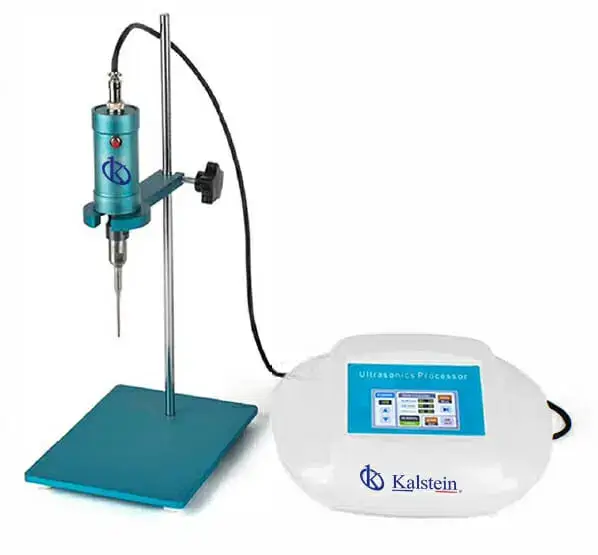
Interpreting Results and Reading Measurements with the YR05831 Ultrasonic Homogenizer
The YR05831 Ultrasonic Homogenizer Processor is a sophisticated instrument that employs ultrasonic technology to achieve the cavitation effect in liquids, making it invaluable in various laboratory applications. Its multifunctional capabilities allow it to emulsify, homogenize, and extract, catering to fields such as biochemistry, microbiology, and more. This article focuses on interpreting results and reading measurements effectively when utilizing the YR05831, ensuring optimal usage and reliable outcomes.
Understanding the Principle of Operation
The YR05831 relies on the principles of ultrasonics to generate high-frequency sound waves that produce cavitation bubbles in liquid media. These bubbles collapse violently, creating localized high temperatures and pressures, which facilitate the homogenization and disruption of cellular structures. This section will delve into the scientific fundamentals of cavitation, explaining the physical and chemical processes involved and their relevance to the applications of the YR05831.
Technical Specifications of the YR05831
| Specification | Value |
|---|---|
| Model | YR05831 |
| Operating Mode | Automatic, Manual |
| Power (W) | 5-400 |
| Frequency (KHz) | 19-25 |
| Capacity Handling (ml) | 0.5-300 |
| Ultrasonic Time (s/min) | 1s-99m-99h |
| Weight (kg) | 4.5 |
| Power Supply | 220V / 50Hz |
Interpreting Measurement Units and Normal Ranges
When operating the YR05831, users must be familiar with various measurement units and their normal ranges. For instance, ultrasonic power is typically measured in Watts (W), while frequency is expressed in Kilohertz (KHz). Understanding these units is crucial for evaluating the performance and efficacy of the homogenizer in various applications. In this section, we will provide detailed explanations of each measurement type and its significance in the context of the YR05831's operation.
Common Misinterpretations of Results
Inaccurate readings can arise from different factors, including operator error, equipment miscalibration, or misunderstandings of what the results represent. For example, confusing the ultrasonic power with the effective homogenization achieved can lead to misjudged process efficiency. This segment will explore common pitfalls in interpreting results and provide guidance on how to avoid these misinterpretations for more reliable data.
Best Practices for Accurate Measurements
To ensure accurate readings with the YR05831, certain best practices should be followed. These include proper setup and calibration of the device, understanding the influence of sample properties on results, and maintaining consistent operational conditions. This section will outline these best practices, emphasizing the importance of reproducibility and accuracy in laboratory settings.
Sector Adaptations: Using the YR05831 Across Different Applications
The YR05831 is versatile and can be utilized in various sectors, including clinical, industrial, food processing, and educational laboratories. Each sector has specific protocols and requirements that can influence how results are interpreted. This section will explore how the YR05831 is configured and used in these different sectors, complete with use cases that align with best practices tailored for each application.
Frequently Asked Questions
What types of samples can be processed with the YR05831 Ultrasonic Homogenizer?
The YR05831 can process a wide range of samples, including biological samples like cells and tissues, as well as materials in industrial applications. Knowledge of the sample type is essential for optimizing results.
How can I ensure consistent results when using the YR05831?
Consistency can be achieved by standardizing your procedure, including sample size, processing time, and maintaining environmental conditions. Regular calibration of the device is also crucial.
What are common signs of malfunction in the YR05831?
Common signs include inconsistent homogenization results, unusual noises during operation, and failure to power on. Addressing these symptoms promptly can avoid more significant issues.
Can I use the YR05831 for small-scale experiments?
Yes, the YR05831 is well-suited for small-scale experiments, offering precise control over processing parameters that can be scaled for larger applications as needed.
What is the recommended maintenance schedule for the YR05831?
Regular maintenance should include cleaning the device after use, checking the ultrasonic probe for wear, and performing calibration checks periodically to ensure accuracy.
If you need a detailed analysis or a tailored solution using the YR05831 Ultrasonic Homogenizer, feel free to request a quote on Kalstein Plus.
If you are looking for a fusion of innovation and quality, you have come to the right place. At Kalstein, we offer you the luxury of exploring our exclusive catalog of laboratory equipment. We manufacture every device to the highest standards of excellence. Our intuitive and seamless online purchasing channels are designed for your convenience, securing the most competitive prices. Hesitate no longer — we bring science to life, it is time to become part of our community.