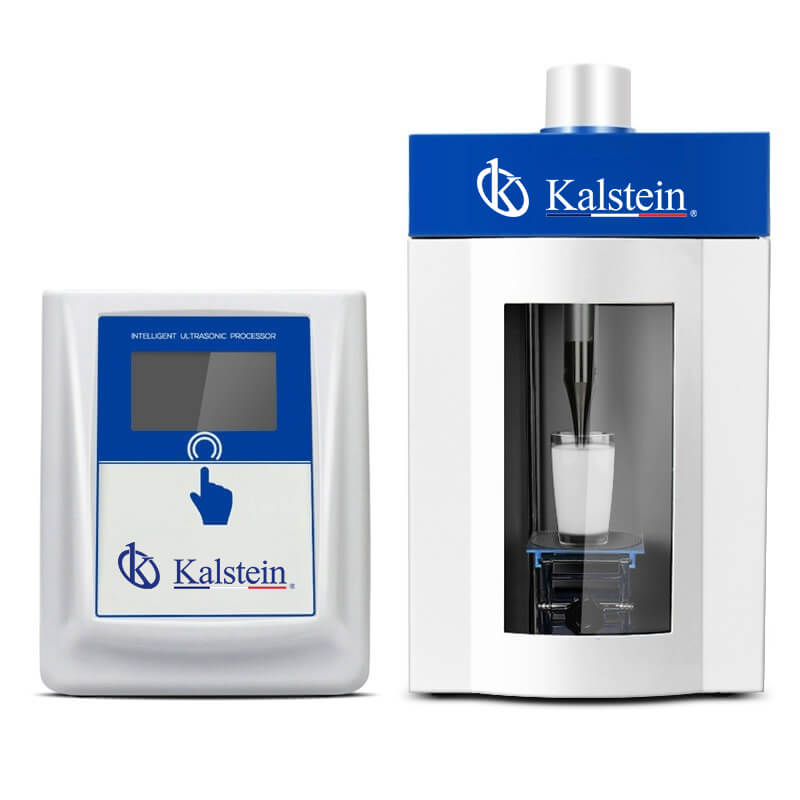
Interpreting Results and Reading Measurements with the YR05832 Ultrasonic Homogenizer
The YR05832 Ultrasonic Homogenizer is a powerful tool designed for liquid processing that employs ultrasonic waves to achieve effective homogenization. Understanding how to interpret the results it generates and accurately read its measurements is crucial for operators and researchers in various fields. This article delves into the essential aspects of measurement interpretation and provides practical guidance for users of the YR05832.
Understanding Ultrasonic Homogenization: The Science Behind YR05832
Ultrasonic homogenization relies on the principle of cavitation, where high-frequency sound waves create microscopic bubbles in a liquid. These bubbles implode violently, generating localized high pressures and temperatures that disrupt cellular structures and promote effective mixing. This process is fundamental in applications such as cell disruption, emulsification, and extraction.
The design of the YR05832 optimizes this cavitation effect through its adjustable amplitude settings and various probe sizes, allowing for tailored processing conditions. This flexibility is crucial for achieving desired outcomes, especially when working with diverse sample types.
Technical Specifications of the YR05832
| Model | Max Power (W) | Ultrasonic Frequency (KHz) | Included Probes (mm) | Power Supply (V) |
|---|---|---|---|---|
| YR05832 | 650-1800 | 20-25 | 6, 10, 15, 22, 25 | 220/110 |
Interpreting Measurement Outputs from the YR05832
The YR05832 features a user-friendly interface with a large TFT touch screen that displays real-time data during operation. Understanding how to interpret this data is vital for ensuring that the homogenization process meets the intended research or industrial objectives.
Key parameters to monitor include:
- Power Output: The variable power output can be adjusted from 0 to 900 watts. Users should interpret the power levels in relation to the sample size and desired homogenization effect.
- Ultrasonic Frequency: Operating between 20-25 KHz, the frequency affects the size of the cavitation bubbles and the efficiency of the process. Higher frequencies may yield finer emulsions, while lower frequencies may be more effective for cell lysis.
Common Misinterpretations and How to Avoid Them
Operators may misinterpret results if they are not familiar with the characteristics of the samples being processed. For example, observing a high power output without achieving desired results could indicate improper probe selection or sample viscosity issues. It is essential to correlate the displayed metrics with known standards for the specific application.
Another common mistake is neglecting to account for temperature changes during operation. The YR05832 includes a temperature indicator, and exceeding optimal temperature ranges can lead to sample degradation. Proper monitoring and adjustment are key.
Case Studies: Effective Use of YR05832 in Different Applications
Different sectors leverage the YR05832 for various applications, each requiring unique interpretations of results:
- Clinical Applications: In clinical labs, the YR05832 is used for cell disruption to extract DNA or proteins. Accurate interpretation of the yield and purity is critical for downstream applications.
- Food Industry: For emulsification, measuring the droplet size distribution is essential to ensure product consistency. Utilizing techniques like laser diffraction can help correlate the measurements directly with the homogenization process.
- Biotechnology: In biotechnological research, sample concentration post-homogenization must be correlated with the initial cell density to ensure reproducibility.
Frequently Asked Questions
What is the optimal power setting for different sample types in the YR05832?
The optimal power setting varies based on the sample type and desired outcomes. For cell lysis, higher power settings (around 80-100% output) may be required, while emulsification might be effectively achieved with lower settings (around 50-70% output).
How can users determine if the YR05832 is functioning correctly?
Regular calibration and validation checks are essential. Monitoring output consistency, power fluctuations, and temperature readings will aid in diagnosing operational issues. Error codes displayed on the screen can also provide insights into malfunctions.
What are the common troubleshooting steps for inconsistent readings?
Inconsistent readings can arise from sample viscosity, probe wear, or incorrect power settings. Users should check the probe for damage, verify the settings against a control sample, and adjust parameters accordingly.
How does temperature affect the results obtained from the YR05832?
Temperature can significantly influence the efficiency of cell disruption and emulsification processes. Elevated temperatures may lead to sample degradation, while low temperatures can hinder effective homogenization. It is crucial to monitor and control the temperature during operation.
What accessories are recommended for optimal performance of the YR05832?
Accessories such as specialized probes for different sample types, thermal jackets for temperature control, and calibration kits are recommended to enhance the performance and accuracy of the YR05832.
Can the YR05832 be used for nanoparticle dispersion, and how are results interpreted?
Yes, the YR05832 is effective for nanoparticle dispersion. Results can be interpreted by analyzing the size distribution through appropriate techniques like dynamic light scattering, ensuring that the desired nanoparticle size is achieved.
If you are looking for a fusion of innovation and quality, you have come to the right place. At Kalstein, we offer you the luxury of exploring our exclusive catalog of laboratory equipment. We manufacture every device to the highest standards of excellence. Our intuitive and seamless online purchasing channels are designed for your convenience, securing the most competitive prices. Hesitate no longer — we bring science to life, it is time to become part of our community.