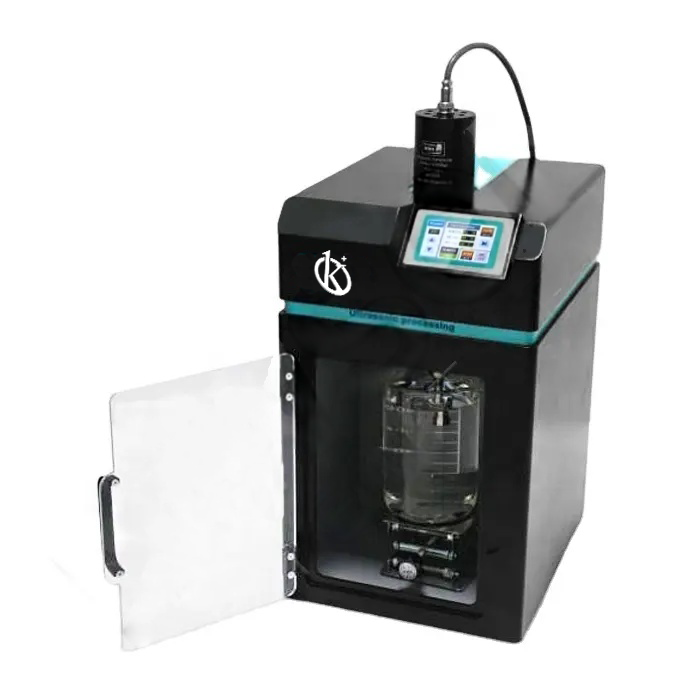
Interpreting Results and Reading Measurements with the YR05839 Ultrasonic Homogenizer
The YR05839 Ultrasonic Homogenizer is not just a piece of laboratory equipment; it represents a leap in liquid processing technology, allowing researchers to achieve unprecedented results in sample homogenization. Understanding how to interpret the results and read measurements accurately is essential for ensuring the reliability of outcomes, especially in sensitive experiments.
Understanding the YR05839 Ultrasonic Homogenizer
The YR05839 model uses ultrasonic waves to disperse and homogenize liquid samples efficiently. By emitting high-frequency sound waves, the equipment creates cavitation bubbles that collapse, generating powerful shock waves that break apart particles within the liquid. This process is particularly advantageous in applications requiring uniformity and consistency, such as in the life sciences and material chemistry.
Technical Specifications of YR05839
| Specification | Value |
|---|---|
| Model | YR05839 |
| Frequency Range | 19~25 KHz with automatic compensation |
| Ultrasonic Power | 950W |
| Processing Capacity | 100~3000ml |
| Timer | Adjustable from 1s to 99h |
| Control Mode | Digital with closed-loop feedback |
Interpreting Measurement Results
When using the YR05839, it is critical to understand how to read and interpret the measurements displayed on the device. The ultrasonicator provides real-time data regarding frequency, power output, temperature, and progress, which are crucial for evaluating the effectiveness of processing.
Measurements are often displayed in various units; for instance, power output may be indicated as a percentage (0-100%), while frequency is measured in kilohertz (kHz). Understanding these units and their implications helps researchers make informed decisions regarding adjustments and calibrations.
Common Misinterpretations of Results
Misreading data can lead to significant errors in experimental outcomes. Some common pitfalls include:
- Overlooking Error Codes: The YR05839 may generate error codes during operation, indicating issues such as overload or overheating. It’s essential to familiarize oneself with these codes to troubleshoot effectively.
- Ignoring Temperature Variations: The temperature of the sample can impact the ultrasonic process. Ignoring this factor might lead to misinterpretation of the results, especially regarding sample integrity and reaction efficiencies.
Worked Examples of Measurement Interpretation
Here are two practical examples illustrating how to interpret results from the YR05839:
- Example 1: A sample is processed at 25 kHz, with a power output of 80%. The resulting measurement reveals a uniform dispersion. This indicates that the applied conditions were optimal for the sample type.
- Example 2: If the same sample, when processed at 20 kHz, shows inconsistent measurements, this could suggest improper power settings or that the cavitation effects were insufficient for the sample viscosity.
Best Practices for Accurate Measurements
To ensure accurate interpretation of results when using the YR05839, adhere to the following best practices:
- Calibration: Regularly calibrate the device to ensure that measurements remain precise and reliable.
- Consistent Sample Preparation: Maintain consistent sample sizes and concentrations to allow for comparative analysis across experiments.
- Record Keeping: Document all parameters and conditions of experiments to assist in troubleshooting and future reference.
Frequently Asked Questions
What is the ideal frequency range for processing with the YR05839?
The YR05839 operates effectively within the frequency range of 19 to 25 kHz. It is engineered for optimal performance within this range, ensuring efficient cavitation and homogenization of samples.
How do I troubleshoot error codes on the YR05839?
To troubleshoot error codes, refer to the user manual, which provides explanations for each code. Common steps include checking for overload issues, ensuring proper temperature management, and verifying power settings.
What types of samples can be processed with the YR05839?
The YR05839 is suitable for a variety of liquid samples, including biological tissues, nanomaterials, and chemical solutions. Its versatility makes it a valuable tool in multiple laboratory settings.
How can I ensure consistent results when using the YR05839?
Consistent results can be achieved by standardizing sample preparation, maintaining uniform processing parameters, and conducting regular maintenance and calibration of the device.
What is the maximum processing capacity of the YR05839?
The YR05839 can process samples ranging from 100 to 3000ml, making it adaptable for both small-scale and larger applications.
Are there any specific maintenance requirements for the YR05839?
Routine maintenance includes cleaning the transducer, checking power connections, and ensuring the cooling system functions effectively to prevent overheating.
How does temperature affect measurements with the YR05839?
Temperature can significantly influence cavitation and sample integrity. High temperatures may lead to sample degradation, while low temperatures might not adequately facilitate the homogenization process.
If you are looking for a fusion of innovation and quality, you have come to the right place. At Kalstein, we offer you the luxury of exploring our exclusive catalog of laboratory equipment. We manufacture every device to the highest standards of excellence. Our intuitive and seamless online purchasing channels are designed for your convenience, securing the most competitive prices. Hesitate no longer — we bring science to life, it is time to become part of our community.