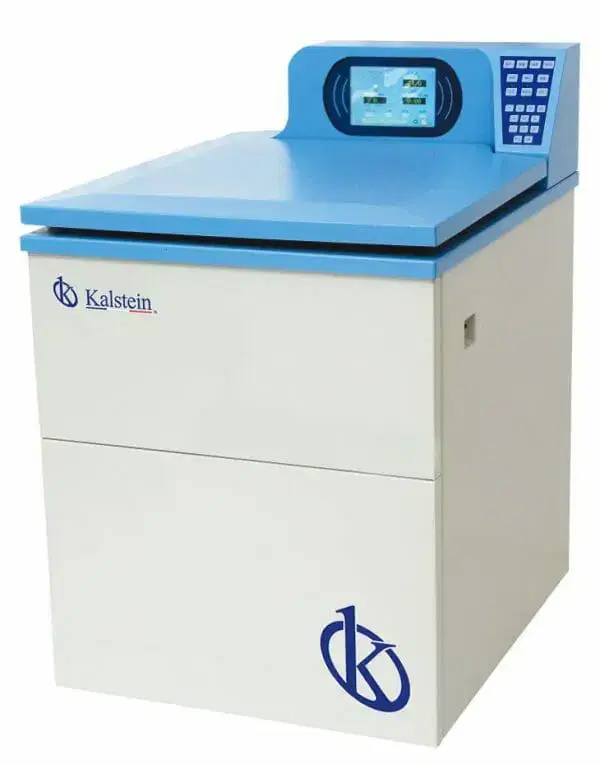
Interpreting Results and Measurement Readings with the YR0111-4-12 Centrifuge
The YR0111-4-12 centrifuge is a highly sophisticated device engineered to facilitate precise and effective sample processing in various laboratory environments. Understanding how to interpret the results and reading the measurements accurately is crucial for ensuring validity in your experiments. This article provides an in-depth exploration of measurement interpretation and result validation using the YR0111-4-12 centrifuge.
Technical Specifications of the YR0111-4-12
| Model | Brand | Category | Price (USD) | Gross Weight (kg) |
|---|---|---|---|---|
| YR0111-4-12 | Kalstein | Centrifuges | 1455.00 | 10 |
Understanding Measurement Units and Calibration
When working with the YR0111-4-12 centrifuge, it is essential to understand the key measurement units employed in your results. Commonly, centrifugation results are expressed in revolutions per minute (RPM) and relative centrifugal force (RCF), both of which are vital for the accurate assessment of sample separation.
The RCF unit is crucial for interpreting the centrifugal effect on samples, as it provides a clearer picture of the forces acting on your samples compared to RPM. Calibration procedures should be routinely followed, ensuring that your readings are accurate and reliable.
Reading Display Outputs and Printouts
The display on the YR0111-4-12 provides a wealth of information during operation. It is important to familiarize yourself with its layout and the data it presents. Key measurements such as RPM, time elapsed, and current RCF will be displayed throughout the centrifugation process.
Upon completion, the centrifuge may offer a printout detailing the cycle conditions and final measurements. Understanding how to read these outputs is crucial for interpreting the effectiveness of your centrifugation process and ensuring that the results meet your expectations.
Common Misinterpretations of Results
Laboratory professionals can sometimes misinterpret results due to a lack of understanding of the centrifuge’s operation or the principles behind the measurements. A common mistake is relying solely on RPM without considering the RCF. This can lead to incorrect conclusions about sample separation efficiency.
Another frequent misinterpretation involves confusing the time displayed with the total processing time required for optimal results. Always double-check your understanding of the output to avoid errors.
Worked Examples for Result Interpretation
For practical understanding, let’s consider a scenario where you have centrifuged a blood sample using the YR0111-4-12. If your display shows an RPM of 3000, this might translate to an RCF of 1500 g. Understanding that this force is sufficient to separate plasma from cells is critical for interpreting the results correctly.
In a case where the ideal RCF for plasma separation is 1000 g, you would need to adjust your RPM accordingly in subsequent experiments. Keeping a record of each run's conditions and results will help you fine-tune your procedures over time.
Frequently Asked Questions
What is the importance of RCF in result interpretation for the YR0111-4-12?
RCF is crucial as it indicates the actual force applied to the sample during centrifugation, providing a more accurate understanding of separation efficiency compared to RPM alone.
How can I ensure accurate calibration of the YR0111-4-12?
Regular calibration checks against known standards, and following the manufacturer's calibration protocols will help maintain accuracy in your measurement readings.
What should I do if the results are inconsistent with expected values?
Inconsistent results may be due to incorrect RPM, improper sample loading, or equipment malfunction. Verify calibration, review procedures, and consider re-running the samples.
How often should results be validated when using the YR0111-4-12?
Results should be validated with each use, particularly if the samples or protocols change, to ensure continued accuracy and reliability in readings.
Are there specific training requirements for interpreting results from the YR0111-4-12?
Yes, training on the operational principles of centrifugation and familiarity with the specific functions of the YR0111-4-12 will enhance interpretation accuracy.
What are the best practices for recording and analyzing results from the YR0111-4-12?
Best practices include maintaining a detailed log of parameters for each centrifugation run and using statistical methods to analyze variance in results over time.
If you are looking for a fusion of innovation and quality, you have come to the right place. At Kalstein, we offer you the luxury of exploring our exclusive catalog of laboratory equipment. We manufacture every device to the highest standards of excellence. Our intuitive and seamless online purchasing channels are designed for your convenience, securing the most competitive prices. Hesitate no longer — we bring science to life, it is time to become part of our community.