Understanding ISO/IEC Norms and Regulatory Compliance in Histopathology Labs
In the fast-evolving landscape of laboratory science, adherence to ISO/IEC standards is not merely a matter of compliance but a vital component of operational excellence in histopathology. As the demand for precise diagnostics increases, understanding the nuances of these regulations equips lab professionals with the tools needed to ensure quality, reliability, and efficiency. This article delves into the essential ISO/IEC norms that govern histopathology, the significance of compliance, and how various histopathology accessories and consumables play a crucial role in meeting these standards.
The Importance of ISO/IEC Standards in Histopathology
ISO/IEC standards are foundational documents that establish requirements for various processes within laboratories, ensuring that diagnostic results are consistent and reliable. In histopathology, standards such as ISO 17025 and ISO 15189 are particularly critical. These standards provide frameworks for laboratory management and testing processes, enhancing laboratory efficiency and accuracy.
By complying with these standards, histopathology labs can not only improve diagnostic accuracy but also enhance their credibility among peers and regulatory bodies. Compliance signifies a commitment to quality, which is essential in providing patient safety and meeting healthcare regulations.
Key ISO/IEC Norms Relevant to Histopathology
Several ISO/IEC standards are particularly relevant in the context of histopathology:
- ISO 17025: This standard outlines the general requirements for the competence of testing and calibration laboratories, emphasizing quality management and technical proficiency.
- ISO 15189: It specifies requirements for quality and competence in medical laboratories, focusing on the management system and the technical processes that lead to reliable results.
- IEC 61010: This standard pertains to the safety requirements for electrical equipment used in laboratories, ensuring operator protection in the context of histopathology.
How Histopathology Consumables Support Compliance
Consumables such as microtome blades, embedding cassettes, and paraffin blocks are fundamental to the histopathology workflow. Selecting the right consumables not only enhances operational efficiency but also supports compliance with ISO/IEC norms:
Microtome Blades
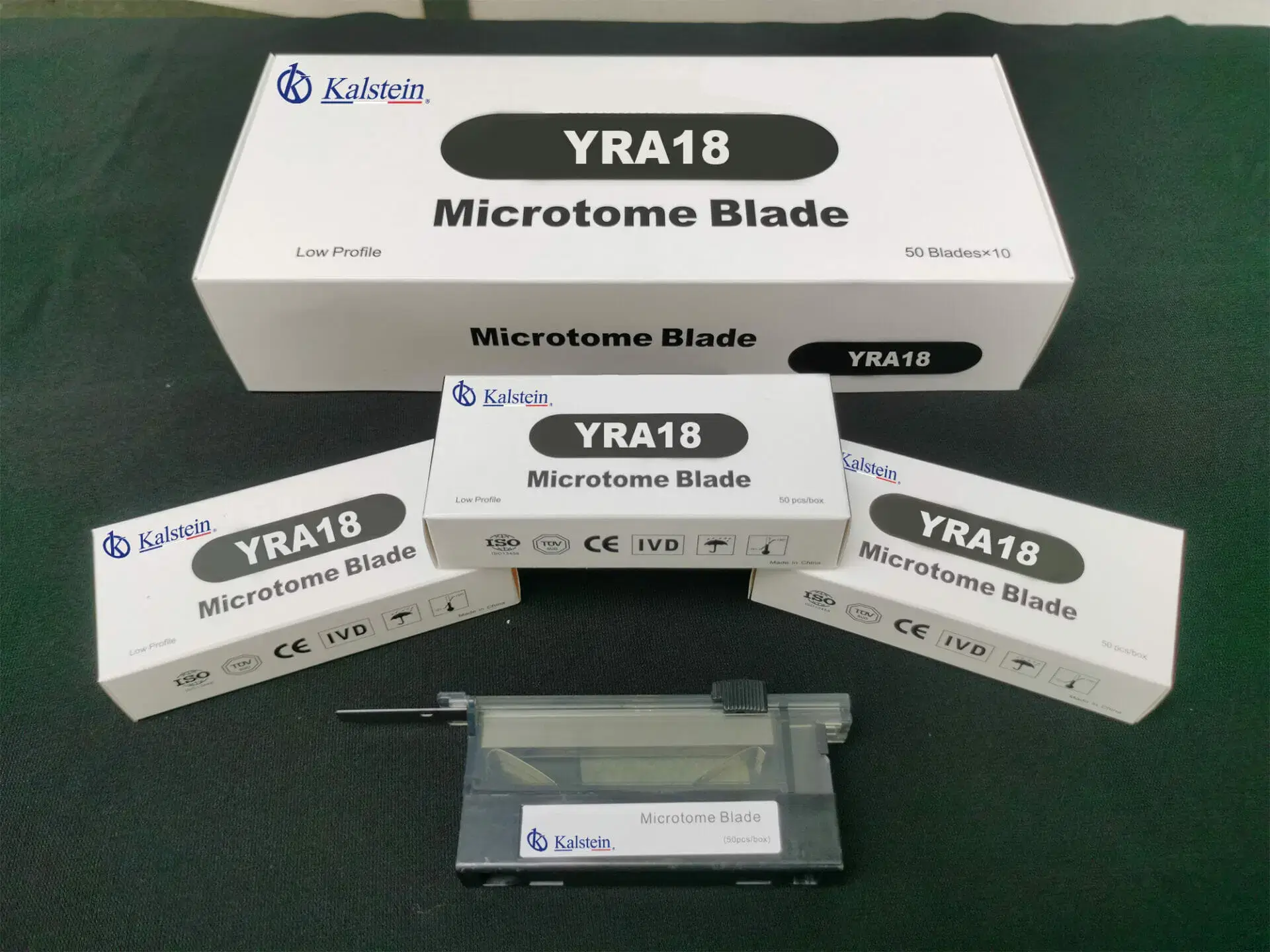
The Disposable microtome blade (Low profile) YRA18-1 and Disposable microtome blade (High profile) YRA19-1 are designed to produce high-quality sections with minimal errors. These blades enhance the precision of tissue slicing, which is critical for ensuring diagnostic accuracy as mandated by ISO 15189.
Embedding Cassettes
The Tissue embedding cassette YRA20-1 is indispensable for proper tissue sample preparation. This product ensures that samples are adequately preserved, allowing for accurate histopathological analysis that aligns with the standards of ISO 17025.
Paraffin Products
Both the Paraffin block YRA33-2 and Granular paraffin YRA33-3 provide essential medium for embedding tissue samples, facilitating the preservation of cellular structures. Compliance with regulatory requirements necessitates the use of high-quality paraffin to ensure that samples remain intact for reliable diagnostics.
Comparison of Available Models
| Model | Description | Quantity per Box | Best Use Case |
|---|---|---|---|
| YRA18-1 | Disposable microtome blade (Low profile) | 250 boxes | Optimal for routine tissue processing. |
| YRA19-1 | Disposable microtome blade (High profile) | 40 boxes | Best for precision cutting in delicate samples. |
| YRA20-1 | Tissue embedding cassette | 9000 pieces | Essential for sample preservation. |
| YRA21-1 | Plastic cassette with plastic cover | 4000 pieces | Reliable for long-term storage of samples. |
| YRA33-2 | Paraffin block | 10kgs (20 boxes)/Carton | Best for embedding larger samples. |
| YRA33-3 | Granular paraffin | 10 KG (10 bags)/Carton | Used for embedding and sections. |
Common Mistakes and How to Avoid Them
When navigating ISO/IEC compliance, several common pitfalls can occur:
- Inadequate Training: Ensure all laboratory staff are trained in ISO/IEC standards. Continuous education minimizes errors and enhances quality control.
- Poor Record Keeping: Maintain accurate documentation of all lab processes and results. This is critical for audits and demonstrating compliance.
- Neglecting Equipment Calibration: Regularly calibrate equipment used in histopathology to meet the stipulations of ISO 17025.
Frequently Asked Questions
How do microtome blades contribute to ISO 17025 compliance in histopathology labs?
The use of high-quality microtome blades like the Disposable microtome blade (Low profile) YRA18-1 ensures that tissue sections are cut accurately, meeting the precision required for ISO 17025 compliance.
What are the key elements to ensure compliance with ISO 15189 in histopathology?
Ensuring compliance with ISO 15189 involves implementing a quality management system and utilizing reliable consumables like the Tissue embedding cassette YRA20-1 to maintain consistency in testing processes.
Which histopathology consumables help reduce errors in diagnostic results?
Consumables like the Disposable microtome blade (High profile) YRA19-1 are designed to minimize errors in sectioning, thereby enhancing the reliability of diagnostic results as required by ISO 15189.
How often should laboratory equipment be calibrated for compliance?
Laboratory equipment should be calibrated regularly, typically every 6-12 months, to comply with ISO 17025 standards. This practice ensures ongoing accuracy and reliability in histological assessments.
What role do embedding cassettes play in achieving compliance with laboratory standards?
Embedding cassettes like the Tissue embedding cassette YRA20-1 are critical for preserving tissue morphology, which is essential for compliance with ISO 15189 and ensuring accurate histopathological diagnostics.
How can histopathology labs avoid common compliance mistakes?
Histopathology labs can avoid mistakes by ensuring thorough training for staff, maintaining detailed records, and regularly calibrating equipment, which are all crucial for compliance with ISO/IEC standards.
What are the benefits of using granular paraffin in histopathology?
The Granular paraffin YRA33-3 is beneficial for achieving optimal embedding consistency, which is vital for compliance with diagnostic standards set forth in ISO 15189.
How does adherence to ISO standards impact lab efficiency?
Adhering to ISO standards enhances lab efficiency by streamlining processes, improving accuracy, and decreasing error rates, which is fundamental in the delivery of quality diagnostics in histopathology.
If you are seeking advanced solutions that align with ISO/IEC standards for your histopathology lab, consider reaching out to request a quote on Kalstein Plus.
If you are looking for a fusion of innovation and quality, you have come to the right place. At Kalstein, we offer you the luxury of exploring our exclusive catalog of laboratory equipment. We manufacture every device to the highest standards of excellence. Our intuitive and seamless online purchasing channels are designed for your convenience, securing the most competitive prices. Hesitate no longer — we bring science to life, it is time to become part of our community.