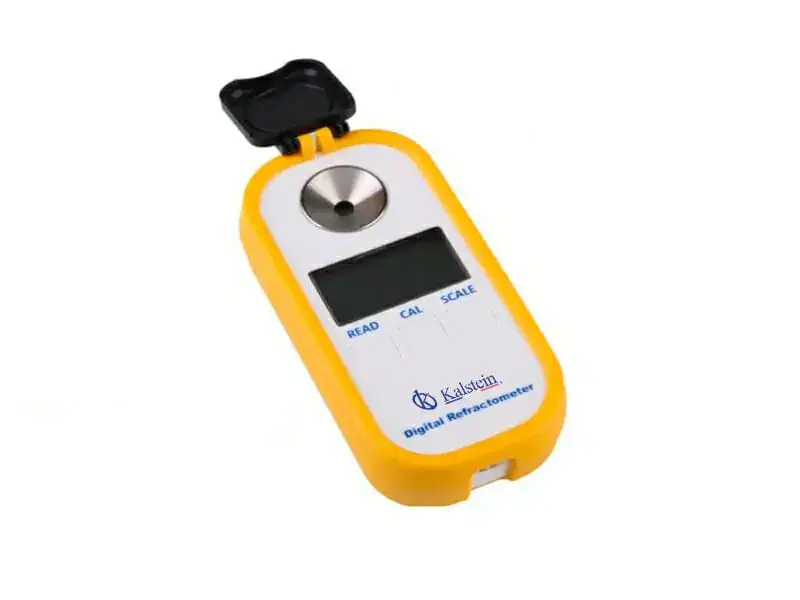
Maximize ROI with Digital Salinity Refractometers: A Comprehensive Cost-Benefit Analysis
In today’s competitive laboratory environment, understanding the return on investment (ROI) and performing a thorough cost-benefit analysis are vital for making informed decisions about equipment purchases. Digital salinity refractometers are powerful tools that not only enhance the accuracy of salinity measurements but also offer significant cost savings over time. This article will explore the financial implications and operational benefits of various models of digital salinity refractometers, helping laboratory professionals make a data-driven decision.
Digital Salinity Refractometers: Understanding the Financial Impact
Digital salinity refractometers are essential instruments used to measure the concentration of salt in various solutions, including seawater and chemical mixtures. Their accuracy and efficiency can directly influence laboratory results and operational costs. By investing in high-quality refractometers, laboratories can improve their data integrity while minimizing expenses related to reagent waste and equipment calibration.
Investment Considerations for Digital Salinity Refractometers
When considering an investment in digital salinity refractometers, it is essential to assess the initial costs (CAPEX), ongoing operational costs (OPEX), and the potential for savings through efficiency improvements. Digital models often come with features like automatic temperature compensation (ATC), which can reduce errors and the need for manual adjustments, saving both time and financial resources.
Comparison of Available Models
| Model | Measurement Range | Min. Division | Accuracy | ATC | Price (USD) |
|---|---|---|---|---|---|
| YR05953 | 0.0–28.0% | 0.10% | ±0.1% | Yes (0-40°C) | 76.00 |
| YR05954 | 0–280‰ | 1‰ | ±1‰ | Yes (0-40°C) | 76.00 |
| YR05955 | 1.000-1.217 | 0.001 | ±0.002 | Yes (0-40°C) | 76.00 |
| YR05956 | 1.3330–1.3900nD | 0.0001nD | ±0.0003nD | Yes (0-40°C) | 76.00 |
| YR05957 | 0—100‰ | 1‰ | ±2‰ | Yes (0-40°C) | 76.00 |
| YR05958 | 0–57‰ | 1‰ | ±2‰ | Yes (0-40°C) | 76.00 |
| YR05959 | 1.000-1.070 | 0.001 | ±0.002 | Yes (0-40°C) | 76.00 |
| YR05960 | 1.3330–1.3530nD | 0.0001nD | ±0.0003nD | Yes (0-40°C) | 76.00 |
Understanding Costs: CAPEX vs OPEX
Capital expenditures (CAPEX) refer to the initial investment in digital salinity refractometers, while operational expenditures (OPEX) involve costs incurred during their operational lifespan. Investing in modern refractometers like the YR05954 can significantly lower OPEX by reducing the need for consumables and manual calibration. A well-chosen instrument can deliver a positive cash flow by minimizing both CAPEX and OPEX.
Cost-Benefit Analysis: Quantitative Breakdown
To facilitate decision-making, laboratories should perform a quantitative analysis that compares the costs associated with different models. Consider producing a matrix that outlines initial purchase costs, estimated lifespan, maintenance costs, and the anticipated savings from improved measurement accuracy. This analysis can dramatically illustrate potential savings and returns from specific refractometer models.
Common Mistakes and How to Avoid Them
One common mistake laboratory professionals make is underestimating the long-term costs associated with lower-quality refractometers. Opting for the cheapest model may lead to higher maintenance costs and inaccurate results. Always consider the total cost of ownership, including potential savings from enhanced accuracy and reduced operational costs over time.
Frequently Asked Questions
What is the expected ROI from using digital salinity refractometers in my lab?
The expected ROI from using digital salinity refractometers can vary but is typically favorable. For example, models like YR05953 offer high accuracy with minimal operating costs, allowing laboratories to save on consumables. A detailed analysis of your specific usage will provide a clearer financial picture.
How do I determine the best salinity refractometer model for my laboratory needs?
To determine the best model for your needs, assess the measurement range and accuracy required for your specific applications. Models like YR05954, which measures up to 280‰, are suitable for saline solutions, while YR05955 offers additional density measurements, expanding usability in diverse applications.
What factors should be included in a cost-benefit analysis for salinity refractometers?
Include initial purchase costs, maintenance fees, calibration requirements, and the potential for operational savings in your cost-benefit analysis. For instance, the YR05956 model, known for its precision, may lead to significant savings in re-testing and material waste.
How can I ensure my digital salinity refractometer remains compliant with laboratory standards?
To maintain compliance, regularly calibrate your refractometer according to the manufacturer's specifications and keep detailed records of all measurements. Models such as YR05957 come with built-in ATC features that help maintain measurement accuracy, which is essential for compliance.
What are the maintenance costs associated with different salinity refractometer models?
Maintenance costs can vary based on model quality and usage frequency. Generally, higher-end models like YR05958 require less frequent calibration and have lower maintenance costs over time due to their durable construction and reliability.
Which digital salinity refractometer offers the best accuracy for my laboratory?
For the best accuracy, the YR05956 model is recommended as it offers an accuracy of ±0.0003nD, making it suitable for high-precision applications. This level of accuracy can significantly impact the reliability of your laboratory results.
How do automatic temperature compensation features benefit refractometer use?
Automatic temperature compensation (ATC) features, present in models like YR05953 and YR05954, allow for accurate readings without manual adjustments, ensuring that temperature variations do not skew results. This feature is crucial for maintaining the integrity of your measurements.
What should I consider when budgeting for a digital salinity refractometer?
When budgeting, consider both the initial purchase price and the long-term operational costs associated with calibration, maintenance, and potential repairs. The YR05955 model, for example, provides excellent value over time with its robust design and accuracy, leading to lower total cost of ownership.
If you are looking for a fusion of innovation and quality, you have come to the right place. At Kalstein, we offer you the luxury of exploring our exclusive catalog of laboratory equipment. We manufacture every device to the highest standards of excellence. Our intuitive and seamless online purchasing channels are designed for your convenience, securing the most competitive prices. Hesitate no longer — we bring science to life, it is time to become part of our community.