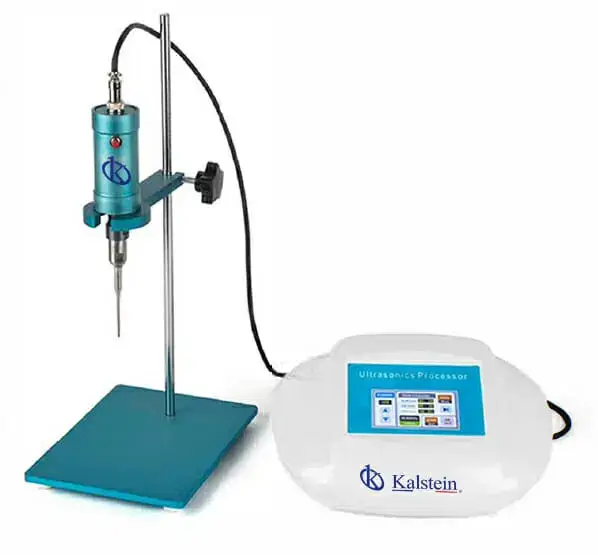
Maximizing ROI and Cost-Benefit Analysis for Ultrasonic Homogenizers
In the rapidly evolving landscape of laboratory technology, ultrasonic homogenizers have emerged as essential tools for a variety of applications, including cell disruption, emulsification, and extraction. This article delves into the crucial aspects of return on investment (ROI) and cost-benefit analysis specifically tailored for ultrasonic homogenizers. By meticulously evaluating the capabilities of different models, professionals can make informed decisions that align with their laboratory's financial and operational goals.
Understanding ROI in Ultrasonic Homogenizers
Return on investment is a critical metric that quantifies the profitability of capital expenditures in laboratory settings. In the context of ultrasonic homogenizers, ROI can be influenced by multiple factors including initial costs, operational efficiency, and the longevity of the equipment. By analyzing these elements, laboratory managers can determine the best model that not only meets their operational needs but also maximizes financial returns.
Key Factors Influencing ROI
When considering the ROI of ultrasonic homogenizers, several key factors must be analyzed. These include the initial purchase price, maintenance costs, energy consumption, and the versatility of the unit in supporting diverse applications. Each model may offer unique benefits that can significantly impact overall costs and revenue.
Operational Efficiency and Cost Savings
Operational efficiency is a cornerstone of cost savings in any laboratory. Ultrasonic homogenizers can streamline processes such as emulsification and cell lysis, reducing the time required for sample preparation. This can lead to increased throughput and ultimately, lower costs per test. For instance, laboratories that frequently conduct cell disruption may find that investing in a higher-wattage model like the YR05831, with a maximum power of 400W, enhances processing speed and efficiency.
Comparison of Available Models
| Model | Initial Cost (USD) | Max Power (W) | Recommended Scenario | Cost per Test (USD) |
|---|---|---|---|---|
| YR05829 | 659.00 | 150 | Standard laboratory use | 1.50 |
| YR05830 | 659.00 | 250 | Medium throughput labs | 1.30 |
| YR05831 | 699.00 | 400 | High throughput applications | 1.10 |
| YR05831-op1 | 149.00 | 150 | Low budget options | 2.00 |
| YR05831-op2 | 95.00 | 150 | Basic homogenization tasks | 2.10 |
| YR05832 | 1050.00 | 650 | Advanced applications | 0.90 |
Common Mistakes and How to Avoid Them
Laboratory professionals often make mistakes in assessing the ROI of ultrasonic homogenizers. One common pitfall is neglecting to consider long-term operational costs alongside initial purchase prices. Additionally, failing to match the homogenizer's capabilities with the laboratory's specific needs can lead to underutilization or over-spending on unnecessary features. To avoid these pitfalls, thorough research and analysis of each model's specifications and operational costs are essential.
Cost-Benefit Analysis: Evaluating Alternatives
Conducting a cost-benefit analysis can provide a comprehensive view of the potential returns from investing in ultrasonic homogenizers. Factors to consider include labor costs saved due to automation, reduced reagent usage, and improved sample quality. High-powered models like the YR05831 can offer significant improvements in these areas, demonstrating a favorable cost-benefit ratio compared to low-powered alternatives.
Exploring Energy Consumption and Sustainability
As laboratories become more focused on sustainability, evaluating energy consumption is essential. Ultrasonic homogenizers differ in their energy efficiency, which directly impacts operational costs. Models with higher wattage may consume more energy but can also complete tasks more quickly, thus saving time and labor costs. It is crucial to balance energy consumption with performance needs.
Frequently Asked Questions
What should I consider for ROI when purchasing an ultrasonic homogenizer?
When considering ROI, evaluate the initial investment, operating costs, and the expected throughput from models like YR05831. Analyze how frequently the device will be used and its versatility across various applications, as this will influence your cost per test and overall profitability.
How does the power rating affect the cost-benefit of ultrasonic homogenizers?
The power rating significantly affects the efficiency and throughput of ultrasonic homogenizers. For example, the YR05831 with a power rating of 400W is apt for high throughput applications, which can lower the cost per test considerably compared to lower-wattage models like YR05829.
What energy consumption should I expect from ultrasonic homogenizers?
Energy consumption varies by model. For instance, the YR05832 operates at a maximum power of 650W. While it may consume more energy, it also offers enhanced processing capabilities, which can lead to a better return on investment through increased productivity.
Which ultrasonic homogenizer is best for high-throughput laboratories?
The YR05831 is ideal for high-throughput laboratories due to its maximum power of 400W and efficient processing capabilities. Its design allows for rapid sample preparation, thus increasing overall productivity and lowering costs over time.
How can I calculate the cost per test for ultrasonic homogenizers?
To calculate the cost per test, divide the total operational costs, including consumables and labor, by the number of tests performed. For instance, if using the YR05830, with an initial cost of $659, if it completes 500 tests efficiently, the cost per test would be roughly $1.30.
What are the maintenance costs for ultrasonic homogenizers?
Maintenance costs for ultrasonic homogenizers can vary, but they typically include routine cleaning, calibration, and potential replacement of parts. Budgeting for at least 10% of the initial cost annually is advisable for models like YR05831.
How does the versatility of ultrasonic homogenizers impact ROI?
The versatility of ultrasonic homogenizers, such as the YR05832's multi-use capabilities, directly affects ROI by allowing laboratories to perform multiple applications without needing additional equipment, thus saving costs and increasing efficiency.
What factors should I analyze for a comprehensive cost-benefit analysis?
Factors to analyze include initial cost, operational efficiency, labor savings, reagent use, and equipment longevity. Evaluating these factors helps to build a clearer picture of potential savings and productivity gains from models like YR05831.
If you are looking for a fusion of innovation and quality, you have come to the right place. At Kalstein, we offer you the luxury of exploring our exclusive catalog of laboratory equipment. We manufacture every device to the highest standards of excellence. Our intuitive and seamless online purchasing channels are designed for your convenience, securing the most competitive prices. Hesitate no longer — we bring science to life, it is time to become part of our community.