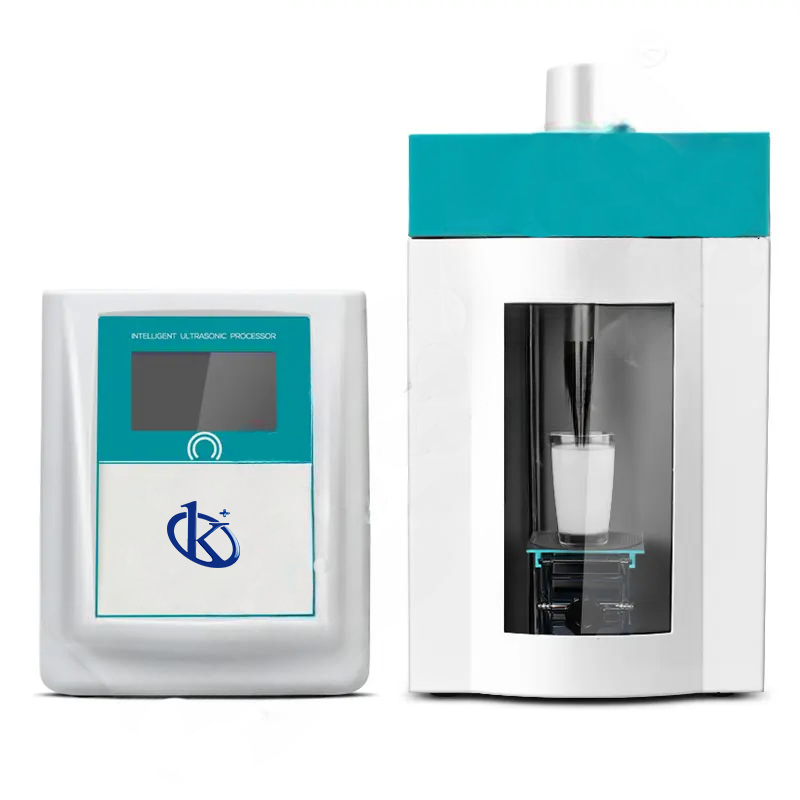
Maximizing ROI and Cost-Benefit Analysis for Ultrasonic Homogenizers in Laboratories
In modern laboratories, the focus on maximizing return on investment (ROI) and conducting thorough cost-benefit analyses is paramount. Ultrasonic homogenizers play a critical role in various applications, including sample preparation and material processing. This article will delve into the financial aspects of investing in ultrasonic homogenizers, exploring how they can enhance laboratory efficiency and productivity while providing significant cost savings.
Understanding the Importance of ROI in Laboratory Equipment
The concept of ROI is essential for laboratory managers and decision-makers as it helps in evaluating the profitability of investments. ROI can be defined as a performance measure used to evaluate the efficiency of an investment. In the context of laboratory equipment like ultrasonic homogenizers, understanding the ROI involves analyzing capital expenditures (CAPEX), operational expenditures (OPEX), and the overall impact on laboratory productivity.
Ultrasonic homogenizers can facilitate quicker sample processing, higher throughput, and improved reproducibility, which can lead to significant cost savings over time. By evaluating the ROI of ultrasonic homogenizers, labs can make informed decisions that align with their operational objectives and budget constraints.
Key Factors Influencing ROI for Ultrasonic Homogenizers
Several factors can influence the ROI of ultrasonic homogenizers in laboratory settings. These include:
- Initial Investment: The purchase price of the equipment impacts the ROI. Models such as the YR05015, priced at $756, versus the YR05020 at $2058, show a significant variance in upfront costs.
- Operational Costs: The cost of consumables, maintenance, and labor also plays a role in calculating the overall cost of ownership. Efficient models minimize these costs over time.
- Throughput and Efficiency: Higher throughput rates can lead to increased productivity, making it essential to choose models that offer the best performance in line with laboratory needs.
- Longevity and Reliability: Investing in durable equipment can enhance ROI by reducing replacement and repair costs.
Conducting a Cost-Benefit Analysis of Ultrasonic Homogenizers
A cost-benefit analysis (CBA) is a systematic approach for calculating and comparing the benefits and costs of equipment. When conducting a CBA for ultrasonic homogenizers, it is essential to consider both tangible and intangible factors:
Tangible Benefits
These include direct financial gains from increased throughput, reduced time spent on sample preparation, and lower costs associated with consumables. For instance, the Ultrasonic homogenizer YR05017, which costs $1050, may reduce processing time significantly compared to less efficient models.
Intangible Benefits
These may involve improved accuracy in results, better reproducibility of experiments, and enhanced laboratory reputation. Such benefits can contribute to long-term financial gains through increased grants and funding opportunities.
Comparison of Available Models
| Model | CAPEX (USD) | Power (W) | Mixing Capacity (ml) | Best Application |
|---|---|---|---|---|
| YR05015 | 756.00 | 150 | 150 | Small sample preparations |
| YR05016 | 882.00 | 250 | 300 | Medium sample preparations |
| YR05017 | 1050.00 | 650 | 500 | Large sample homogenization |
| YR05018 | 1281.00 | 900 | 600 | Advanced applications |
| YR05019 | 1785.00 | 1200 | 1000 | High-throughput labs |
| YR05020 | 2058.00 | 1800 | 1200 | Industrial-scale applications |
Common Mistakes and How to Avoid Them
When investing in ultrasonic homogenizers, laboratories may encounter several common pitfalls that can affect ROI and overall performance. Here are some mistakes to watch out for:
- Underestimating Initial Costs: Make sure to account for all associated costs beyond the purchase price, including installation and training.
- Failure to Assess Operational Needs: Choose models that align with your laboratory's specific applications and throughput requirements. For instance, the YR05016 is ideal for medium samples but may not suffice for high-volume needs.
- Ineffective Training: Ensure staff members are properly trained to utilize the equipment effectively, as improper use can lead to suboptimal results.
- Neglecting Maintenance: Establish a regular maintenance schedule to prolong equipment life and maintain performance.
Frequently Asked Questions
What factors should I consider when evaluating ROI for ultrasonic homogenizers?
When evaluating ROI for ultrasonic homogenizers, consider initial investment costs, operating expenses, throughput efficiency, and maintenance needs. For instance, the YR05020, while more expensive at $2058, can provide higher throughput and reliability, impacting long-term ROI positively.
How do operational costs affect the overall cost-benefit analysis for ultrasonic homogenizers?
Operational costs, including consumables and maintenance, significantly impact the cost-benefit analysis. Choosing a more efficient model like the YR05018 can reduce these costs over time, leading to better overall financial performance for the laboratory.
What are the best applications for each model of ultrasonic homogenizer?
Different models suit various applications; for example, the YR05015 is ideal for small sample preparations, while the YR05019 excels in high-throughput settings, processing larger volumes efficiently.
How can ultrasonic homogenizers improve laboratory efficiency and productivity?
Ultrasonic homogenizers streamline sample processing, reduce preparation time, and enhance reproducibility. For instance, the YR05017, with its robust power output, can significantly cut down processing times, thereby increasing lab throughput.
What is the importance of durability in ultrasonic homogenizers for ROI maximization?
Durability affects long-term ROI as it reduces replacement and repair costs. Investing in reliable models, like the YR05020, ensures consistent performance and lower total cost of ownership over time.
Which ultrasonic homogenizer model is recommended for high-volume laboratories?
The YR05020, with its high power of 1800W and mixing capacity of 1200ml, is recommended for high-volume laboratories, ensuring efficient and effective processing of large sample sizes.
How important is staff training for the effective use of ultrasonic homogenizers?
Proper staff training is crucial for maximizing the equipment's potential. Without it, operators may misuse the ultrasonic homogenizers, leading to poor results and wasted resources, negatively impacting ROI.
How can I ensure effective maintenance of ultrasonic homogenizers?
Establishing a maintenance schedule is key. Regular checks and servicing of models like the YR05016 will prolong their lifespan and maintain optimal performance, contributing to higher ROI.
If you are looking for a fusion of innovation and quality, you have come to the right place. At Kalstein, we offer you the luxury of exploring our exclusive catalog of laboratory equipment. We manufacture every device to the highest standards of excellence. Our intuitive and seamless online purchasing channels are designed for your convenience, securing the most competitive prices. Hesitate no longer — we bring science to life, it is time to become part of our community.