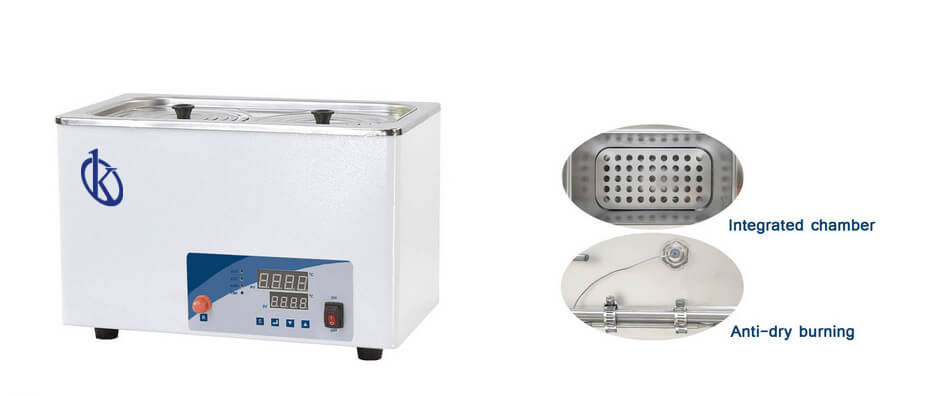
Maximizing ROI and Cost-Benefit Analysis for Water Baths in Laboratories
In the world of laboratory operations, water baths are essential tools that facilitate controlled heating processes for various applications. However, understanding the financial implications and cost-effectiveness of these devices is paramount for laboratory managers. This article will delve into the return on investment (ROI) and cost-benefit analysis of water baths, focusing on key models, operational efficiencies, and strategic decisions. We'll explore multiple water bath models available on the market, providing laboratory professionals with practical insights to optimize their investments.
Understanding ROI in Laboratory Equipment
Return on investment (ROI) is a critical metric that evaluates the profitability of an investment relative to its cost. In laboratory contexts, particularly with water baths, ROI calculations take into account the initial capital expenditure (CAPEX), ongoing operational expenses (OPEX), and the resultant benefits gained from increased efficiency, productivity, and compliance. A well-structured ROI analysis can guide laboratories in making informed purchasing decisions.
Cost-Benefit Analysis Framework for Water Baths
Conducting a cost-benefit analysis (CBA) involves comparing the costs associated with owning and operating water baths against the benefits they provide. Key components of a CBA for water baths include:
- Initial Costs: The purchase price of the water bath and installation fees.
- Operational Costs: Daily maintenance, energy consumption, and consumables.
- Benefits: Improved workflow efficiency, enhanced reproducibility of results, and compliance with standards.
Key Models of Water Baths and Their Cost Implications
Examining various models of water baths helps in understanding their unique features and how they contribute to overall ROI and CBA. Here, we will analyze the following models:
- Water Bath YR05073
- Water Bath YR05074
- Water Bath Shaker YR030L
- Cooling and Heating Circulator Pump YR05001
- Cooling and Heating Circulator Pump YR05002
- Cooling and Heating Circulator Pump YR05003
Comparison of Available Models
| Model | CAPEX (USD) | Cost per Test | Payback Period (Months) | Recommended Scenario |
|---|---|---|---|---|
| YR05073 | 67.00 | Depends on usage | Varies based on throughput | Basic laboratory heating tasks |
| YR05074 | 80.00 | Depends on usage | Varies based on throughput | Small to medium labs |
| YR030L | 602.00 | Depends on usage | Varies based on throughput | Advanced heating with agitation |
| YR05001 | 1974.00 | Depends on usage | Varies based on throughput | Reactor cooling applications |
| YR05002 | 2646.00 | Depends on usage | Varies based on throughput | High-capacity cooling |
| YR05003 | 2982.00 | Depends on usage | Varies based on throughput | Extensive cooling applications |
Common Mistakes and How to Avoid Them
Laboratories often make several common mistakes regarding the procurement and utilization of water baths. Avoiding these pitfalls is essential for maximizing ROI and achieving operational efficiency:
- Neglecting Total Cost of Ownership: It's crucial to consider not just the upfront costs but also ongoing maintenance and operational costs.
- Overlooking Compliance Needs: Ensure that the models selected meet regulatory standards to avoid costly rework and compliance issues.
- Insufficient Training: Properly train staff to operate water baths efficiently, minimizing errors and maximizing throughput.
Optimizing Energy Consumption in Water Baths
Energy consumption is a significant factor in the operational costs of water baths. Here are some strategies to optimize energy use:
- Choose Efficient Models: Selecting models with energy-efficient designs can reduce electricity costs.
- Regular Maintenance: Keep equipment well-maintained to ensure optimal operation and energy efficiency.
- Temperature Settings: Adjust temperature settings based on the specific needs of experiments to avoid unnecessary energy expenditure.
Enhancing Workflow Efficiency with Water Baths
Integrating water baths into laboratory workflow can significantly enhance productivity. Here’s how:
- Preheating Techniques: Preheat water baths to reduce wait times for experiments.
- Batch Processing: Use water baths for batch processing of samples to improve efficiency in high-throughput scenarios.
- Automation: Consider automation add-ons that streamline processes and reduce human error.
Frequently Asked Questions
What is the ROI of using a water bath like YR05073 in my laboratory?
The ROI of a water bath like YR05073 can vary based on usage; however, with an initial cost of $67.00, its efficient operation can lead to substantial savings on energy and time, particularly in basic laboratory tasks.
How do I calculate cost per test for YR030L water bath shaker?
To calculate the cost per test for the YR030L water bath shaker, consider all operational expenses, including energy and maintenance, divided by the number of tests conducted over a specific period.
Which water bath model offers the best energy efficiency for cooling applications?
The YR05001 model is designed for precision in cooling applications, with effective energy management features that reduce overall consumption during laboratory operations.
How can the YR05074 water bath help comply with ISO standards?
The YR05074 water bath meets various ISO standards by providing stable temperature control, essential for experiments requiring precise thermal conditions and compliance documentation.
What is the expected payback period for a high-end circulator pump like YR05003?
The payback period for the YR05003 circulator pump varies but can be optimized with higher throughput and reduced operational costs, generally providing returns within a few months when utilized efficiently.
How does regular maintenance impact the ROI of water baths?
Regular maintenance ensures that water baths like the YR05074 operate at peak efficiency, thereby reducing downtime and repair costs, which positively impacts the overall ROI.
What are the benefits of using a water bath shaker in biochemistry labs?
Using a water bath shaker, such as the YR030L, allows for precise temperature control and agitation, enhancing biochemical reactions and results consistency, thus improving the lab's overall productivity.
How often should I perform energy audits on my water baths?
Conducting energy audits every six months is advisable to assess the efficiency of models like the YR05001, ensuring they operate within optimal energy consumption parameters.
If you are looking for a fusion of innovation and quality, you have come to the right place. At Kalstein, we offer you the luxury of exploring our exclusive catalog of laboratory equipment. We manufacture every device to the highest standards of excellence. Our intuitive and seamless online purchasing channels are designed for your convenience, securing the most competitive prices. Hesitate no longer — we bring science to life, it is time to become part of our community.