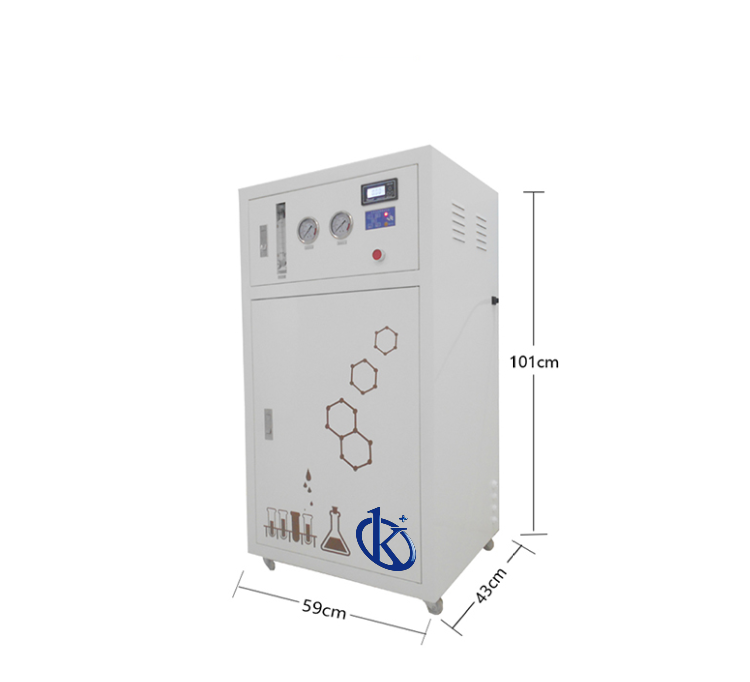
Understanding Measurements and Results Interpretation with the YR59-1 Water Purification System
The YR59-1 Water Purification System is engineered to deliver high-quality purified water essential for various laboratory applications. This article focuses on the critical task of interpreting measurements and results from the YR59-1, which is vital for ensuring the accuracy and reliability of the water purification process.
Technical Specifications of the YR59-1
| Model | YR59 | YR59-1 (current) |
|---|---|---|
| Particles | (≤0.22μm): ≤1/ml | |
| Output (pure water) | 30L/hr output (pure water) | |
| TOC | ≤30ppb | |
| Bacteria rejection rate | >99% | |
| Weight | 37KG (main unit) 13KG (water tank) | |
| Source | Pure water (conductivity <20 μs/cm) | |
| Voltage | 230 V, 50 Hz | |
| Resistivity at 25 ℃ | 18.2MΩ.cm | |
| Conductivity at 25 ℃ | 0.055 μs/cm | |
| Flow rate | 1.5-2.0L/min | |
| Resistivity cell | 0.01cm -1 | |
Interpreting Water Quality Measurements
The YR59-1 provides vital measurements that reflect the quality of the water produced. Understanding these readings is essential for maintaining laboratory standards. The primary parameters to focus on include resistivity, conductivity, Total Organic Carbon (TOC), and bacterial contamination rates.
1. Understanding Resistivity and Conductivity
Resistivity indicates the purity of the water, with higher values representing lower impurity levels. For the YR59-1, the expected resistivity at 25 ℃ is 18.2MΩ.cm. Conversely, conductivity, measured in μs/cm, quantifies the water's ability to conduct electricity, with lower readings indicating purer water. The YR59-1 records conductivity levels of 0.055 μs/cm, falling within acceptable purity ranges.
2. Total Organic Carbon (TOC) Monitoring
TOC levels are vital for assessing the organic contamination in the water. The YR59-1 maintains TOC levels at or below 30ppb, ensuring the water's suitability for sensitive applications. Accurate TOC readings are crucial in industries where contamination can lead to significant issues.
3. Assessing Bacterial Contamination
With a bacteria rejection rate of over 99%, the YR59-1 effectively minimizes microbial presence in the water. Regular monitoring of contamination rates helps laboratories maintain compliance with health and safety regulations.
Common Measurements and Their Interpretations
Understanding how to read and interpret the YR59-1 display is crucial for effective operation. Here are some common scenarios and interpretations:
1. High Conductivity Reading
If measurements indicate elevated conductivity levels, this suggests increasing levels of ionic contaminants. Operators should check the pre-treatment module for issues or consider replacing consumables sooner than the intended schedule.
2. Low Resistivity Alerts
Low resistivity alerts signal inadequate purification. Inspect the purification cartridges to ensure they haven't exceeded their operational lifespan. Regular maintenance and timely replacements are essential for consistent performance.
3. TOC Level Increases
Increased TOC readings may indicate issues with feed water quality or cartridge integrity. Regular sampling and testing should be performed to identify the root cause and implement corrective steps.
Best Practices for Efficient Measurements
To ensure accurate readings and results, adhering to specific best practices is paramount:
- Regular Calibration: Schedule periodic calibration of the YR59-1 to maintain precision in measurements.
- Frequent Maintenance: Implement a maintenance schedule that includes checking filters, cartridges, and the resistivity cell.
- Documentation: Keep detailed records of water quality measurements to track trends and identify anomalies quickly.
Frequently Asked Questions
What is the significance of the resistivity measurement in the YR59-1?
The resistivity measurement indicates the purity of water produced by the YR59-1. Higher resistivity reflects lower contamination levels, making it essential for applications requiring high-purity water.
How often should I replace the consumables for the YR59-1?
Replacement intervals depend on the water quality and usage frequency. As a general guideline, check consumables every three months and replace them if resistivity or conductivity readings exceed normal ranges.
Can I troubleshoot high TOC measurements?
Yes, high TOC readings may stem from feed water quality or cartridge failure. Review the quality of the feed water and inspect the cartridges for degradation or damage.
What actions should I take if I receive a low resistivity alert?
First, check the operational status of the purification cartridges. It may also be necessary to assess the input water quality and perform a system flush if needed.
What are the environmental conditions required for optimal YR59-1 operation?
Maintain the YR59-1 in a controlled environment, with temperature ranges between 15°C and 30°C, and humidity levels below 80% to ensure its efficient operation.
How can I ensure accurate conductivity readings?
Ensure that the conductivity cell is clean and regularly calibrated. Avoid introducing contaminants during the sampling process to maintain reading accuracy.
Conclusion
Interpreting measurements from the YR59-1 Water Purification System is essential for achieving optimal water quality in laboratory settings. Understanding parameters like resistivity, conductivity, TOC, and bacterial contamination equips operators with the knowledge necessary to maintain the system's efficiency and accuracy.
If you are looking for a fusion of innovation and quality, you have come to the right place. At Kalstein, we offer you the luxury of exploring our exclusive catalog of laboratory equipment. We manufacture every device to the highest standards of excellence. Our intuitive and seamless online purchasing channels are designed for your convenience, securing the most competitive prices. Hesitate no longer — we bring science to life, it is time to become part of our community.