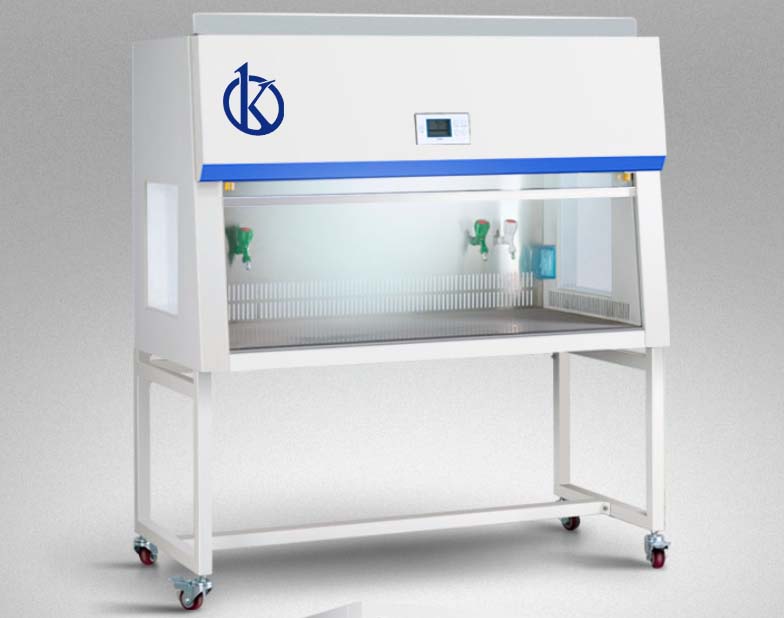
How Miniaturization and Portability are Shaping Vertical Laminar Flow Clean Benches
In today’s rapidly evolving laboratory environments, the push for miniaturization and portability is revolutionizing the design and functionality of Vertical Laminar Flow Clean Benches. These critical pieces of equipment play a vital role in maintaining sterile conditions for sensitive experiments, particularly in field laboratories. This article delves into various models, their specifications, and how their designs cater to the growing need for compact and mobile solutions in different scientific fields.
Understanding Miniaturization and Portability Trends
Miniaturization refers to the reduction in size and weight of laboratory equipment while maintaining or even enhancing functionality. The trend towards portability is driven by the need for equipment that can be easily transported and set up in various field conditions, facilitating on-site experiments and research. This shift is particularly crucial in disciplines such as biotechnology, pharmaceuticals, and environmental science, where researchers require clean environments to prevent contamination.
Key Advantages of Miniaturization in Clean Benches
Miniaturized vertical laminar flow clean benches, such as the YR05734 and YR05735 models, offer significant advantages, including decreased space requirements and enhanced mobility. Their reduced dimensions allow for more efficient utilization of laboratory or field space, making them ideal for smaller settings. Moreover, lightweight designs enable easy relocation, allowing researchers to conduct experiments wherever needed without the constraints of traditional, bulkier models.
Portability Features Enhancing Field Laboratory Work
Portability is essential for clean benches used in field laboratories, where environmental conditions can vary significantly. Models like the YR05736 and YR05737 are equipped with features such as a stable base, compact design, and lightweight materials. This makes them suitable for transportation in various settings, from remote locations to urban research facilities, ensuring that clean work conditions are maintained even in challenging environments.
Comparison of Available Models
| Model Code | Name | Dimensions (mm) | Weight (kg) | Price (USD) | Best For |
|---|---|---|---|---|---|
| YR05267-1 | Laminar Flow Cabin (Double Person) | 1585×1460×735 | 210 | 1600.00 | Biotechnology and Pharmaceuticals |
| YR05734 | Horizontal Laminar Flow Cabin | 650×530×850 | N/A | 240.00 | Medical and Health Engineering |
| YR05735 | Horizontal Laminar Flow Cabin | 850×530×850 | N/A | 300.00 | Scientific Experiments |
| YR05736 | Laminar Flow Cabin | 860×590×1600 | N/A | 420.00 | General Lab Use |
| YR05737 | Laminar Flow Cabinet | 1310×590×1600 | N/A | 650.00 | Advanced Laboratory Applications |
| YR05738 | Laminar Flow Cabin | 1040×690×1600 | N/A | 590.00 | Medical and Chemical Treatments |
Common Mistakes and How to Avoid Them
When selecting a vertical laminar flow clean bench, laboratory professionals often overlook crucial factors that can impact their research quality. Here are common mistakes and how to avoid them:
- Overlooking Size Requirements: Always measure the available workspace and choose a model that fits comfortably. For instance, the YR05734 is compact, making it suitable for smaller setups.
- Ineffective Research Needs Assessment: Understand the specific conditions needed for your experiments. Models like YR05267-1 are designed for dual users, perfect for collaborative work.
- Neglecting Mobility: Ensure the model can be easily transported if fieldwork is expected. The YR05735 is lightweight and portable.
Miniaturization and Portability in Practice
Field Deployment Scenarios
Field deployment often requires equipment that can adapt to varying conditions without compromising functionality. Models like the YR05736 and YR05738 are designed with rugged features, such as durability against environmental factors and energy-efficient operation, which are essential for remote fieldwork. Their compact designs allow researchers to set up quickly in diverse environments, from laboratories to outdoor settings, without losing the sterile conditions necessary for sensitive experiments.
Battery Autonomy and Energy Efficiency
Battery-operated models are increasingly gaining popularity, particularly those with energy-efficient designs. Although many vertical laminar flow clean benches typically plug into an electrical outlet, the future trend is moving towards hybrid systems that include battery backup. This allows for uninterrupted operations during field studies, ensuring that clean air conditions are preserved while maximizing research time in remote locations.
Ruggedization Standards
Equipment used in field laboratories must meet specific ruggedization standards to ensure reliability in harsh environments. Models like the YR05737 follow these standards, offering features that provide protection against dust, moisture, and impact, thus ensuring consistent performance under various conditions.
Frequently Asked Questions
What are the key features of the YR05267-1 model in field laboratory applications?
The YR05267-1 model is designed for dual users in laboratory settings, with ISO 14644.1 Class 5 certification, making it ideal for biotechnology and pharmaceutical applications. Its compact design facilitates mobility, essential for fieldwork.
How does the YR05734 compare to standard lab equipment?
The YR05734 features a compact size of 650×530×850 mm, making it highly portable, compared to bulkier lab equipment. This model is particularly efficient in medical and health engineering scenarios, ensuring clean room conditions.
Which model is best for portability and miniaturization?
The YR05735 stands out in terms of portability and miniaturization, with dimensions of 850×530×850 mm. It is lightweight and easy to transport, making it suitable for scientific experiments in various locations.
How does battery autonomy improve field lab operations?
Battery autonomy allows models like the YR05737 to operate without electrical outlets, making it easier to conduct research in remote locations. This model combines portable design with energy efficiency, ensuring reliability in field conditions.
What are the advantages of using the YR05736 for field studies?
The YR05736 model is equipped with ruggedization features and energy-efficient operation, making it optimal for field studies. Its durable construction ensures that it can withstand environmental challenges while maintaining clean conditions.
Which miniaturized model is best for medical applications?
The YR05738 is specifically designed for medical applications, providing a clean environment for sensitive experiments. Its compact design and ISO 100 standards make it ideal for hospitals and clinics.
What price range can I expect for the YR05737?
The YR05737 is available for approximately $650.00, offering advanced features suitable for high-level laboratory applications, emphasizing its value in both portability and performance.
How do portability features enhance productivity in laboratories?
Portability features, such as those found in the YR05734, enhance laboratory productivity by allowing equipment to be easily relocated and set up in various configurations. This flexibility accommodates different research needs and maximizes operational efficiency.
If you are looking for a fusion of innovation and quality, you have come to the right place. At Kalstein, we offer you the luxury of exploring our exclusive catalog of laboratory equipment. We manufacture every device to the highest standards of excellence. Our intuitive and seamless online purchasing channels are designed for your convenience, securing the most competitive prices. Hesitate no longer — we bring science to life, it is time to become part of our community.