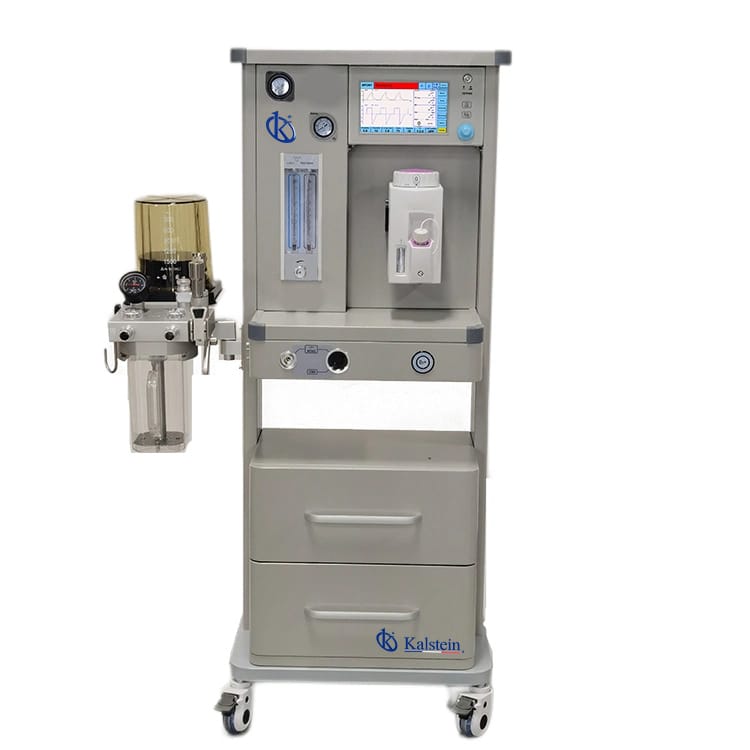
Understanding the Operating Principle and Scientific Fundamentals of the YR06100 Veterinary Anesthesia Machine
The YR06100 Veterinary Anesthesia Machine represents a significant advancement in veterinary anesthesia technology. Understanding its operating principles and the scientific fundamentals behind its design is crucial for practitioners who want to maximize its efficiency and reliability in clinical applications.
Design and Functional Overview of the YR06100
The YR06100 is engineered to cater to animals of varying sizes and weights, making it an essential tool in veterinary practices. The design integrates a non-rebreathing circuit interface conveniently placed at the front of the machine, facilitating easier anesthesia procedures for smaller animals.
The YR06100 operates using a combination of pressure, volume, manual, and other breathing modes, thereby accommodating diverse clinical needs. Integrated high-precision sensors and valve control technology ensure safety, stability, and accuracy in monitoring and controlling pressure, flow rate, and volume.
Scientific Principles of Anesthesia
The scientific principles behind anesthesia revolve around pharmacology and the physiological responses of animals to anesthetic agents. The YR06100 employs anesthetics such as halothane, isoflurane, and sevoflurane, each having distinct mechanisms of action. These agents work by depressing the central nervous system, leading to loss of consciousness and pain relief.
Understanding the partial pressures of these gases and their concentration ranges is essential for effective anesthesia. The YR06100 allows for precise adjustments in anesthetic concentrations, which is vital for maintaining the desired anesthetic depth while ensuring the safety of the animal.
Technical Specifications of the YR06100
| Feature | Details |
|---|---|
| Model | YR06100 |
| Working Mode | Closed, Semi-closed, Semi-open system, Open |
| Driven Mode | Pneumatically driven, manual controlled |
| Application | Animals weighing 0.5-100 kg |
| Anesthesia Gas Source Switch | Start or stop the gas source control |
| Alarm Parameters | Upper tidal volume alarm, low oxygen alarm, apnea, power failure |
| Oxygen Flush | 25L/min~75L/min |
| Airway Pressure | O2: 0.25Mpa~0.65Mpa |
| Concentration Range | Halothane: 0.2 to 5%, Isoflurane: 0.2 to 5%, Sevoflurane: 0.2 to 8% |
| Flow Rate Range | 0.2 to 15L/min (normal application 0.2 to 10L/min) |
| Anesthetic Volume | 340ML (dry cavity), 300ML (wet cavity) |
| Suspension Type | Selectatec international standard type |
Understanding the Operational Modes of the YR06100
The YR06100 provides various operational modes that enhance its versatility in clinical settings. The operational modes include:
- Closed System: This mode minimizes gas wastage and allows the recycling of exhaled gases, making it economical.
- Semi-closed System: Combines the benefits of closed and open systems, allowing for controlled gas exchange.
- Semi-open System: Facilitates easy administration of anesthetic gases and is suitable for quick procedures.
- Open System: Often used in emergency scenarios where rapid induction is required.
Each mode serves different procedural needs and should be selected based on the specific requirements of the clinical situation and the size of the patient.
Calibration and Initial Setup of the YR06100
Proper calibration and setup are vital to ensure optimal performance of the YR06100. Upon unboxing, practitioners should follow a checklist that includes the following steps:
- Inspect all components for damage.
- Ensure all connections are secure and free from leaks.
- Level the unit for accurate pressure readings.
- Power up the machine and perform initial calibrations.
After the initial setup, a first-run calibration should be conducted to validate the system's performance against known standards. Common mistakes include improper calibration of the pressure settings and failure to check alarm functionalities, which are crucial for patient safety.
Maintenance and Troubleshooting of the YR06100
Regular maintenance of the YR06100 is essential for ensuring safety and optimal functionality. Key maintenance tasks include: - Regular checks of the gas supply and connections. - Periodic testing of alarm systems to ensure they function correctly. - Inspection and replacement of the anesthetic vaporizer as needed. In case of troubleshooting, common issues may present as symptoms such as:
| Symptom | Possible Cause | Recommended Solution |
|---|---|---|
| Machine does not turn on | Power supply issue | Check power connection and circuit breaker. |
| Inconsistent gas flow | Clogged circuit | Inspect and clear any obstructions in the gas line. |
| Alarms not functioning | Faulty sensor | Check sensors and replace if necessary. |
Frequently Asked Questions
What is the maximum weight capacity for animals using the YR06100?
The YR06100 can accommodate animals weighing between 0.5 kg to 100 kg, making it suitable for a wide range of veterinary applications, from small pets to larger animals.
How does the YR06100 ensure patient safety during anesthesia?
The YR06100 is equipped with a triple alarm system that provides visual and auditory alerts for various parameters, including upper tidal volume, low oxygen levels, and apnea, ensuring that any critical changes during the procedure are promptly addressed.
Can the YR06100 be used for both small and large animals?
Yes, the YR06100's design allows for flexible adjustments to cater to both small and larger animals, ensuring that the required anesthetic depth is achieved safely and effectively.
What are the common anesthetic agents used with the YR06100?
The YR06100 typically utilizes inhalational anesthetics such as halothane, isoflurane, and sevoflurane, which are chosen based on their effective concentration ranges and the specific needs of the patient.
What maintenance is required for the YR06100?
Regular maintenance tasks include checking gas connections, testing alarm systems, and inspecting the vaporizer. It is also recommended to conduct periodic calibrations to ensure accuracy and reliability.
How is the YR06100 calibrated for use?
Calibration involves securing the machine, ensuring all connections are intact, powering it on, and adjusting settings according to the manufacturer's specifications, followed by a performance validation against known standards.
Where can I request a quote for the YR06100?
You can request a quote for the YR06100 directly through Kalstein Plus, which offers competitive pricing and tailored options for your veterinary practice.
If you are looking for a fusion of innovation and quality, you have come to the right place. At Kalstein, we offer you the luxury of exploring our exclusive catalog of laboratory equipment. We manufacture every device to the highest standards of excellence. Our intuitive and seamless online purchasing channels are designed for your convenience, securing the most competitive prices. Hesitate no longer — we bring science to life, it is time to become part of our community.