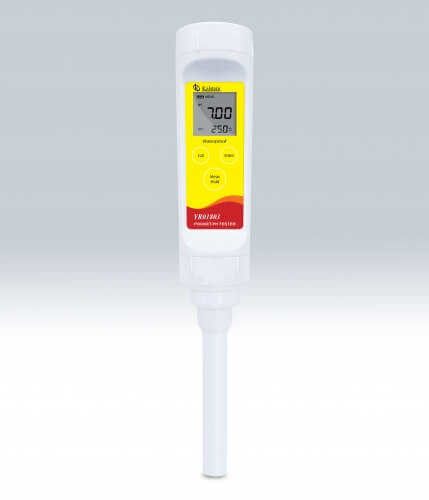
Portable pH Meters: Practical Applications and Techniques 2026
Portable pH meters are essential tools in various laboratory settings, enabling accurate and convenient pH measurement of solutions. In 2026, their applications have expanded across clinical, educational, and industrial laboratories. Understanding how to use these instruments effectively is crucial for laboratory professionals aiming for precision in their measurements.
What is it used for in 2026
In 2026, portable pH meters are utilized for a wide range of applications. They are essential in various settings including:
- Clinical Laboratories: Used for measuring the pH of blood, urine, and other biological fluids, helping in diagnosis and monitoring of patients.
- Environmental Testing: Used to assess soil and water quality, ensuring compliance with environmental standards.
- Food Industry: Ensuring the quality and safety of food products by measuring the pH of various samples.
- Research Settings: Useful for experimental measurements in chemical and biological research.
History and evolution of the technology
The evolution of pH measurement technology traces back to the development of the glass electrode in the early 20th century. Initially, laboratory pH meters were bulky and stationary, limiting their use in fieldwork. The invention of portable pH meters in the late 20th century revolutionized the field, allowing for quick and accurate measurements on-the-go. Over the years, advancements in microelectronics and sensor technology have led to the development of compact, user-friendly devices with enhanced accuracy and features such as automatic calibration and temperature compensation.
How to use it step by step
Using a portable pH meter involves several steps to ensure accurate readings:
- Calibration: Begin by calibrating the pH meter using standard buffer solutions. Ensure the meter recognizes the chosen buffers.
- Sample Preparation: Prepare the sample to be measured. Ensure it is homogeneous and free of debris that may interfere with the reading.
- Measurement: Insert the electrode into the sample, allowing it to stabilize. Read and record the pH value displayed.
- Cleaning: Clean the electrode after use to prevent contamination of subsequent samples.
- Storage: Store the meter according to manufacturer guidelines to maintain electrode longevity.
Best techniques and protocols
To optimize pH measurement accuracy:
- Always calibrate the meter before use, preferably at the same temperature as the samples.
- Use freshly prepared buffer solutions to ensure reliable calibration.
- Allow the electrode to equilibrate in the sample for a few seconds before taking a reading.
- Document the calibration date and results for traceability.
Practical applications by laboratory type
Clinical Laboratories
In clinical laboratories, pH meters are crucial for testing bodily fluids to diagnose conditions like acidosis or alkalosis. Accurate pH measurements can impact treatment decisions significantly.
Environmental Laboratories
Environmental labs utilize portable pH meters for assessing the pH of water sources, soil samples, and wastewater. This ensures compliance with environmental regulations and helps in monitoring ecological health.
Food Safety Laboratories
Portable pH meters are indispensable in the food industry for quality control. Monitoring pH levels in food products can prevent spoilage and ensure consumer safety.
Research Laboratories
Research laboratories use portable pH meters for experiments involving pH-sensitive reactions, ensuring precise pH control for successful outcomes.
Regulations, standards and certifications
Laboratories using portable pH meters must comply with industry regulations such as ISO/IEC 17025, which outlines general requirements for the competence of testing and calibration laboratories. Ensuring that meters are regularly calibrated and maintained is integral to meeting these standards.
Comparison with alternative technologies
While portable pH meters are popular, other technologies such as colorimetric methods or litmus testing are also used:
- Colorimetric Methods: Offer a visual indication of pH but can be subjective and less precise.
- Litmus Testing: Simple and inexpensive but lacks quantitative precision.
- Portable pH Meters: Provide accurate and quantitative results quickly, making them the preferred choice in many situations.
Comparison of available models
| Model | Best for | Key specs | Recommended use case |
|---|---|---|---|
| YR01803 | High precision measurements | pH range: -1.00 to 15.00, Accuracy: ± 0.01 pH | Testing samples in test tubes |
| YR01804 | Outdoor applications | pH range: -1.00 ~ 15.00, Manual temperature compensation | Field testing of environmental samples |
| YR01800 | General portable use | pH range: -1.00~15.00, Resolution: 0.01 pH | Routine checks in various labs |
| YR01800-1 | General portable use | pH range: -1.00~15.00, Resolution: 0.01 pH | Routine checks in various labs |
| YR01802 | Measurements of semi-solids | pH range: -1.00 to 15.00, Accuracy: ± 0.01 pH | Testing pH of gels or creams |
| YR01802-1 | Measurements of semi-solids | pH range: -1.00 to 15.00, Accuracy: ± 0.01 pH | Testing pH of gels or creams |
Common mistakes and how to avoid them
Common mistakes in using portable pH meters include:
- Neglecting Calibration: Always calibrate before use to ensure accuracy.
- Improper Electrode Care: Clean and store electrodes properly to extend their lifespan.
- Ignoring Temperature Effects: Be aware of temperature variations affecting readings; use temperature compensation features.
Maintenance, calibration and good practices 2026
Regular maintenance and calibration are vital for the longevity of portable pH meters:
- Calibrate at least once a week or before each use based on frequency of use.
- Store electrodes in appropriate solutions to prevent drying out.
- Perform regular checks on accuracy and functionality.
Cost-benefit analysis 2026
Investing in portable pH meters is often justified due to their accuracy and convenience in various applications. Although initial costs may vary, their efficiency in preventing costly errors and ensuring compliance with standards provides significant long-term savings.
Frequently asked questions
How often should I calibrate my portable pH meter?
You should calibrate your portable pH meter at least once a week or before each use, especially in critical applications.
What is the best way to clean the pH electrode?
Clean the electrode with distilled water and a soft cloth after each use. Avoid harsh chemicals that may damage the electrode.
Can I use the pH meter for semi-solid samples?
Yes, certain models are specifically designed for measuring the pH of semi-solid samples like gels or creams.
How do temperature variations affect pH readings?
Temperature can affect the pH of solutions, which is why using meters with automatic temperature compensation is recommended.
What should I do if my readings are inconsistent?
If readings are inconsistent, check the calibration, ensure the electrode is clean, and consider replacing it if it’s damaged.
Are portable pH meters suitable for fieldwork?
Yes, portable pH meters are ideal for fieldwork as they are designed for ease of use and quick measurements in various environments.
If you are looking for a fusion of innovation and quality, you have come to the right place. At Kalstein, we offer you the luxury of exploring our exclusive catalog of laboratory equipment. We manufacture every device to the highest standards of excellence. Our intuitive and seamless online purchasing channels are designed for your convenience, securing the most competitive prices. Hesitate no longer — we bring science to life, it is time to become part of our community.