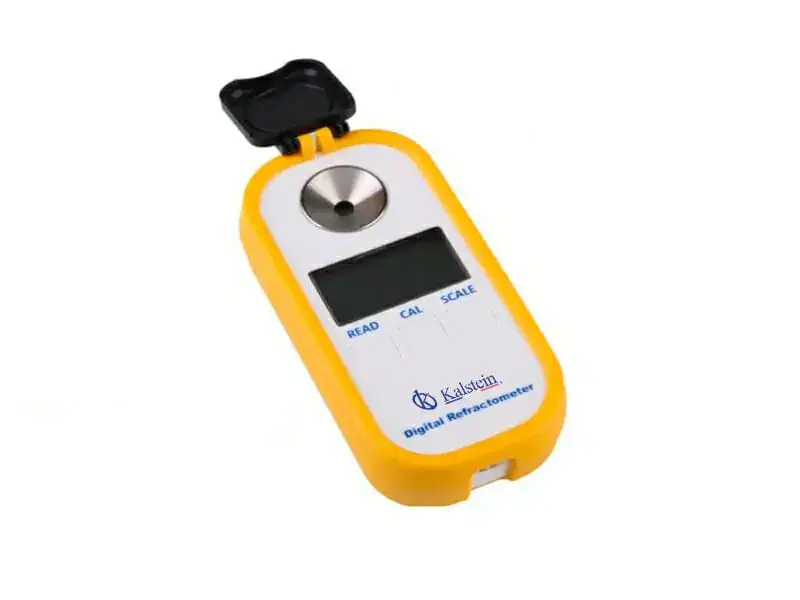
Predictive Maintenance and Recommended Calibration for Digital Salinity Refractometers
Digital salinity refractometers are essential tools in various laboratory settings, primarily used for measuring the salinity of solutions such as sodium chloride and seawater. To ensure precision and reliability in measurements, implementing predictive maintenance and regular calibration is crucial. This article delves into the importance of these practices, focusing on several prominent models in the digital salinity refractometer category.
Understanding Predictive Maintenance
Predictive maintenance involves monitoring the performance of equipment to predict when maintenance should be performed. This proactive strategy minimizes disruptions and extends the lifespan of the equipment. For digital salinity refractometers, predictive maintenance ensures consistent performance and accuracy, reducing the need for reactive repairs.
Importance of Regular Calibration
Calibration is the process of adjusting and verifying the accuracy of a measuring instrument. For digital salinity refractometers, regular calibration is vital to ensure that the readings are accurate and consistent. Calibration should be performed using standard solutions at defined intervals or when a significant change in measurement conditions occurs.
Key Calibration Standards
Calibration for digital salinity refractometers typically adheres to industry standards that ensure accuracy and reliability. The most common standards used include ISO/IEC 17025, which specifies general requirements for the competence of testing and calibration laboratories. Meeting these standards is crucial for laboratories to maintain quality assurance.
Impact of Temperature on Calibration
Temperature fluctuations can significantly affect the accuracy of measurements taken by digital salinity refractometers. Models equipped with Automatic Temperature Compensation (ATC), like the YR05953 and YR05954, adjust readings based on the temperature of the solution, ensuring consistent results within the operational range of 0 to 40°C (32 to 104°F).
Calibration Schedule for Digital Salinity Refractometers
Establishing a calibration schedule is essential for ensuring accuracy. A practical approach is to calibrate the instruments monthly and after any maintenance or repair. The schedule should include the calibration of each model, considering specific environmental conditions and operational demands. Below is a suggested calibration frequency:
| Model Code | Calibration Frequency | Calibration Method |
|---|---|---|
| YR05953 | Monthly | Standard Solutions |
| YR05954 | Monthly | Standard Solutions |
| YR05955 | Every Two Months | Standard Solutions |
| YR05956 | Every Two Months | Standard Solutions |
| YR05957 | Monthly | Standard Solutions |
| YR05958 | Every Two Months | Standard Solutions |
| YR05959 | Every Two Months | Standard Solutions |
| YR05960 | Monthly | Standard Solutions |
Comparison of Available Models
| Model Code | Measurement Range | Minimum Division | Accuracy | ATC | Best for |
|---|---|---|---|---|---|
| YR05953 | 0.0–28.0% | 0.10% | ±0.1% | Yes | General laboratory use |
| YR05954 | 0–280‰ | 1‰ | ±1‰ | Yes | Marine applications |
| YR05955 | 1.000-1.217 | 0.001 | ±0.002 | Yes | Densities in saline solutions |
| YR05956 | 1.3330–1.3900nD | 0.0001nD | ±0.0003nD | Yes | Optical refractive index measurements |
| YR05957 | 0–100‰ | 1‰ | ±2‰ | Yes | Water quality testing |
| YR05958 | 0–57‰ | 1‰ | ±2‰ | Yes | Clinicity measurements |
| YR05959 | 1.000-1.070 | 0.001 | ±0.002 | Yes | Research applications |
| YR05960 | 1.3330–1.3530nD | 0.0001nD | ±0.0003nD | Yes | Advanced refractive index studies |
Common Mistakes and How to Avoid Them
Common mistakes in using digital salinity refractometers include improper calibration, neglecting temperature adjustments, and failing to clean the prism adequately after each use. To avoid these pitfalls, ensure that calibration procedures are followed meticulously and that the instrument is kept free from residues that may interfere with measurements. Regular training for personnel can also help in mitigating these errors.
Frequently Asked Questions
How often should I calibrate my digital salinity refractometer for accurate readings?
Calibration should ideally be performed monthly for models like YR05953 and YR05954, especially if used frequently in varying temperatures. Regular calibration ensures that the readings remain reliable and compliant with standards like ISO/IEC 17025.
Which model offers the best temperature compensation for salinity measurements?
The YR05954 model excels in temperature compensation, featuring Automatic Temperature Compensation (ATC) that allows it to maintain accuracy across a range of 0 to 40°C (32 to 104°F), making it ideal for marine applications.
What is the recommended calibration method for digital salinity refractometers?
Using standard solutions for calibration is advisable. Models like YR05955 and YR05956 benefit from this method, ensuring that they provide accurate measurements across their specified ranges.
How do I determine the right refractometer model for my laboratory?
Choosing the right model depends on your specific applications. For general lab use, the YR05953 is suitable, while marine applications might require the YR05954 for its higher salinity range.
What are the key features to look for in a digital salinity refractometer?
Key features include measurement range, accuracy, and the presence of Automatic Temperature Compensation (ATC). Models like YR05957 and YR05958 are equipped with these features, enhancing their usability in various environments.
How do I maintain my digital salinity refractometer for optimal performance?
Proper maintenance involves regular cleaning, calibration, and storage in a protective case. Following these practices for models like YR05956 can significantly extend their lifespan and accuracy.
What is the impact of temperature on the readings of a salinity refractometer?
Temperature can alter the density and refractive index of solutions. Models with ATC, such as the YR05954, adapt to temperature changes, ensuring that readings remain accurate even under fluctuating conditions.
How does predictive maintenance benefit the use of salinity refractometers?
Predictive maintenance helps anticipate equipment failures, reducing downtime. For digital salinity refractometers, it ensures consistent accuracy in measurements, improving lab efficiency and reliability.
If you are looking for a fusion of innovation and quality, you have come to the right place. At Kalstein, we offer you the luxury of exploring our exclusive catalog of laboratory equipment. We manufacture every device to the highest standards of excellence. Our intuitive and seamless online purchasing channels are designed for your convenience, securing the most competitive prices. Hesitate no longer — we bring science to life, it is time to become part of our community.