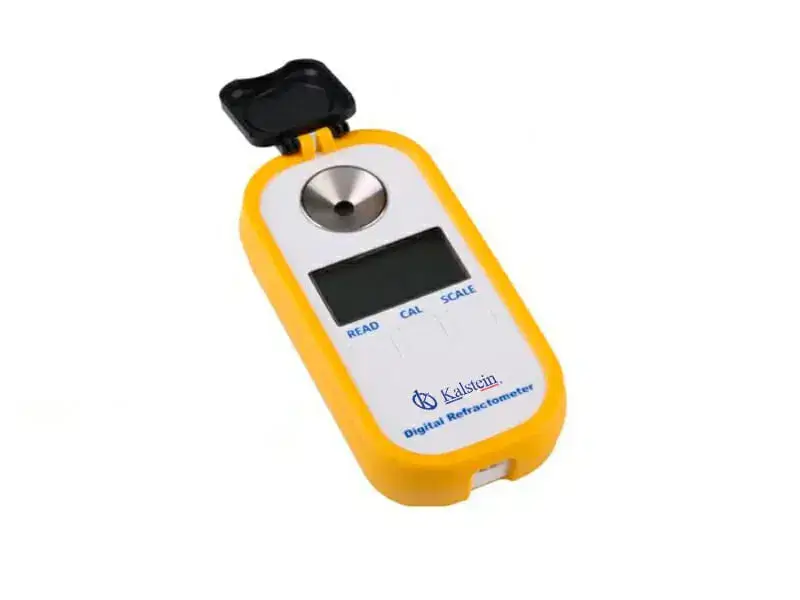
How Predictive Maintenance Enhances Calibration Practices for Digital Salinity Refractometers
Calibration is a critical process in laboratory settings, ensuring that instruments like Digital Salinity Refractometers provide accurate and reliable measurements. Adopting predictive maintenance strategies can significantly enhance this process. This article discusses the relationship between predictive maintenance and the calibration of Digital Salinity Refractometers, focusing on specific models and practical applications.
The Importance of Calibration in Digital Salinity Refractometers
Digital Salinity Refractometers, such as the YR05953, YR05954, and YR05955, are essential for measuring salinity levels in various solutions, including seawater and saline solutions. Regular calibration is necessary to maintain measurement accuracy and comply with industry standards. Calibration ensures that the readings reflect true salinity levels, which is vital for scientific experiments, environmental monitoring, and industrial processes.
Understanding Predictive Maintenance
Predictive maintenance involves using data and analytics to predict when equipment will fail, allowing for timely interventions. By focusing on the health of Digital Salinity Refractometers, maintenance can be scheduled based on actual usage and performance data rather than adhering to a rigid schedule. This flexibility minimizes downtime and extends the lifespan of the instruments, ensuring that they perform optimally.
Key Features of Digital Salinity Refractometers
Each model offers unique features that cater to various salinity measurement needs:
- YR05953: Ideal for salinity measurement with a range of 0.0–28.0%. The automatic temperature compensation (ATC) between 0-40°C simplifies the calibration process.
- YR05954: Measures salinity from 0–280‰ with high accuracy, making it suitable for marine research.
- YR05955: Focuses on density measurement (1.000-1.217), useful in both salinity and specific gravity applications.
Calibration Intervals and Predictive Strategies
The calibration intervals for Digital Salinity Refractometers can vary based on usage frequency, environment, and specific requirements of the measurements. Predictive maintenance allows laboratories to establish a dynamic calibration schedule based on real-time data, enhancing reliability.
Calibration Schedule Example
| Model | Calibration Frequency | Next Calibration Date |
|---|---|---|
| YR05953 | Monthly | 2023-10-15 |
| YR05954 | Bi-Monthly | 2023-11-15 |
| YR05955 | Quarterly | 2024-01-15 |
Common Mistakes in Calibration and Maintenance
One prevalent mistake is failing to calibrate instruments frequently enough, which can lead to inaccurate readings. Another common issue is neglecting to document calibration results, which is crucial for compliance and quality assurance. Utilizing predictive maintenance can help avoid these pitfalls by alerting users to potential issues before they affect measurements.
Comparison of Available Models
| Model | Measurement Range | Min. Division | Precision | Best Use |
|---|---|---|---|---|
| YR05953 | 0.0–28.0% | 0.10% | ±0.1% | General salinity measurements |
| YR05954 | 0–280‰ | 1‰ | ±1‰ | Marine research |
| YR05955 | 1.000-1.217 | 0.001 | ±0.002 | Density applications |
| YR05956 | 1.3330–1.3900nD | 0.0001nD | ±0.0003nD | Refractive index measurements |
| YR05957 | 0–100‰ | 1‰ | ±2‰ | General salinity |
| YR05958 | 0–57‰ | 1‰ | ±2‰ | Specific applications |
| YR05959 | 1.000-1.070 | 0.001 | ±0.002 | Density measurements |
| YR05960 | 1.3330–1.3530nD | 0.0001nD | ±0.0003nD | Refractive index applications |
Frequently Asked Questions
What are the calibration requirements for YR05953 digital salinity refractometer?
The YR05953 digital salinity refractometer requires calibration at least once a month, ensuring accurate readings within a range of 0.0–28.0%. Predictive maintenance strategies can help determine optimal calibration intervals based on actual usage.
How does predictive maintenance improve the calibration of Digital Salinity Refractometers?
Predictive maintenance enhances calibration by allowing labs to schedule calibrations based on actual instrument performance data, reducing unnecessary downtime. This proactive approach is particularly beneficial for models like YR05954, which operates in marine settings.
Which standards apply to the calibration of salinity refractometers like YR05955?
The calibration of models such as the YR05955 should adhere to industry standards like ISO 17025, ensuring traceability and compliance. Regular calibrations help maintain the accuracy of density measurements essential for various applications.
What role does temperature compensation play in salinity refractometers?
Temperature compensation, such as the Automatic Temperature Compensation (ATC) in models like YR05953, is crucial for ensuring accurate measurements across varying conditions. This feature mitigates temperature-related discrepancies in salinity readings.
How often should maintenance be performed on digital salinity refractometers?
Maintenance should be conducted based on usage frequency and predictive analytics. Models like YR05954 benefit from bi-monthly maintenance checks to ensure optimal performance, especially in demanding environments.
What is the cost range for Digital Salinity Refractometers like YR05956?
The YR05956 digital salinity refractometer typically ranges around $76, making it a cost-effective choice for labs requiring precise refractive index measurements, along with robust calibration capabilities.
If you are looking for a fusion of innovation and quality, you have come to the right place. At Kalstein, we offer you the luxury of exploring our exclusive catalog of laboratory equipment. We manufacture every device to the highest standards of excellence. Our intuitive and seamless online purchasing channels are designed for your convenience, securing the most competitive prices. Hesitate no longer — we bring science to life, it is time to become part of our community.