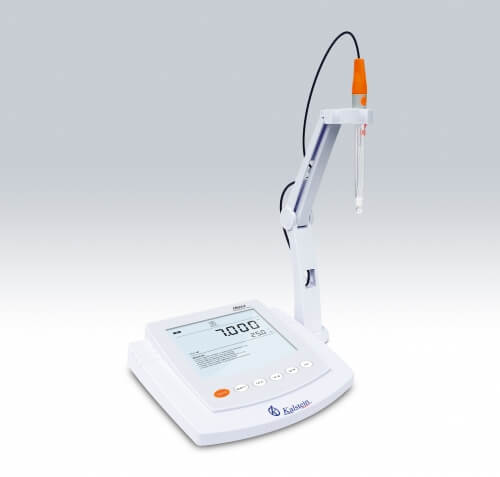
Predictive Maintenance and Recommended Calibration for Table Conductivity Controllers
Table conductivity controllers are vital tools in laboratories where accurate measurements of electrical conductivity, pH, and other parameters are essential. Their performance can significantly impact experimental results and data integrity. This article delves into the critical aspects of predictive maintenance and periodic calibration, exploring how these practices can enhance the reliability and lifespan of table conductivity controllers.
Understanding Predictive Maintenance
Predictive maintenance is a proactive approach to equipment management that involves monitoring the performance and condition of devices to predict potential failures before they occur. This strategy is essential for laboratory instruments, where precision is paramount. By leveraging data analytics and monitoring systems, laboratory professionals can establish maintenance schedules based on actual equipment use, rather than predefined timelines.
The Importance of Periodic Calibration
Calibration is the process of adjusting the accuracy of a measuring device against a known standard. For table conductivity controllers, this ensures that readings are accurate and reliable, which is critical for experiments and quality control processes. The frequency of calibration can depend on several factors, including usage frequency, environmental conditions, and specific application requirements.
Calibration Intervals and Best Practices
Establishing a calibration schedule is vital for maintaining instrument accuracy. Generally, it is advisable to calibrate table conductivity controllers:
- Before critical measurements
- After significant changes in temperature or environment
- Based on manufacturer recommendations
Moreover, utilizing traceable calibration standards ensures compliance with industry regulations and enhances measurement reliability.
Benefits of Predictive Maintenance in Table Conductivity Controllers
Implementing predictive maintenance strategies can yield considerable benefits, including:
- Reduced downtime and repair costs
- Improved measurement accuracy and reliability
- Extended equipment lifespan
By monitoring key performance indicators such as Mean Time Between Failures (MTBF) and Mean Time to Repair (MTTR), labs can better anticipate maintenance needs and optimize operational efficiency.
Comparison of Available Models
| Model Code | Calibration Points | Accuracy | Best for | Price (USD) |
|---|---|---|---|---|
| YR01836-1 | 1 to 5 points | ±0.002 pH | Multi-parameter testing | 355.00 |
| YR01836 | 1 to 3 points | ±0.02 pH | General laboratory use | 199.00 |
| YR01829-1 | 1 to 3 points | ±1% F.S. | Daily testing and control | 160.00 |
| YR01829-2 | 1 to 3 points | ±1% F.S. | Daily testing and control | 235.00 |
| YR01829 | 1 to 3 points | ±0.01 pH | High-resolution measurements | 285.00 |
| YR01828 | 1 to 3 points | ±0.8% F.S. | Comprehensive conductivity analysis | 232.00 |
Common Mistakes and How to Avoid Them
When managing table conductivity controllers, common pitfalls can compromise measurement accuracy. To avoid these mistakes, consider the following:
- Neglecting regular calibration and maintenance schedules
- Using incorrect calibration standards
- Failing to document calibration and maintenance activities
By establishing a systematic approach to maintenance and ensuring that proper protocols are followed, laboratories can minimize errors and enhance the reliability of their measurements.
Frequently Asked Questions
How often should table conductivity controllers be calibrated for accurate results?
Table conductivity controllers should ideally be calibrated before critical measurements and at least once a month for regular use, depending on environmental conditions. For example, models like YR01836-1 have multi-point calibration options that enhance accuracy, especially in variable lab environments.
What are the benefits of predictive maintenance for table conductivity controllers?
Predictive maintenance can significantly reduce unexpected downtime and repair costs for laboratory instruments, such as the YR01829. By using real-time monitoring, labs can schedule maintenance proactively, ensuring optimal performance and accuracy in measurements.
Which standards should be followed for calibrating conductivity meters?
Calibration of conductivity meters, including models like YR01836, should adhere to ISO/IEC standards to ensure accuracy and compliance. Using traceable standards will enhance the credibility of measurements and quality control processes.
How does automatic temperature compensation improve conductivity measurements?
Automatic Temperature Compensation (ATC) adjusts readings based on temperature variations, ensuring accuracy in measurements. For instance, the YR01829 model includes ATC, which is critical for reliable data in varying laboratory conditions.
What is the impact of calibration on the performance of conductivity controllers?
Calibration directly affects the performance and accuracy of conductivity controllers. Regular calibration ensures that devices like the YR01836-1 maintain their measurement integrity, adhering to specific standards and enhancing data reliability.
How can labs establish a predictive maintenance schedule for conductivity meters?
Labs can establish a predictive maintenance schedule by monitoring usage patterns and performance metrics. For example, tracking the MTBF of models like YR01836 can inform maintenance intervals, reducing the risk of equipment failure.
What equipment can be used in conjunction with table conductivity controllers for better results?
Combining table conductivity controllers such as the YR01828 with data logging and reporting tools can enhance results. Such integration helps in tracking performance trends and ensuring compliance with regulatory standards.
Conclusion
Incorporating predictive maintenance and regular calibration into the operational procedures for table conductivity controllers is essential for ensuring accurate and reliable laboratory measurements. The models discussed, such as YR01836 and YR01829, offer various features to aid in effective monitoring and calibration strategies. By prioritizing these practices, laboratories can enhance the performance and lifespan of their conductivity meters.
If you are looking for a fusion of innovation and quality, you have come to the right place. At Kalstein, we offer you the luxury of exploring our exclusive catalog of laboratory equipment. We manufacture every device to the highest standards of excellence. Our intuitive and seamless online purchasing channels are designed for your convenience, securing the most competitive prices. Hesitate no longer — we bring science to life, it is time to become part of our community.