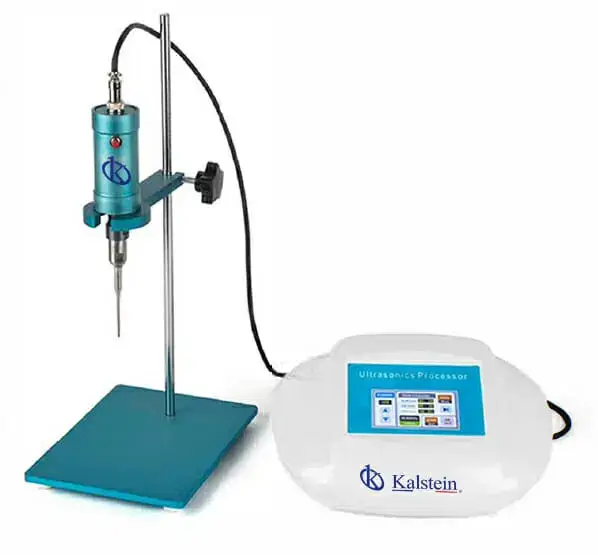
How to Ensure Effective Predictive Maintenance and Periodic Calibration for Ultrasonic Homogenizers
Ultrasonic homogenizers are vital tools in modern laboratories, known for their ability to process liquids through cavitation effects. As with any sophisticated laboratory equipment, maintaining optimal performance through predictive maintenance and periodic calibration is essential. This article will delve into the importance of these practices, exploring techniques and strategies specifically tailored for ultrasonic homogenizers.
Understanding Predictive Maintenance
Predictive maintenance refers to the proactive approach of monitoring the condition of equipment to predict when maintenance should be performed. This strategy is beneficial for ultrasonic homogenizers, particularly for models like YR05829 and YR05830, which feature advanced digital controls that allow for real-time performance monitoring. By utilizing predictive analytics, labs can significantly reduce downtime, extend equipment life, and improve overall efficiency.
Importance of Periodic Calibration
Periodic calibration ensures that ultrasonic homogenizers operate within specified parameters, providing accurate and reliable results. Calibration involves comparing the output of the device with a known standard. For instance, models such as YR05831 and YR05832 require regular calibration to maintain precision in applications like emulsification and extraction processes.
Calibration Intervals and Standards
Calibration intervals for ultrasonic homogenizers may vary based on usage frequency and application. Generally, it is recommended to calibrate every 6 to 12 months. Utilizing traceable standards is critical, as it ensures compliance with industry regulations such as ISO 17025. This standard emphasizes the importance of maintaining laboratory equipment's accuracy through systematic calibration practices.
Best Practices for Predictive Maintenance
Implementing a predictive maintenance strategy can be streamlined by following best practices. First, develop a maintenance schedule based on usage patterns. For example, if the YR05830 model operates continuously, more frequent checks may be necessary. Additionally, install sensors to monitor key parameters such as temperature and ultrasonic power, allowing for timely interventions before failures occur.
Key Performance Indicators (KPIs)
To effectively measure the success of predictive maintenance strategies, establish KPIs such as Mean Time Between Failures (MTBF) and Mean Time to Repair (MTTR). Monitoring these metrics will provide insights into equipment reliability and help identify areas for improvement. For ultrasonic homogenizers, a well-documented calibration and maintenance log can significantly enhance these metrics.
Comparison of Available Models
| Model | Power (W) | Max Capacity (ml) | Price (USD) | Best for |
|---|---|---|---|---|
| YR05829 | 150 | 50 | 659.00 | Cell disruption and emulsification |
| YR05830 | 250 | 100 | 659.00 | Large volume emulsification |
| YR05831 | 400 | 300 | 699.00 | High-throughput applications |
| YR05832 | 650 | 500 | 1050.00 | Advanced material processing |
Common Mistakes and How to Avoid Them
One common mistake in maintaining ultrasonic homogenizers is neglecting routine checks. Regular maintenance schedules should be adhered to strictly for models like YR05831, which, if ignored, can lead to performance degradation. Another mistake is using incorrect calibration standards. Always ensure that standards are traceable and compliant with relevant regulations to guarantee accuracy.
Frequently Asked Questions
What are the recommended calibration intervals for ultrasonic homogenizers?
Calibration for ultrasonic homogenizers such as YR05830 should typically be performed every 6 to 12 months, depending on usage. Adhering to these intervals helps maintain compliance with ISO 17025 standards.
How does predictive maintenance improve ultrasonic homogenizer efficiency?
Predictive maintenance enhances efficiency by reducing unplanned downtime. For instance, the YR05829 model can benefit from real-time monitoring of performance metrics, ensuring timely maintenance interventions.
What standard should be used for calibrating ultrasonic homogenizers?
ISO 17025 is the preferred standard for calibrating ultrasonic homogenizers. This ensures that devices like the YR05831 model meet strict accuracy requirements during laboratory processes.
How can I implement predictive maintenance for my laboratory equipment?
To implement predictive maintenance, consider using sensors for real-time monitoring of your devices, such as the YR05830 model, and develop a maintenance schedule based on operational data.
What common issues arise from improper calibration of ultrasonic homogenizers?
Improper calibration can lead to inaccuracies in results, affecting experiments. For example, if the YR05832 model is not calibrated correctly, it may disrupt emulsification processes, producing inconsistent results.
Which ultrasonic homogenizer is best for high-throughput applications?
The YR05831 model is specifically designed for high-throughput applications, making it ideal for labs that require efficient processing of large volumes.
How does calibration affect the lifecycle of ultrasonic homogenizers?
Regular calibration can extend the lifecycle of ultrasonic homogenizers, such as the YR05830, by ensuring that they operate within optimal parameters, thus preventing premature wear and tear.
What role do KPIs play in the maintenance of ultrasonic homogenizers?
KPIs like MTBF and MTTR help quantify the reliability and efficiency of ultrasonic homogenizers. Monitoring these metrics for models like YR05831 enables labs to optimize maintenance strategies.
If you are looking for a fusion of innovation and quality, you have come to the right place. At Kalstein, we offer you the luxury of exploring our exclusive catalog of laboratory equipment. We manufacture every device to the highest standards of excellence. Our intuitive and seamless online purchasing channels are designed for your convenience, securing the most competitive prices. Hesitate no longer — we bring science to life, it is time to become part of our community.