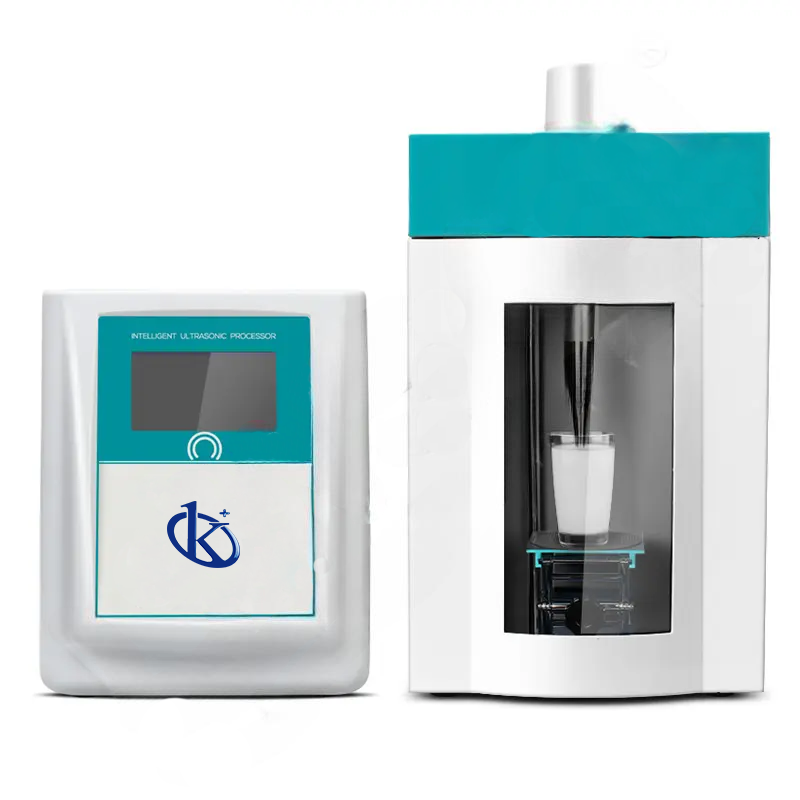
How to Implement Predictive Maintenance and Recommended Calibration for Ultrasonic Homogenizers
Ultrasonic homogenizers are vital tools in laboratory settings, particularly for tasks such as sample preparation and emulsification. Ensuring their optimal performance through predictive maintenance and regular calibration is crucial for lab efficiency and compliance with industry standards. This article will delve into the strategies for effective predictive maintenance and calibration of ultrasonic homogenizers.
Understanding the Role of Predictive Maintenance
Predictive maintenance is an innovative approach that anticipates equipment failures before they occur. Utilizing data from ultrasonic homogenizers, labs can schedule maintenance based on actual equipment condition rather than on a fixed time schedule. This not only minimizes downtime but also extends the lifespan of the equipment.
Benefits of Calibration in Ultrasonic Homogenizers
Regular calibration of ultrasonic homogenizers ensures that they operate within specified parameters. Proper calibration can enhance the accuracy of results, maintain consistency across experiments, and ensure compliance with relevant standards. For ultrasonic homogenizers, calibration typically involves checking parameters like frequency, power output, and temperature control to adhere to quality benchmarks.
Key Maintenance Practices for Ultrasonic Homogenizers
- Frequent Performance Monitoring: Regularly track performance metrics such as output power and temperature to identify anomalies.
- Scheduled Cleaning: Implement a routine cleaning schedule to prevent contamination and maintain performance.
- Visual Inspections: Regularly inspect the unit for wear, damage, or any visible signs of malfunction.
Recommended Calibration Intervals
Calibration intervals for ultrasonic homogenizers can vary based on usage frequency and laboratory standards. As a general guideline, it is recommended to perform calibration at least once every six months. For high-use scenarios, monthly calibration may be necessary.
Common Calibration Techniques
Calibration techniques for ultrasonic homogenizers involve the use of standard reference materials and protocols. A common method is to use a known frequency and power input, comparing the output against specified values. This helps in ensuring that the homogenizer is functioning correctly and that the results obtained from experiments are reliable.
Comparison of Available Models
| Model | Power (W) | Mixing Capacity (ml) | Price (USD) |
|---|---|---|---|
| YR05015 | 1.5 – 150 | 0.1 – 150 | 756.00 |
| YR05016 | 2-5 – 250 | 0.1 – 300 | 882.00 |
| YR05017 | 10 – 650 | 0.1 – 500 | 1050.00 |
| YR05018 | 10 – 900 | 0.1 – 600 | 1281.00 |
| YR05019 | 20 – 1200 | 1 – 1000 | 1785.00 |
| YR05020 | 50 – 1800 | 1 – 1200 | 2058.00 |
Common Mistakes and How to Avoid Them
In the context of ultrasonic homogenizers, many labs make mistakes such as infrequent maintenance checks or neglecting calibration schedules. To avoid these pitfalls, labs should establish a robust maintenance program that includes regular checks and educated personnel on the importance of calibration. Furthermore, integrating predictive maintenance software can significantly enhance scheduling and monitoring.
Frequently Asked Questions
How does predictive maintenance enhance the performance of ultrasonic homogenizers?
Predictive maintenance uses real-time data to forecast equipment issues, thereby preventing unexpected failures in models like YR05020. This approach can result in substantial cost savings and improved performance reliability in laboratory operations.
What is the recommended calibration frequency for ultrasonic homogenizers?
It is generally recommended to calibrate ultrasonic homogenizers every six months, but for high-use models like YR05017, monthly calibrations may be necessary to maintain accuracy and compliance.
Which ultrasonic homogenizer model offers the best flexibility for varying sample sizes?
The YR05020 model is notably versatile, accommodating a mixing capacity of up to 1200 ml, making it ideal for diverse laboratory applications and sample sizes.
What are the consequences of failing to calibrate ultrasonic homogenizers regularly?
Neglecting regular calibration can lead to inaccurate results and compliance issues. For instance, uncalibrated models like YR05019 may produce unreliable data, ultimately affecting research outcomes.
How can I ensure my ultrasonic homogenizer remains compliant with industry standards?
Regular calibration and maintenance programs, such as adopting protocols for models like YR05015, are essential for compliance with industry standards and ensure optimal operational integrity.
What specific features should I look for in an ultrasonic homogenizer for predictive maintenance?
Look for models like YR05018 equipped with data logging capabilities and alerts for performance anomalies, as these features greatly aid in implementing an effective predictive maintenance strategy.
How often should I perform maintenance checks on my ultrasonic homogenizer?
It's advisable to conduct maintenance checks on ultrasonic homogenizers monthly, especially for high-performing models like YR05017, to identify and rectify potential issues before they escalate.
Which ultrasonic homogenizer model is best for high throughput applications?
The YR05020 model, with its high power output and mixing capacity, is well-suited for high throughput applications, ensuring efficient processing of larger volumes in less time.
If you are looking for a fusion of innovation and quality, you have come to the right place. At Kalstein, we offer you the luxury of exploring our exclusive catalog of laboratory equipment. We manufacture every device to the highest standards of excellence. Our intuitive and seamless online purchasing channels are designed for your convenience, securing the most competitive prices. Hesitate no longer — we bring science to life, it is time to become part of our community.