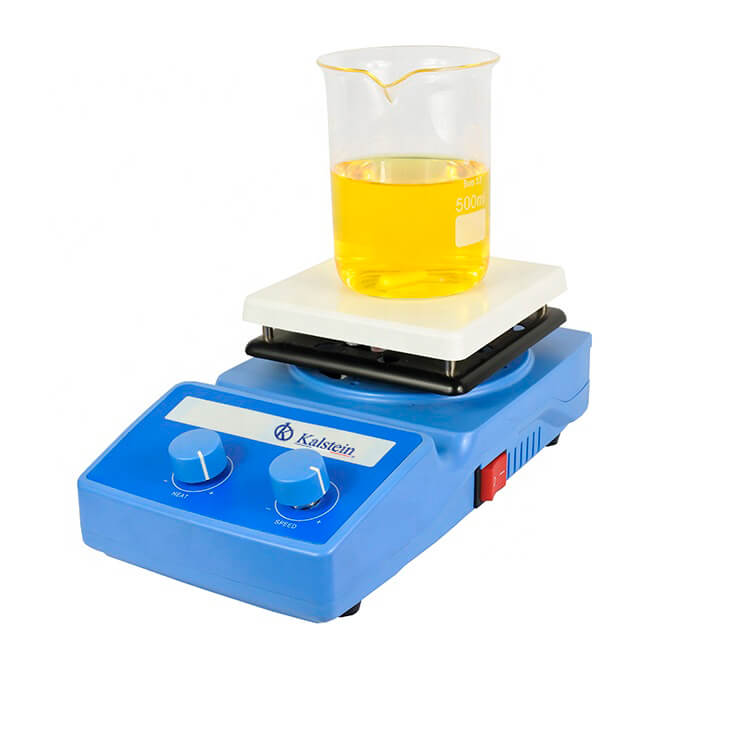
Maximizing ROI and Cost-Benefit Analysis for Hotplate Stirrer Laboratories
In today's laboratory environment, efficiency and cost-effectiveness are paramount. Laboratory professionals need to carefully assess the return on investment (ROI) and undertake cost-benefit analysis when selecting equipment such as Analog Ceramic top Hotplate Stirrers. This article will explore the various models available, evaluating them through the lens of ROI, operational costs, and their overall value in laboratory settings.
Understanding ROI in the Context of Laboratory Equipment
Return on investment (ROI) is a critical metric for laboratory managers, reflecting the profitability gained relative to the purchase cost of equipment. When considering Analog Ceramic top Hotplate Stirrers, it's essential to analyze both the initial investment and the long-term operational costs, including energy consumption, maintenance, and efficiency improvements.
Cost-Benefit Analysis for Hotplate Stirrers
A cost-benefit analysis helps laboratory professionals make informed decisions by comparing the costs against the benefits realized from the equipment usage. For Hotplate Stirrers, key elements to consider include:
- Initial purchase price
- Energy consumption
- Operational efficiency and reliability
- Maintenance costs
- Longevity and warranty services
Comparison of Available Models
| Model | Initial Cost (USD) | Best For | Operational Efficiency |
|---|---|---|---|
| YR02933 | 125.00 | Basic laboratory tasks | Standard usage |
| YR02934 | 152.00 | Chemistry and biology experiments | PID control, efficient |
| YR02935 | 190.00 | Versatile mixing tasks | High performance |
| YR02936 | 265.00 | High-capacity applications | Advanced features |
Operational Costs and Their Impact on ROI
When evaluating the ROI of Hotplate Stirrers, operational costs are critical. Factors such as electricity consumption, the frequency of maintenance, and the cost of consumables must be analyzed. For instance, a model like YR02935, with higher efficiency at 750W, may provide better long-term savings compared to less efficient models.
Time to Payback: Evaluating Efficiency
Calculating the payback period helps in understanding how quickly an investment will return profits. Consider the following variables:
- Cost of equipment
- Cost savings from enhanced efficiency
- Replacement frequency
A straightforward approach includes calculating the average savings per month and dividing it by the initial cost. Models like YR02936, being more advanced, may have a longer initial payback period but can yield savings in energy and operational efficiency over time.
Common Mistakes and How to Avoid Them
One of the most significant mistakes laboratory professionals make is neglecting the total cost of ownership (TCO). Focusing only on the initial purchase price can lead to higher long-term expenses. Ensure to factor in:
- Energy consumption
- Maintenance and repair costs
- Training staff on new equipment
Furthermore, understanding the actual needs of the laboratory and selecting models accordingly can prevent unnecessary expenditures. For example, the YR02934 model is ideal for specific chemistry applications, optimizing both cost and function.
Frequently Asked Questions
What are the key ROI factors for Analog Ceramic top Hotplate Stirrers?
The key ROI factors include purchase cost, energy efficiency, and maintenance requirements. For example, the YR02935 model offers significant operational efficiency, helping to improve ROI over time.
How can I calculate the payback period for Hotplate Stirrer investments?
To calculate the payback period, divide the initial investment by the monthly savings generated from operational efficiency. For instance, with YR02936’s advanced features, you may achieve faster savings than other models.
Which Hotplate Stirrer model provides the best energy efficiency?
The YR02934 model is designed with PID control, allowing for precise energy management, making it one of the most energy-efficient options available in this category.
How do I identify the best Hotplate Stirrer for specific laboratory applications?
Identify your specific laboratory needs, such as volume and type of experiments. The YR02935 is excellent for versatile mixing tasks, while YR02936 suits high-capacity applications.
What are the maintenance costs associated with different Hotplate Stirrers?
Maintenance costs vary by model; for instance, more advanced models like YR02936 may require less frequent servicing due to their robust design, thus impacting long-term costs favorably.
How does energy consumption affect the overall cost-benefit analysis of Hotplate Stirrers?
Energy consumption plays a crucial role in the total cost of ownership. Lower consumption models, such as the YR02934, can lead to significant cost savings over time, thus improving cost-benefit ratios.
What additional features should I consider when purchasing a Hotplate Stirrer?
Consider features like temperature control precision, build quality, and user interface. The YR02935 offers user-friendly controls and high precision, making it an ideal choice for various laboratory settings.
How can I assess the cost-effectiveness of upgrading my laboratory's Hotplate Stirrers?
Evaluate the cost of new models against the benefits they bring, such as improved efficiency and lower operational costs. Upgrading to a model like YR02936 could yield significant productivity gains for your laboratory.
If you are looking for a fusion of innovation and quality, you have come to the right place. At Kalstein, we offer you the luxury of exploring our exclusive catalog of laboratory equipment. We manufacture every device to the highest standards of excellence. Our intuitive and seamless online purchasing channels are designed for your convenience, securing the most competitive prices. Hesitate no longer — we bring science to life, it is time to become part of our community.