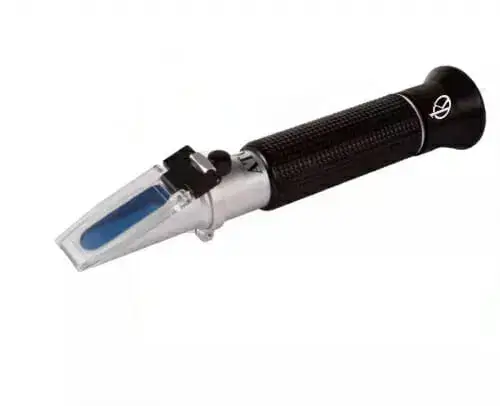
Salinity Refractometers: Practical Applications and Techniques 2026
What is it used for in 2026
Salinity refractometers are essential instruments used to measure the concentration of salt in solutions, particularly seawater and brine. In 2026, these devices are crucial in various fields including marine biology, aquaculture, environmental science, and food production. They enable accurate monitoring of salinity levels, which is vital for maintaining the health of aquatic ecosystems and ensuring quality control in food and beverage industries. Their ability to deliver precise readings contributes significantly to research and quality assessment processes.
History and evolution of the technology
The development of refractometry dates back to the early 19th century with the invention of light reflection devices. Over the decades, the technology has evolved from basic optical devices to sophisticated digital refractometers equipped with automatic temperature compensation. The introduction of salinity refractometers has revolutionized marine science and industry, providing accurate and reliable measurements that were previously unattainable.
How to use it step by step
Using a salinity refractometer involves a few straightforward steps:
- Calibration: Before using the refractometer, ensure it is calibrated according to the manufacturer's instructions, using distilled water to set the zero point.
- Sample Preparation: Collect the sample of seawater or brine in a clean container. Ensure that there are no contaminants that could affect the reading.
- Applying the Sample: Place a few drops of the sample on the prism of the refractometer. Close the cover to avoid any external light interference.
- Reading the Measurement: Look through the eyepiece and read the measurement against the scale, noting the salinity concentration.
- Cleansing the Device: Rinse the prism with distilled water after each use to prevent cross-contamination.
Best techniques and protocols
To achieve accurate readings with salinity refractometers, consider the following techniques and protocols:
- Utilize automatic temperature compensation features, if available, to account for temperature variations during measurements.
- Ensure that all equipment is clean and maintained regularly to avoid residue build-up that could skew results.
- Take multiple readings for the same sample to ensure consistency and accuracy.
- Document all measurements meticulously for future reference and quality control purposes.
Practical applications by laboratory type
Different laboratories utilize salinity refractometers in various ways:
- Marine Biology Labs: Measure salinity levels in aquatic organisms’ habitats.
- Aquaculture: Monitor water conditions for fish and shellfish farming.
- Food and Beverage Industries: Ensure quality control in salt concentrations in food products.
Regulations, standards and certifications
In laboratory settings, salinity refractometers must comply with industry regulations and standards. These might include ISO certifications for quality management and specific guidelines provided by environmental agencies. Regular calibration and maintenance are essential to meet these standards and ensure reliable results.
Comparison with alternative technologies
While salinity refractometers are popular for measuring salinity, other technologies such as conductivity meters and ion-selective electrodes are also used. Conductivity meters are effective for rapid measurements but may require more extensive calibration. In contrast, ion-selective electrodes provide precise readings but can be affected by the presence of other ions in the solution.
Comparison of available models
| Model | Best for | Key specs | Recommended use case |
|---|---|---|---|
| YR05887 | Testing salinity in brine solutions | Salinity: 2-4% (20-40ppt), Specific Gravity: 1.015-1.030 | Ideal for marine research and industry applications. |
| YR05888 | Measuring low salinity levels | Salinity: 0-4% (0-40ppt), Specific Gravity: 1.000-1.030 | Excellent for quality control in food production. |
| YR05913 | Clinical laboratory testing | Salinity: 2-4% (20-40ppt), Specific Gravity: 1.015-1.030 | Useful for research in clinical environments. |
| YR05914 | General salinity testing | Salinity: 0-4% (0-40ppt), Specific Gravity: 1.000-1.030 | Versatile for various laboratory applications. |
Common mistakes and how to avoid them
Common mistakes when using salinity refractometers include:
- Not calibrating the device properly, leading to inaccurate readings.
- Using contaminated samples, which can give misleading results.
- Failing to account for temperature variations, affecting measurement accuracy.
To avoid these issues, always follow the calibration procedures, handle samples carefully, and utilize any temperature compensation features.
Maintenance, calibration and good practices 2026
Regular maintenance of salinity refractometers is crucial for their longevity and accuracy:
- Calibrate the device frequently using standard solutions.
- Clean the prism immediately after use to prevent residue build-up.
- Store the device in a protective case to avoid damage.
Cost-benefit analysis 2026
Investing in a quality salinity refractometer can enhance laboratory efficiency. The benefits often outweigh the costs when considering the accurate measurements that contribute to research and quality control. Evaluating the price versus the quality of readings can help laboratories make informed decisions on which model to choose.
Frequently asked questions
What is the best way to calibrate a salinity refractometer?
The best way to calibrate a salinity refractometer is to use distilled water as your standard. Place a few drops of distilled water on the prism and adjust the scale to zero. Repeat this process with calibration solutions if available.
How often should I calibrate my salinity refractometer?
Calibration should ideally be performed before each use or at least once a week, depending on the frequency of use and the precision required for your measurements.
Can I use a salinity refractometer for other liquids?
While salinity refractometers are designed for saline solutions, they can also measure other liquids with similar refractive indices. However, ensure that the liquid does not contain other solids that could affect the readings.
What maintenance do salinity refractometers require?
Regular maintenance includes cleaning the prism after each use, calibrating the device frequently, and storing it properly in a protective case to avoid damage.
Are there any specific temperature conditions for using a salinity refractometer?
Salinity refractometers function best within the temperature range specified by the manufacturer. It is essential to allow the device to acclimatize to room temperature before use.
How do I choose the right model for my laboratory?
When choosing a model, consider the range of salinity you need to measure, the precision required, and whether automatic temperature compensation is necessary for your applications.
What is the typical cost range for salinity refractometers?
The cost of salinity refractometers can vary widely based on features and specifications. Generally, you can expect prices to range from $50 to several hundred dollars, depending on the model's accuracy and capabilities.
If you are looking for a fusion of innovation and quality, you have come to the right place. At Kalstein, we offer you the luxury of exploring our exclusive catalog of laboratory equipment. We manufacture every device to the highest standards of excellence. Our intuitive and seamless online purchasing channels are designed for your convenience, securing the most competitive prices. Hesitate no longer — we bring science to life, it is time to become part of our community.