Table spectrophotometer YR05478
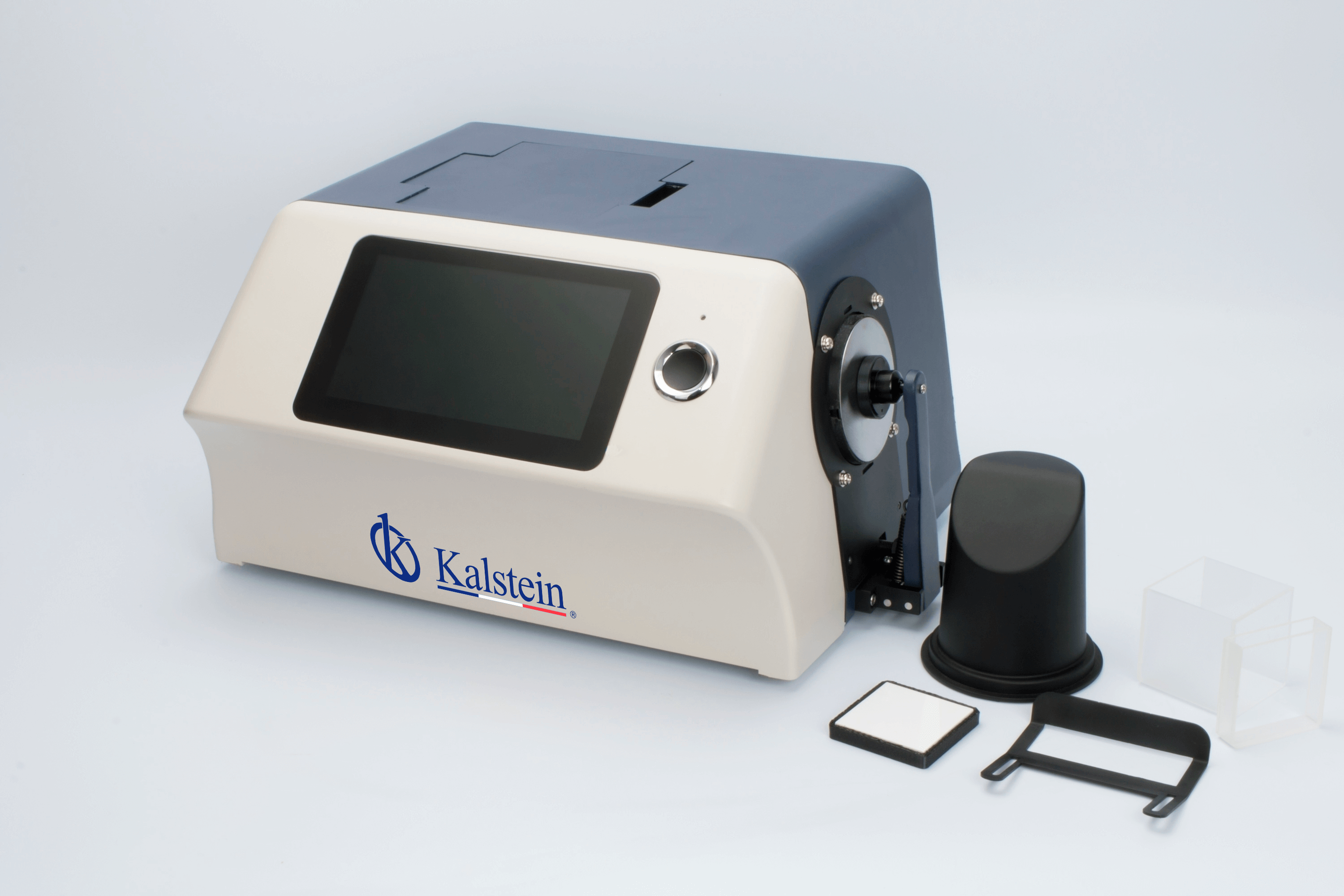
The Table spectrophotometer YR05478 combines technical features for laboratory routines, operational continuity and a coherent equipment selection process.
This page provides an overview of the Table spectrophotometer YR05478, including selection criteria, investment factors, operational advantages and maintenance recommendations. The aim is to support an informed decision before requesting a quotation.
This Kalstein model is available for laboratories in United Kingdom, with selection criteria adapted to local purchasing, installation and support conditions.
Key factors to consider
Before selecting the Table spectrophotometer YR05478, confirm workflow, available space, required accessories and installation conditions. This prevents oversizing the purchase and helps prepare a more accurate quotation.
Its use is oriented to laboratory routines that require observation, control and operational continuity.
For the market in United Kingdom, evaluation should consider local context such as NHS, university research, UKCA/CE marking and match the product to the real workload of the laboratory.
Market price range
The investment should be evaluated according to configuration, required accessories, installation conditions and available technical support.
The final price may vary according to configuration, accessories, logistics, warranty and territorial availability. Compare the technical sheet with the real laboratory workload before confirming the investment.
In United Kingdom, budget comparison should include CE references, 230V/50Hz power conditions, accessories, logistics and after-sales support.
Value for money
Equipment value depends on operational stability, required accuracy, ease of maintenance and accessory availability.
Value for money should be reviewed together with equipment stability, after-sales support, technical documentation and expected service life. A well-matched selection reduces downtime and improves return on investment.
Advantages and disadvantages
Its use is oriented to laboratory routines that require observation, control and operational continuity.
Main advantages include specialized application, integration with laboratory routines and accessory configuration. Limitations may include installation requirements, user training and preventive maintenance to preserve performance.
Expected lifespan based on use and maintenance
Model YR05478 (current) optical geometry Reflect: di:8°, de:8°(diffuse illumination, viewing angle of 8 degrees); SCI (specular component included)/SCE (specular component excluded); UV light source included / UV excluded Transmittance: di:0°, de:0° (diffuse illumination: 0° viewing) SCI (specular component included)/SCE (specular component excluded) Haze (ASTM D1003), complies with CIE No.15, GB/T 3978, GB 2893, GB/T 18833, ISO7724/1, ASTM E1164, DIN5033 Teil7 Application Used for precise analysis and transmission of laboratory color. Apply in paint, ink, textile, clothing, printing and dyeing, printing, etc. industries for color transfer and quality control.
Service life depends on usage frequency, cleaning, storage, calibration when applicable and adherence to technical recommendations. A structured maintenance plan helps preserve accuracy, safety and operational continuity.
Support and spare-parts availability oriented to United Kingdom helps preserve service continuity and plan preventive maintenance without extended downtime.
Specifications table for the Table spectrophotometer YR05478
Table spectrophotometer YR05478
Características
- Alta configuración de hardware: pantalla táctil capacitiva a color TFT de 7 pulgadas; Bluetooth 2.1; Rejilla cóncava.
- Sensor CMOS de doble matriz de 256 elementos de imagen; Lámpara de xenón estable de larga vida útil.
- Con espectro reflectante y transmisivo, valor de laboratorio preciso, bueno para calcular la fórmula de color y hacer una transmisión de color precisa.
- Apertura de medición de identificación automática. Libremente conmutable entre 3 aperturas de medición: Φ 25,4 mm/8 mm/4 mm.
- Sensor de temperatura incorporado para monitorear y compensar la temperatura de medición para garantizar una medición más precisa.
- Rango de longitud de onda 360nm - 780nm. Se puede usar para probar muestras fluorescentes con una amplia aplicabilidad y una operación simple
- Detector de fuente de luz independiente para garantizar que la fuente de luz sea confiable.
- Múltiples modos de medición: modo de gestión de calidad, modo de muestra; Cumple con los requisitos de más usuarios.
- Múltiples accesorios, portamuestras, abrazadera de fijación, adecuados para más condiciones de trabajo.
- Almacenamiento de datos de gran capacidad, para resultados de prueba de 20000 piezas.
- Localización de cámara incorporada.
- Funciones ampliadas más potentes en el software para PC.
Especificaciones técnicas
| Model | YR05478 (current) |
| optical geometry | Reflect: di:8°, de:8°(diffuse illumination, viewing angle of 8 degrees); SCI (specular component included)/SCE (specular component excluded); UV light source included / UV excluded Transmittance: di:0°, de:0° (diffuse illumination: 0° viewing) SCI (specular component included)/SCE (specular component excluded) Haze (ASTM D1003), complies with CIE No.15, GB/T 3978, GB 2893, GB/T 18833, ISO7724/1, ASTM E1164, DIN5033 Teil7 |
| Application | Used for precise analysis and transmission of laboratory color. Apply in paint, ink, textile, clothing, printing and dyeing, printing, etc. industries for color transfer and quality control. |
| Integrating sphere size | Φ154mm |
| Light source | 360 nm to 780 nm, combined LED light (5 million hours lifespan) |
| Spectrophotometric mode | concave grating |
| Sensor | 256-element dual matrix CMOS image sensor |
| Wavelength range | 360-780nm |
| Wavelength interval | 10nm |
| Half-bandwidth | 10nm |
| Measured reflectance range | 0-200% |
| Measurement aperture | Reflective: Φ30mm/Φ25.4mm, Φ10mm/Φ8mm, Φ6mm/Φ4mm; |
| Transmissive: Φ30mm/Φ25mm; | |
| Observation: 1. Automatic identification of switch gauge 2. Custom gauge setting and lens position | |
| Specular component | Reflectance: SCI&SCE / Transmittance: SCI&SCE |
| Color space | CIE Lab, XYZ, Yxy, LCh, LUV CIE, Musell, s-RGB, HunterLab, βxy, DIN Lab99 |
| Color difference formula | ΔE*ab, ΔE*uv, ΔE*94, ΔE*cmc(2:1), ΔE*cmc(1:1), ΔE*00, DINΔE99, ΔE(Hunter) |
| Other colorimetric index | WI (ASTM E313, CIE/ISO, AATCC, Hunter), |
| YI (ASTM D1925, ASTM 313), | |
| MI (metamerism index), | |
| Staining fastness, color fastness, color intensity, opacity, | |
| 8° gloss, Gardner index, Pt-Co index, index 555, haze (ASTM D1003) | |
| Observer angle | 2°/10° |
| Illuminant | D65, A, C, D50, D55, D75, F1, F2, F3, F4, F5, F6, F7, F8, F9, F10, F11, F12 |
| Displayed data | Spectrogram/Values, Sample chromaticity values, Color difference values/Graph, PASSED/FAILED result, Color compensation |
| Measuring time | About 2.4 s (SCI and SCE measurement about 5 s) |
| Repeatability | Spectral reflectance: Φ25.4 mm/SCI, standard deviation within 0.06% (400 nm to 700 nm: within 0.05%) |
| Chromaticity value: Φ25.4 mm/SCI, standard deviation within ΔE*ab 0.01 (when a white calibration plate is measured 30 times at 5-second intervals after white calibration) Spectral transmittance: Φ25.4 mm/SCI, standard deviation within 0.06% (400 nanometers to 700 nanometers: within 0.06%) | |
| Chromaticity value: Φ25.4 mm/SCI, standard deviation within ΔE*ab 0.015 (when a white calibration plate is measured 30 times at 5-second intervals after white calibration) | |
| Error between instruments | Φ25.4 mm/SCI, within ΔE*ab 0.15 (average for 12 BCRA Series II color tiles) |
| Dimension | L*W*H=370x300x200mm |
| Weight | Approx. 9.6 kg |
| Power | AC 24V, 3A power adapter |
| Illuminant lifespan | 5 years, over 3 million measurements |
| Monitor | 7-inch color TFT LCD, capacitive touchscreen |
| Data port | USB serial port and printing |
| Data storage | 1000 standard pieces, 20000 sample pieces |
| Language | simplified Chinese, traditional Chinese, English, |
| Operating environment | 0~40℃, 0~85%RH (non-condensing), Altitude < 2000m |
| Storage environment | -20~50℃, 0~85%RH (non-condensing) |
| Standard accessory | Power adapter, user guide, CD disk (PC software), USB cable, standard calibration plate, black calibration cavity, black transmission deflector, sample holder, gauge 25.4, gauge 8, gauge 4 |
| Optional accessory | Microprinter, transmissive test component, micro-aperture transmission test clamp component (4 mm), instrument inversion components |
| Notes: Specifications are subject to change without notice. The YS6003 quality management software can only be used for data management | |
Frequently Asked Questions about the Table spectrophotometer YR05478
How do I choose the right table spectrophotometer yr05478 for my laboratory?
Selection should start from workload, critical technical parameters, available space and frequency of use. Kalstein can support the comparison between operational needs, budget and maintenance requirements to avoid choosing equipment that is oversized or insufficient.
What should I review before requesting a quotation?
Review the model, technical specifications, required accessories, electrical conditions, consumables, delivery timing and installation needs. With this information, the quotation can be prepared more accurately and aligned with the laboratory workflow.
Does Kalstein provide guidance for this type of equipment?
Yes. The commercial and technical team can support product evaluation, explain differences between models, answer application questions and advise on preventive maintenance, spare parts and documentation required for a secure purchase.
What maintenance helps extend the equipment lifespan?
Follow the manufacturer manual, perform regular cleaning, verify calibrations or controls when applicable, avoid workload abuse and keep maintenance records. Stable use and preventive routines reduce failures and improve operational continuity.