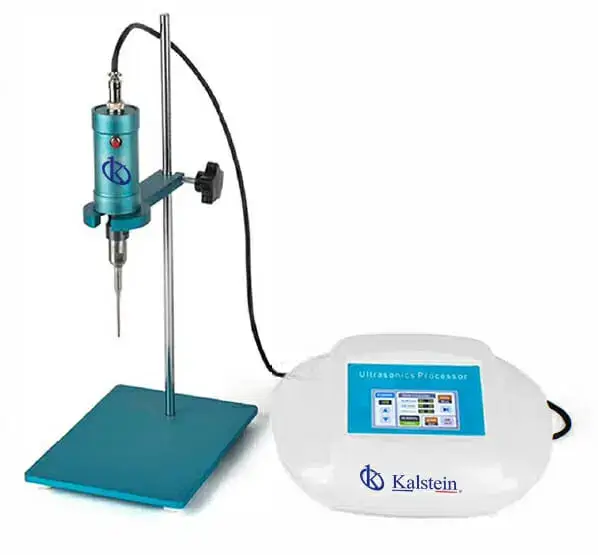
Ultrasonic Homogenizers: A Comparative Analysis Against Alternative Technologies
Ultrasonic homogenizers are essential tools in laboratories, used for a range of applications such as emulsification, cell disruption, and particle size reduction. This article provides a deep comparative analysis of different models of ultrasonic homogenizers and alternative technologies available in the market. We will explore their specifications, applications, and effectiveness to help laboratory professionals make informed decisions.
Understanding Ultrasonic Homogenizers in Laboratory Applications
Ultrasonic homogenizers utilize high-frequency sound waves to create cavitation bubbles in liquids. When these bubbles collapse, they generate intense shear forces that can effectively disrupt cells, emulsify liquids, or disperse particles. Each model of ultrasonic homogenizer has specific features that make it suitable for various applications in laboratory settings.
Comparison of Available Models
| Model | Ultrasonic Power (W) | Handling Capacity (ml) | Price (USD) | Best For |
|---|---|---|---|---|
| YR05829 | 5-150 | 0.1-50 | 659.00 | Basic cell disruption and emulsification tasks. |
| YR05830 | 5-250 | 0.5-100 | 659.00 | Versatile applications in biochemical research. |
| YR05831 | 5-400 | 0.5-300 | 699.00 | Advanced cell disruption and extraction. |
| YR05831-op1 | 5-400 | 0.5-300 | 149.00 | Cost-efficient for small-scale laboratories. |
| YR05831-op2 | 5-400 | 0.5-300 | 95.00 | Budget-friendly option for routine applications. |
| YR05832 | 650 | 0.2-500 | 1050.00 | High-power applications requiring substantial cavitation. |
Common Mistakes and How to Avoid Them
When utilizing ultrasonic homogenizers, laboratory professionals often make mistakes that can compromise results. Common errors include incorrect settings, such as inadequate ultrasonic power or inappropriate handling capacity. To avoid these pitfalls, always refer to the manufacturer's specifications for each model, such as those provided for the YR05831, which has a maximum power of 400 watts suitable for complex emulsifications.
Frequency and Power: Key Factors in Ultrasonic Homogenizer Performance
The frequency and power output of an ultrasonic homogenizer significantly impact its performance. Higher frequencies usually result in finer emulsions but may be less effective for larger particles. For example, the YR05830 operates at a maximum power of 250 watts, making it versatile for various applications, while the YR05832 operates at 650 watts, ideal for high-viscosity samples.
Energy Consumption: Evaluating Efficiency
Energy efficiency is crucial in selecting laboratory equipment. Ultrasonic homogenizers such as YR05832, with higher power ratings, may consume more energy; hence, understanding energy costs relative to output is essential. Laboratories should assess their operational hours and energy rates to calculate total costs effectively.
Comparative Analysis: Ultrasonic Homogenizers vs. Alternative Technologies
When comparing ultrasonic homogenizers to alternative technologies like bead mills or high-shear mixers, several factors come into play, including throughput, cost, and application suitability. Ultrasonic homogenizers excel in producing high-quality emulsions without the need for additional consumables, unlike bead mills which may require ongoing media replacements. This section will analyze these differences in more detail, focusing on factors such as longevity and operational costs.
Operational Guidelines for Optimal Performance
To maximize the effectiveness of ultrasonic homogenizers, understanding operational guidelines is crucial. For example, it is essential to select the appropriate horn diameter based on the volume and viscosity of the sample. Using a horn that is too small might lead to inefficient processing, while an oversized horn may not deliver the desired results. Guidelines specific to each model, like the YR05831, should be strictly followed to achieve optimal outcomes.
Frequently Asked Questions
What are the advantages of using ultrasonic homogenizers in laboratories?
Ultrasonic homogenizers, like the YR05830, offer significant advantages including high efficiency in emulsification, particle size reduction, and cell disruption, making them valuable in biochemical research. Their multifunctionality allows handling various samples with precise control over processing parameters.
How to choose the right ultrasonic homogenizer for my application?
Choosing the right ultrasonic homogenizer depends on the specific requirements of your application, such as power, capacity, and type of samples. For instance, the YR05831 offers a power range of up to 400 watts, ideal for demanding procedures, while the YR05829 suits more straightforward tasks.
What are common errors when using ultrasonic homogenizers?
Common errors include selecting inappropriate power settings and not considering sample viscosity. For instance, using too low power on a viscous sample may lead to ineffective processing. It is crucial to understand each model's specifications, like those of the YR05832, to avoid these mistakes.
How does ultrasonic homogenization compare to bead milling?
Ultrasonic homogenization, such as performed by the YR05831, is generally faster and requires less maintenance compared to bead milling. Additionally, it does not necessitate the use of consumable grinding media, resulting in lower operational costs over time.
What are the energy consumption metrics for ultrasonic homogenizers?
Energy consumption varies by model; for example, the YR05832 has a maximum output of 650 watts. Understanding the energy consumption relative to your laboratory's operations is essential for budgeting and sustainability initiatives.
Which ultrasonic homogenizer is best for high-volume applications?
The YR05832, with its 650 watts power and high handling capacity, is well-suited for high-volume applications in laboratories needing efficient emulsification and dispersion.
Can ultrasonic homogenizers be integrated with LIMS systems?
Yes, many modern ultrasonic homogenizers, including the YR05830, can be integrated with laboratory information management systems (LIMS) for data tracking and process automation, enhancing workflow efficiency.
How do I maintain my ultrasonic homogenizer for longevity?
Regular maintenance, such as cleaning the horn and checking for wear, is essential for the longevity of ultrasonic homogenizers. Following the manufacturer's guidelines for models like the YR05831 ensures continued performance and reliability.
If you are looking for a fusion of innovation and quality, you have come to the right place. At Kalstein, we offer you the luxury of exploring our exclusive catalog of laboratory equipment. We manufacture every device to the highest standards of excellence. Our intuitive and seamless online purchasing channels are designed for your convenience, securing the most competitive prices. Hesitate no longer — we bring science to life, it is time to become part of our community.