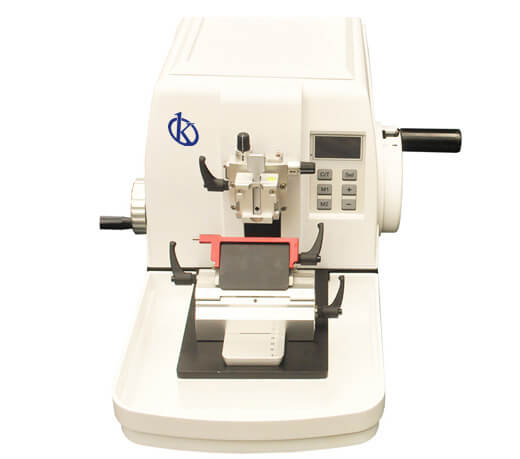
Understanding Measurement Interpretation with the YR416-1 Microtome
The YR416-1 microtome is a semi-automatic detection instrument that plays a crucial role in the field of pathological anatomy. Mastering the interpretation of results and readings from the YR416-1 can significantly enhance the quality of work in laboratories. This article delves into the measurement interpretation processes, providing practical guidance tailored specifically to the YR416-1 model.
Technical Specifications of the YR416-1 Microtome
| Specification | Details |
|---|---|
| Model | YR416-1 |
| Minimum Cutting Thickness | 0.25 μm |
| Horizontal Feed | 28 mm |
| Vertical Sample Stroke | 70 mm |
| Sample Holder Rotation | Any angle within 360 degrees |
| Blade Holder Base Movement Range | 0-60 mm (forward and backward) |
| Blade Press Plate Movement Range | 0-23 mm |
| Sample Clamp Rotation | Any angle within 360 degrees |
| Sample Orientation | XY-8° |
| Maximum Sample Size | 70 × 70 mm |
| Feed Speed Adjustment | 1500 μm/s ~ 3500 μm/s |
| Precision Error | ±1% |
| Working Voltage | AC 220V±10% 50Hz (standard model); AC 110V±10% 60Hz |
| Power | 100W |
| Dimensions | 575×420×330 mm (Width×Depth×Height) |
| Net Weight | 37 kg |
Understanding Measurement Units and Ranges
The YR416-1 microtome provides precise measurements in micrometers (μm), which is critical for determining the thickness of slices for various types of specimens. Understanding units such as μm is essential in making accurate interpretations of your results.
Normal ranges for cutting thickness can vary depending on the sample type. For instance, samples for histological examination often require sections of 4-10 μm, whereas ultra-thin sections for electron microscopy can be as thin as 0.1 μm. Familiarization with these ranges will ensure that specimens are not compromised, aiding in valid interpretations.
Common Misinterpretations and How to Avoid Them
One of the frequent challenges faced by operators of the YR416-1 microtome is misreading measurements, which can come from various factors including equipment calibration and user technique. It is vital to ensure that the cutting thickness is correctly set to avoid inconsistencies in the sample.
Another common issue is the misinterpretation of the display readings. Operators should familiarize themselves with the user manual to understand how each reading corresponds to the sample properties. Regular training sessions can also help in reinforcing correct operational procedures.
How to Properly Read the Display Outputs
The display of the YR416-1 microtome provides real-time feedback on cutting parameters. To effectively interpret these outputs:
- Ensure that the cutting thickness displays the correct value before each sectioning.
- Note the feed speed and make adjustments as necessary based on the sample type.
- Regularly check for any error codes and refer to the troubleshooting section of the manual for guidance.
Each display line corresponds to a specific parameter that must align with the expected outcome based on the sample and intended results.
Interpreting Cutting Results: Worked Examples
To illustrate the interpretation of results, consider a scenario where a sample was cut at a thickness of 5 μm using the YR416-1. The results indicated a smooth, continuous slice with no tears, crucial for histological analysis. This outcome suggests optimal adjustment of cutting parameters and indicates proper sample preparation.
Conversely, if the cut displays inconsistencies such as jagged edges, operators should revisit parameters such as blade sharpness and feed speed adjustments. Documenting these parameters alongside results can help in refining techniques over time.
Sector-Specific Applications of the YR416-1 Microtome
The YR416-1 microtome finds diverse applications across various sectors:
- Clinical Laboratories: Used for preparing tissue samples for diagnosis.
- Research Facilities: For ultra-thin sections needed for scientific studies.
- Industrial Use: In the development of materials requiring cross-sections for quality control.
- Educational Institutions: As a training tool for students learning histology.
Understanding how the YR416-1 is used across different sectors can help operators adapt their techniques for improved outcomes.
Frequently Asked Questions
What is the minimum cutting thickness of the YR416-1 microtome?
The minimum cutting thickness of the YR416-1 microtome is 0.25 μm, allowing for precise sectioning of specimens.
How can I ensure accurate readings during operation?
To ensure accurate readings, regularly calibrate the device, ensure proper blade maintenance, and follow the operational protocols as described in the user manual.
What types of samples can be processed with the YR416-1?
The YR416-1 is versatile and can handle a wide range of samples, including biological tissues, hard materials, and embedded samples.
What should I do if I encounter an error code on the YR416-1?
Refer to the troubleshooting section of the user manual to diagnose and resolve the specific error code. Regular maintenance checks can also prevent many common issues.
Can the YR416-1 be used for educational purposes?
Yes, the YR416-1 is an excellent tool for educational purposes, enabling students to learn about histological techniques and sample preparation.
What are the key features of the YR416-1 that aid in measurement interpretation?
Key features include adjustable cutting thickness, a user-friendly display for real-time feedback, and a reliable blade holder mechanism, all of which contribute to accurate measurement interpretation.
How often should the YR416-1 be serviced?
Regular servicing is recommended every 6 to 12 months, depending on usage frequency, to maintain accuracy and functionality.
If you are looking for a fusion of innovation and quality, you have come to the right place. At Kalstein, we offer you the luxury of exploring our exclusive catalog of laboratory equipment. We manufacture every device to the highest standards of excellence. Our intuitive and seamless online purchasing channels are designed for your convenience, securing the most competitive prices. Hesitate no longer — we bring science to life, it is time to become part of our community.