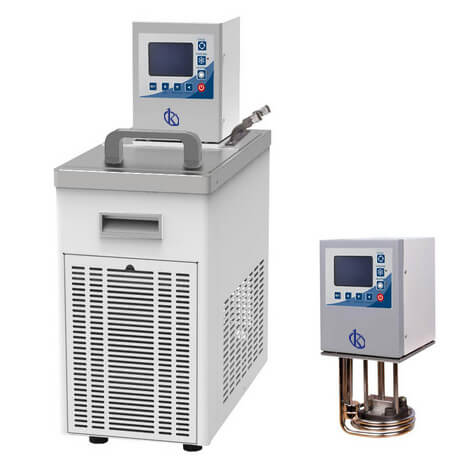
Understanding the Operating Principle and Scientific Foundation of the YR04986 Circulating Bathroom Cooling and Heating Unit
The YR04986 circulating bathroom cooling and heating unit is an advanced piece of laboratory equipment designed to provide a stable liquid temperature environment ranging from -5°C to 100°C. This apparatus serves crucial roles in electronic component testing, chemical synthesis, and life sciences experiments, among others. Understanding the operating principles and scientific foundations behind the YR04986 is essential for maximizing its utility in various applications.
Principle of Operation
The YR04986 employs a PID (Proportional-Integral-Derivative) control system, which is pivotal in maintaining the desired temperature. This process begins with the measurement of the actual temperature using a sensor, which is then compared to the setpoint temperature. The PID algorithm calculates the necessary adjustments needed to minimize any deviation. The effectiveness of the PID controller is contingent upon tuning its parameters, ensuring that the heating and cooling response is swift and stable.
In essence, the circulating bathroom cooling and heating unit operates on the principles of thermodynamics, specifically focusing on heat transfer mechanisms such as conduction, convection, and radiation. The design utilizes a high-efficiency compressor with low noise output and no fluorocarbons, making it an environmentally friendly option.
Scientific Foundations
The YR04986 functions based on the thermodynamic principles that govern heat transfer. The unit circulates fluids to ensure uniform temperature distribution, relying on both convective and conductive heat transfer. This methodology minimizes thermal gradients and promotes consistency across samples. The significance of maintaining such temperatures is paramount in experiments where even slight deviations can lead to inaccurate or unreliable results.
Another critical aspect is the use of stainless steel for the tank construction, which not only provides durability but also enhances thermal conductivity, allowing for quicker responses to temperature changes. The PID control combined with these design choices leads to exceptional steadiness and reliability in temperature management.
Technical Specifications of YR04986
| Model | Temperature Range (°C) | Stability (°C) | Flow Rate (L/min) | Lift (m) | Capacity (L) | Opening (mm) | Depth (mm) | Product Size (WxDxH mm) |
|---|---|---|---|---|---|---|---|---|
| YR04986 | -5 to 100 | ±0.05 | 14 | 12 | 10 | 160x140 | 180 | 450 x 360 x 820 |
Applications of YR04986 in Various Sectors
The YR04986 is a versatile unit tailored for multiple applications across different sectors. In clinical laboratories, it is utilized for temperature control in biochemical reactions and sample preservation. In industrial settings, it plays a crucial role in cooling processes and equipment testing.
Furthermore, educational institutions benefit from using the YR04986 for teaching thermodynamics and fluid dynamics principles, allowing students to observe real-world applications of theoretical knowledge. Each sector has specific protocols and configurations to optimize the use of the YR04986 based on the unique demands of the application.
Common Setup and Initial Calibration
When setting up the YR04986, it is essential to follow specific steps to ensure optimal performance. Begin with unboxing the equipment, followed by an inspection to confirm all components are intact. Secure the unit to a stable surface, ensuring it is level to prevent operational inconsistencies.
The power-up sequence should include a calibration check to validate the temperature readings against known standards. This initial calibration is crucial for maintaining accuracy in measurements during subsequent experiments. Common setup mistakes include overlooking proper fluid levels and failing to check for leaks, which can significantly affect performance.
Troubleshooting Common Symptoms
Even high-quality equipment like the YR04986 may experience issues. Identifying symptoms and understanding their causes can expedite troubleshooting. Here’s a breakdown of common problems:
| Symptom | Possible Cause | Solution |
|---|---|---|
| Unit does not power on | Power supply issue | Check power connections and circuit |
| Error code E-03 | Overheating | Inspect cooling system, ensure adequate ventilation |
| Inconsistent temperature readings | Sensor malfunction | Calibrate or replace sensor as needed |
Frequently Asked Questions
What is the temperature range of the YR04986?
The YR04986 has a temperature range of -5°C to 100°C, allowing it to accommodate various experimental needs.
How does the PID control work in the YR04986?
The PID control system measures the current temperature and adjusts the heating or cooling output to maintain the desired setpoint, ensuring precise temperature stability.
What materials are used in the construction of YR04986?
The unit features stainless steel (304) for the tank, which enhances durability and thermal conductivity, making it suitable for a range of applications.
What are the common applications of the YR04986?
This unit is utilized in clinical labs, industrial applications, educational settings, and research environments for temperature control and experiments.
How can I troubleshoot common issues with the YR04986?
Common issues can include power failures, error codes, and temperature inconsistencies. Refer to the troubleshooting table in this article for detailed guidance.
How do I perform initial calibration for the YR04986?
To calibrate, turn on the unit and compare the displayed temperature with a known standard, making necessary adjustments for accuracy.
If you are looking for a fusion of innovation and quality, you have come to the right place. At Kalstein, we offer you the luxury of exploring our exclusive catalog of laboratory equipment. We manufacture every device to the highest standards of excellence. Our intuitive and seamless online purchasing channels are designed for your convenience, securing the most competitive prices. Hesitate no longer — we bring science to life, it is time to become part of our community.