Utilizing Ultrasonic Homogenizers in Academic Research Projects
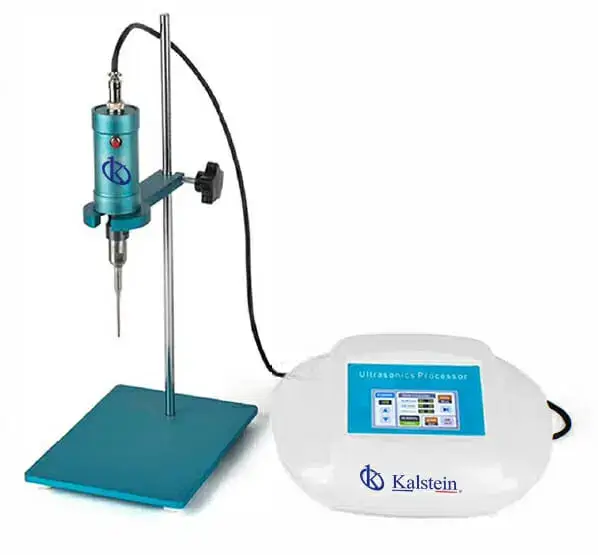
Ultrasonic homogenizers have become indispensable tools in academic research and project development, significantly enhancing the efficiency and outcomes of liquid processing tasks. They leverage ultrasonic waves to create cavitation effects, which can effectively disrupt cells, emulsify, and homogenize various materials. This article explores how ultrasonic homogenizers, such as the YR05829, YR05830, YR05831, YR05831-op1, YR05831-op2, and YR05832 models, can be leveraged in university research settings.
Understanding Ultrasonic Homogenizers and Their Applications in Research
Ultrasonic homogenizers are multifunctional devices that apply ultrasonic energy to liquids for a variety of applications, including cell disruption, emulsification, and extraction. In academic research, these homogenizers are particularly valuable for their ability to process small volumes efficiently, making them ideal for labs that require precise and reproducible results. For instance, the YR05829 model offers a power range of 5-150 watts and operates at a frequency of 19-25 kHz, proving effective in homogenizing biological samples.
Fostering Collaborative Research through Ultrasonic Technologies
Collaboration among researchers often involves sharing resources and techniques. Ultrasonic homogenizers like the YR05830 can facilitate this by providing consistent results in processing samples from various experiments. Its automated and manual operation modes allow multiple users to engage with the device, making it versatile for different project requirements.
Optimizing Sample Preparation for Academic Projects
Effective sample preparation is critical in research. The YR05831, with its larger capacity for handling samples (0.5-300ml), allows researchers to prepare multiple samples simultaneously, enhancing throughput. The ability to control temperature and time settings further assures that samples are processed under optimal conditions, vital for preserving the integrity of sensitive materials.
Integrating Ultrasonic Homogenizers into Research Protocols
When integrating ultrasonic homogenizers into research protocols, it is essential to establish the best practices for their use. The YR05831-op1 model, for example, includes optional probes for varying amplitudes, allowing researchers to fine-tune the sonic energy according to their application needs, ensuring effective emulsification or homogenization, particularly for challenging samples like viral cultures.
Comparison of Available Models
| Model | Power (W) | Frequency (kHz) | Capacity (ml) | Price (USD) |
|---|---|---|---|---|
| YR05829 | 5-150 | 19-25 | 0.1-50 | 659.00 |
| YR05830 | 5-250 | 19-25 | 0.5-100 | 659.00 |
| YR05831 | 5-400 | 19-25 | 0.5-300 | 699.00 |
| YR05831-op1 | 5-400 | 19-25 | 0.5-300 | 149.00 |
| YR05831-op2 | 5-400 | 19-25 | 0.5-300 | 95.00 |
| YR05832 | Max 650 | 20-25 | 0.2-500 | 1050.00 |
Maximizing Efficiency Through Proper Use
To maximize the efficiency of ultrasonic homogenizers, researchers should pay attention to factors such as probe selection, sample type, and processing time. The YR05832 model, known for its high power and versatility, can effectively disrupt tough samples when the right settings are used. By following the manufacturer’s guidelines and adjusting parameters like amplitude and duration, labs can achieve optimal results.
Common Mistakes and How to Avoid Them
One common mistake when using ultrasonic homogenizers is not calibrating the equipment properly. Users often overlook the importance of adjusting the frequency and power settings, which can lead to suboptimal results. It's crucial to follow best practices, such as referring to the user manual for each model, including the YR05830, to ensure correct settings based on the specific application. Additionally, maintaining cleanliness and proper handling of probes can prevent contamination and ensure accurate results.
Frequently Asked Questions
How can ultrasonic homogenizers enhance reproducibility in academic research?
Ultrasonic homogenizers, like the YR05831, provide consistent processing conditions that enhance reproducibility in academic research. By controlling parameters such as power and frequency, researchers can achieve uniform results across multiple samples, crucial for experiments requiring precise replication.
What is the best ultrasonic homogenizer for multi-user academic research labs?
For multi-user labs, the YR05830 is ideal due to its automatic and manual operation modes. This flexibility allows different researchers to use the device according to their project needs, making it easier to standardize procedures across various applications.
How do I determine suitable ultrasonic homogenizer settings for different samples?
Determining suitable settings involves understanding the sample type and desired outcomes. For instance, the YR05832 model allows researchers to adjust power and frequency, which can be fine-tuned based on whether the task involves cell disruption or emulsification, ensuring optimal results.
What sample volumes can ultrasonic homogenizers process effectively?
Ultrasonic homogenizers like the YR05831 can handle sample volumes from 0.5ml to 300ml, making them suitable for a wide range of academic projects that require varying sample sizes for analysis and testing.
How does the power rating of an ultrasonic homogenizer impact its performance?
The power rating significantly impacts performance; higher wattage, like that of the YR05831, allows for more effective disruption of tougher samples. Selecting the right power level is essential for achieving the desired homogenization or emulsification results in research applications.
What are the key advantages of using ultrasonic homogenizers in research?
Ultrasonic homogenizers offer several advantages, including efficient sample processing, scalability for various volumes, and the capability to handle complex biological samples. Models like the YR05829 provide high reliability, making them essential for academic research projects.
Can ultrasonic homogenizers be used for virus extraction in laboratories?
Yes, ultrasonic homogenizers such as the YR05830 are effective for virus extraction in laboratories, as they can disrupt viral cells while maintaining sample viability, which is critical for accurate research outcomes in virology.
What maintenance practices should be followed for ultrasonic homogenizers?
Regular maintenance is vital for ensuring optimal performance of ultrasonic homogenizers. This includes calibration checks, proper cleaning of the probes, and routine inspections of the power settings, especially for models like the YR05831, to avoid performance degradation.
Are you interested in enhancing your laboratory capabilities with cutting-edge ultrasonic homogenizers? Request a quote on Kalstein Plus to explore our offerings tailored for academic research.
If you are looking for a fusion of innovation and quality, you have come to the right place. At Kalstein, we offer you the luxury of exploring our exclusive catalog of laboratory equipment. We manufacture every device to the highest standards of excellence. Our intuitive and seamless online purchasing channels are designed for your convenience, securing the most competitive prices. Hesitate no longer — we bring science to life, it is time to become part of our community.