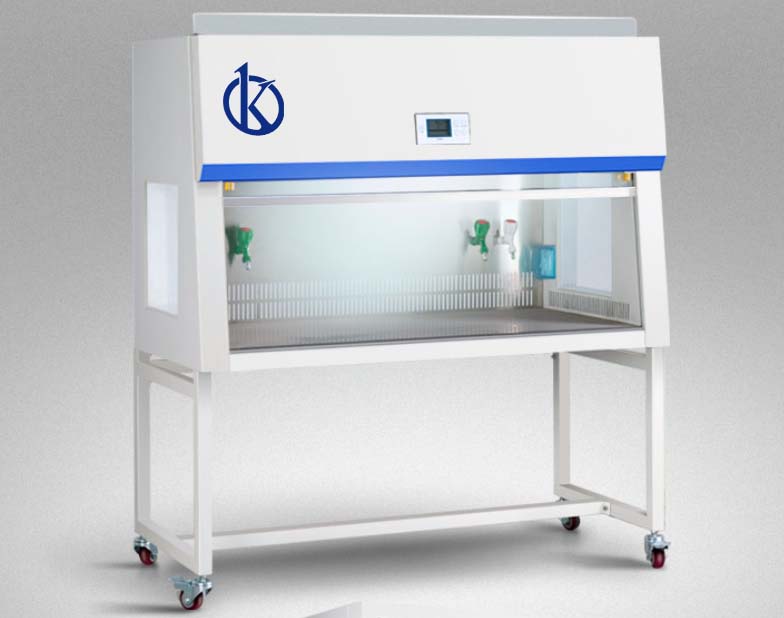
Utilizing Vertical Laminar Flow Clean Benches in Academic Research: Best Practices and Considerations
Vertical laminar flow clean benches are essential tools in laboratory environments, particularly in academic research settings. Their capacity to provide a sterile working environment is crucial for experiments involving sensitive biological materials, chemical reactions, and electronic components. This article discusses the various applications of these clean benches in academic projects, compares different models, and highlights best practices for laboratory professionals.
Overview of Vertical Laminar Flow Clean Benches in Academic Research
Vertical laminar flow clean benches create a controlled environment by filtering the air and providing a sterile workspace. This is especially beneficial in academic research where precision and contamination prevention are paramount. The design of these benches ensures that air flows from the top to the work surface, minimizing the risk of airborne contaminants affecting experiments.
In academic settings, these clean benches are used for a variety of purposes including microbiology, tissue culture, and other biological experiments. By understanding the capabilities and specifications of different models, researchers can select the most appropriate equipment for their specific needs.
Comparison of Available Models
| Model | Cleaning Standard | Airflow Type | Best For | Price (USD) |
|---|---|---|---|---|
| YR05267-1 | ISO 14644.1 Class 5 | Vertical | Biotechnology, Pharmaceuticals | 1600.00 |
| YR05734 | Class 100 | Horizontal | Medical, Biological Engineering | 240.00 |
| YR05735 | Class 100 | Horizontal | Scientific Experiments | 300.00 |
| YR05736 | Class 100 | Vertical | General Laboratory Use | 420.00 |
| YR05737 | Class 100 | Vertical | General Lab Work | 650.00 |
| YR05738 | Class 100 | Vertical | Medical, Food Preparation | 590.00 |
Key Applications in Academic Settings
The adoption of vertical laminar flow clean benches in academic research is critical for maintaining sterile conditions, particularly in fields such as microbiology and pharmacology. For instance, the YR05267-1 model is well-suited for biotechnological applications due to its ISO 14644.1 Class 5 certification. This high level of cleanliness ensures that sensitive experiments are not compromised by contaminants.
Additionally, clean benches like the YR05736 provide flexibility in various experimental setups, supporting protocols that demand stringent sterility. Their structured airflow, which is directed vertically, minimizes the risk of contamination from external sources, making them ideal for tissue cultures and cell line propagation.
Best Practices for Using Clean Benches in Research
To maximize the effectiveness of vertical laminar flow clean benches, researchers should adhere to specific best practices. First, it is crucial to ensure that the bench is properly calibrated and maintained according to the manufacturer's specifications. Regular maintenance checks help in identifying any airflow issues or filter inefficiencies, which could jeopardize the sterility of the workspace.
Furthermore, researchers should develop a protocol for the systematic arrangement of materials within the clean bench. Avoid overcrowding the work surface, as this can disrupt airflow patterns and increase the likelihood of contamination. Instead, materials should be organized logically and efficiently to facilitate smooth workflow during experiments.
Common Mistakes and How to Avoid Them
One common mistake in using vertical laminar flow clean benches is neglecting the importance of pre-use cleaning. Before initiating experiments, it is advisable to disinfect the work surface and all equipment that will be used. This ensures that any potential contaminants are eliminated, creating a safer environment for sensitive research.
Another frequent error involves improper airflow management. Researchers should be aware of airflow dynamics and position themselves to avoid disrupting the laminar airflow. Standing directly in front of the bench can cause air turbulence, compromising sterility. Thus, proper training on the operational protocols of these clean benches is essential for all users.
Frequently Asked Questions
What are the benefits of using the YR05267-1 model for academic research?
The YR05267-1 model is designed for dual-person use and meets ISO 14644.1 Class 5 standards, making it ideal for academic research involving sensitive biological materials. Its efficient airflow and user-friendly design contribute to maintaining a sterile working environment, which is essential for successful experiments.
How can I ensure compliance with standards using the YR05736 clean bench?
To ensure compliance with cleanliness standards while using the YR05736 clean bench, regularly monitor its performance according to ISO guidelines. This model provides a Class 100 environment which is suitable for various laboratory applications, ensuring that contamination is minimized during critical research activities.
What is the optimal use case for the YR05738 model in an academic lab?
The YR05738 model excels in settings where a sterile environment is paramount, such as medical and food preparation laboratories. Its Class 100 airflow system ensures a contamination-free workspace, supporting various academic research tasks including microbiological studies and chemical preparations.
How does the maintenance of a vertical laminar flow clean bench affect research outcomes?
Regular maintenance of a vertical laminar flow clean bench, such as the YR05734 model, is crucial for preserving optimal airflow and filtration efficiency. This directly impacts the sterility of the environment, ensuring that research outcomes are reliable and reproducible across experiments.
What is the importance of positioning in vertical laminar flow clean benches?
Proper positioning is vital when utilizing vertical laminar flow clean benches like the YR05735. Standing too close or directly in the airflow can disrupt the laminar flow, leading to contamination of the workspace. Users should be trained to maintain an appropriate distance to uphold sterility.
Which model is best for conducting sensitive electronic experiments in academia?
The YR05267-1 model is particularly suited for sensitive electronic experiments due to its dual-person capacity and robust design that mitigates contamination. Its specifications allow researchers to work effectively in environments where precision and cleanliness are essential.
How can I improve throughput in academic research with clean benches?
Improving throughput with clean benches can be achieved by optimizing the workflow and arrangement of materials within the workspace. For instance, using the YR05736 model effectively requires a well-organized setup that reduces clutter, thus facilitating faster experiment turnaround times.
What factors should I consider when selecting a clean bench for academic research?
When selecting a clean bench, factors such as the required cleanliness class, workspace dimensions, and specific applications are crucial. The YR05737 model, for example, offers versatility and meets Class 100 standards, making it a solid choice for diverse research needs.
If you are looking for a fusion of innovation and quality, you have come to the right place. At Kalstein, we offer you the luxury of exploring our exclusive catalog of laboratory equipment. We manufacture every device to the highest standards of excellence. Our intuitive and seamless online purchasing channels are designed for your convenience, securing the most competitive prices. Hesitate no longer — we bring science to life, it is time to become part of our community.