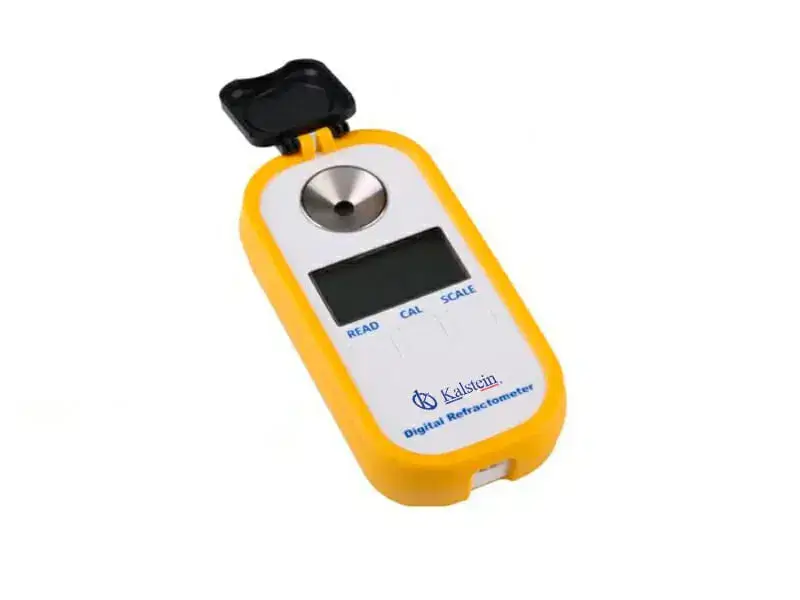
Maximizing Productivity with Digital BRIX Refractometers: A Comprehensive Guide
In today's fast-paced laboratory environments, enhancing productivity while maintaining accuracy is paramount. Digital BRIX refractometers offer a reliable solution for measuring the concentration of soluble solids in various solutions, making them essential tools in food, beverage, and chemical industries. This guide delves into how these devices can optimize productivity and reduce analysis times, comparing various models to identify the best fit for different applications.
Understanding Digital BRIX Refractometers
Digital BRIX refractometers are precision instruments used to measure the refractive index of liquids, allowing laboratories to determine the concentration of soluble solids, particularly sugars. They are widely utilized in industries like food and beverage for quality control and formulation purposes. The automatic temperature compensation (ATC) feature in these models enhances accuracy, making them ideal for uncontrolled environments.
Optimizing Productivity with Digital BRIX Refractometers
Laboratories are constantly looking for ways to improve efficiency and reduce turnaround times. Digital BRIX refractometers play a crucial role in achieving these goals. By providing quick and accurate measurements, they allow for better workflow management. Here are several strategies laboratories can employ to maximize productivity using these refractometers:
1. Leveraging Automatic Temperature Compensation (ATC)
Models such as the YR05944 and YR05945 come equipped with ATC, which eliminates the need for manual temperature corrections, saving time during analysis. This feature ensures that measurements remain consistent across varying environmental conditions, thereby enhancing reliability and efficiency.
2. Streamlining Sample Processing
The ability to process multiple samples in succession without recalibration is critical. Models like YR05946 enable laboratories to run high volumes of tests effectively, minimizing downtime between sample analyses. This is particularly advantageous in settings where large batches of liquid are involved.
3. Enhancing User Training and Workflow
Training staff to use digital BRIX refractometers effectively can lead to significant productivity gains. By understanding the functionalities of models like YR05947 and YR05948, lab personnel can perform analyses faster and with greater precision, reducing human error and increasing throughput.
4. Integrating with Laboratory Information Management Systems (LIMS)
Integrating digital BRIX refractometers with LIMS can further enhance productivity. For instance, models such as YR05949 can export data directly to LIMS, streamlining data entry and record keeping, which can significantly cut down on administrative tasks and allow more time for analysis.
Comparison of Available Models
| Model | Measurement Range | Minimum Division | Accuracy | ATC | Price (USD) |
|---|---|---|---|---|---|
| YR05944 | Brix: 0.0-50.0% | 0.10% | ±0.2% | Yes | 76.00 |
| YR05945 | Brix: 0.0-90.0% | 0.10% | ±0.2% | Yes | 95.00 |
| YR05946 | Brix: 1.3330-1.5177nD | 0.0001nD | ±0.0003nD | Yes | 95.00 |
| YR05947 | Dextran: 0.0-10.6% | 0.10% | ±0.2% | Yes | 95.00 |
| YR05948 | Fructose: 0.0-68.9% | 0.10% | ±0.2% | Yes | 95.00 |
| YR05949 | Glucose: 0.0-59.9% | 0.10% | ±0.2% | Yes | 95.00 |
Common Mistakes and How to Avoid Them
In laboratory settings, misusing digital BRIX refractometers can lead to inaccurate results and wasted resources. Here are some common mistakes to avoid:
1. Neglecting Calibration
Regular calibration is essential to maintain accuracy. Laboratories should establish a calibration schedule based on usage frequency and environmental conditions. Using models like YR05945 without proper calibration can skew results significantly.
2. Ignoring Temperature Effects
Not accounting for temperature variations can lead to errors in measurement. Ensure that samples are at a compatible temperature range for the specific model being used, especially for those lacking ATC features.
3. Inconsistent Sample Handling
Inconsistent sample handling can affect results. Standardize the sample preparation process to ensure similar conditions for each analysis, particularly when using models like YR05946 that require consistent liquid properties for accurate measurements.
Frequently Asked Questions
How can digital BRIX refractometers improve analysis times in a lab setting?
Digital BRIX refractometers, such as the YR05944, can enhance analysis times by providing rapid measurements thanks to their automatic temperature compensation feature, which reduces the need for manual adjustments. This leads to more efficient workflows, allowing labs to handle a higher volume of samples in less time.
What are the key features of the YR05948 model that benefit laboratory productivity?
The YR05948 model features a measurement range up to 68.9% for fructose, coupled with ATC, providing fast and reliable results. Such capabilities allow laboratories to process samples quickly and accurately, boosting overall productivity.
Why is calibration important for digital BRIX refractometers?
Calibration is crucial for maintaining measurement accuracy in digital BRIX refractometers like the YR05945. Regular calibration helps ensure that the results remain consistent and reliable, preventing costly errors in laboratory analyses.
Which digital BRIX refractometer is best for high-throughput applications?
The YR05945 model, with a range of up to 90%, is particularly well-suited for high-throughput applications due to its rapid measurement capabilities and ATC feature, allowing laboratories to process large volumes of samples efficiently.
How does ATC in digital BRIX refractometers enhance measurement accuracy?
Automatic Temperature Compensation (ATC) adjusts measurements based on the sample temperature, ensuring accurate refractive index readings without the need for manual corrections. This feature is present in models like the YR05946, making them ideal for varied laboratory conditions.
What should laboratories consider when choosing a digital BRIX refractometer?
Laboratories should consider factors such as measurement range, accuracy, features like ATC, and the specific types of samples they will analyze. Selecting the right model, such as YR05947 for dextran solutions, ensures optimal performance and productivity.
What maintenance practices should be followed for digital BRIX refractometers?
Regular cleaning, calibration, and proper storage are essential maintenance practices for digital BRIX refractometers. Following these steps ensures longevity and accuracy, particularly for models like YR05949, which can be sensitive to environmental changes.
How can integrating digital BRIX refractometers with LIMS improve laboratory efficiency?
Integrating digital BRIX refractometers with Laboratory Information Management Systems (LIMS) automates data entry and record-keeping, reducing administrative burdens. This integration enhances operational efficiency, particularly for high-volume models like YR05948.
To maximize your laboratory's productivity with digital BRIX refractometers, consider exploring the available models further. Reach out for a quote and tailored recommendations based on your specific needs.
If you are looking for a fusion of innovation and quality, you have come to the right place. At Kalstein, we offer you the luxury of exploring our exclusive catalog of laboratory equipment. We manufacture every device to the highest standards of excellence. Our intuitive and seamless online purchasing channels are designed for your convenience, securing the most competitive prices. Hesitate no longer — we bring science to life, it is time to become part of our community.