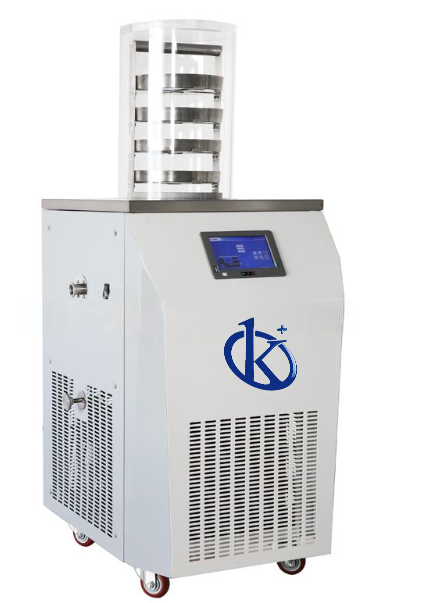
Maximizing ROI and Cost-Benefit Analysis for Vertical Laboratory Freeze Dryers
In the world of laboratory equipment, vertical freeze dryers play a crucial role in preserving the integrity of sensitive materials. With increasing budget constraints and the need for effective resource allocation, understanding the return on investment (ROI) and conducting cost-benefit analyses of these machines is essential for laboratory professionals. This article focuses on major models of vertical laboratory freeze dryers, detailing their benefits, costs, and how they contribute to a lab's financial performance.
Understanding ROI and Cost-Benefit Analysis in Your Laboratory
Return on investment (ROI) is a key performance indicator that helps in evaluating the efficiency of an investment in laboratory equipment. When assessing vertical freeze dryers, laboratories must consider initial costs (CAPEX), ongoing operational costs (OPEX), and the potential revenue generated from improved processes. A thorough cost-benefit analysis takes into account all expenses associated with the equipment over its lifespan, including maintenance, consumables, and energy consumption.
For example, investing in a model like YR05985-1, which has a water capture capacity of at least 10 kg per 24 hours, can increase productivity when processing biological samples, thereby leading to a better return.
Comparison of Available Models
| Model | CAPEX (USD) | Water Capture (kg/24h) | Best For |
|---|---|---|---|
| YR05198 | 4392.00 | 6 | Routine lab applications |
| YR05199 | 4882.00 | 6 | Pharmaceuticals |
| YR05200 | 4178.00 | 6 | Biological research |
| YR05201 | 5061.00 | 6 | Advanced lab setups |
| YR05985-1 | 16800.00 | 10 | High-throughput processing |
| YR05985-2 | 21000.00 | 15 | Large-scale production |
Cost Breakdown: CAPEX vs. OPEX
Cost analysis for vertical laboratory freeze dryers involves understanding both initial investment (CAPEX) and ongoing costs (OPEX). CAPEX includes the purchase price of the machine, typically ranging from $4,178 for the YR05200 to $21,000 for the YR05985-2, depending on features and capabilities.
Ongoing costs encompass maintenance, replacement parts, energy consumption, and operational supplies. For example, the YR05198 model consumes 1800W, impacting energy expenses based on local electric rates. A comprehensive analysis of these factors helps determine the total costs associated with owning a freeze dryer.
Evaluating Payback Period: How Long Until You See Returns?
The payback period is a metric used to measure how long it will take for an investment to generate enough cash flow to recover its initial cost. For example, if a laboratory invests in the YR05985-1 model, which can process 10 kg of samples in 24 hours, the potential for increased throughput can lead to significant revenue generation.
By analyzing throughput, production time, and savings on consumables, labs can project when they will break even on their investment. Estimations should incorporate realistic output numbers, considering operational capacity and market demands.
Energy Efficiency and Sustainable Practices
Energy efficiency is a crucial aspect of cost-benefit analysis for vertical freeze dryers. Models like YR05985-2 are designed with energy-saving features that reduce electricity consumption without compromising performance. Evaluating kWh per run helps laboratories manage operational costs effectively.
Implementing sustainable practices not only lowers energy costs but also enhances the lab’s reputation in environmental stewardship. Considering energy consumption along with operational efficiency can lead to a more favorable long-term financial outlook.
Common Mistakes and How to Avoid Them
Laboratories often make mistakes in their analytical processes that can lead to miscalculations in ROI and cost-benefit analyses. One common error is underestimating the total cost of ownership, including maintenance, downtime, and staff training.
Another mistake is failing to consider the full range of models available. Evaluating just one or two options can lead to suboptimal decisions. To avoid this, labs should assess multiple models, such as the YR05199 and YR05201, to ensure they select the best fit for their specific operational needs.
Frequently Asked Questions
What is the average ROI for vertical laboratory freeze dryers in 2023?
The average ROI for vertical laboratory freeze dryers can vary significantly based on the model and usage. For instance, with proper utilization, a model like the YR05985-1 can provide a return within 12 to 18 months, depending on throughput efficiency and market needs.
How do I calculate the total cost of ownership for a freeze dryer?
Total cost of ownership includes the initial purchase price, maintenance, consumables, and energy usage. For instance, if you purchase the YR05200 for $4,178, you should add any expected yearly maintenance costs and energy expenses to get a complete picture.
Which vertical freeze dryer model offers the best energy efficiency?
The YR05985-2 model is one of the most energy-efficient options, designed to handle larger volumes with lower energy consumption rates, thus optimizing operational costs while maintaining performance.
How does the capacity of a freeze dryer affect its ROI?
The capacity directly impacts ROI since a higher capacity model, like the YR05985-2, can process larger quantities in less time. This efficiency often translates to increased revenue opportunities for laboratories.
What are the maintenance costs associated with vertical freeze dryers?
Maintenance costs can include routine servicing, replacement parts, and operational training. For example, regular maintenance on models like the YR05199 is crucial to ensure lifespan and operational efficiency, and can average around $500 yearly.
How can I optimize throughput using a freeze dryer?
To optimize throughput, consider investing in high-capacity models like YR05985-1. These units can handle larger sample loads, enabling labs to increase output and efficiency significantly.
What factors should I consider when choosing a freeze dryer for my lab?
Factors include the machine's capacity, energy efficiency, maintenance requirements, and compatibility with your lab's workflow. Models such as YR05201 and YR05985-1 offer different strengths based on these criteria.
How can automation improve the ROI of freeze dryers?
Automation can significantly enhance the ROI by reducing manual labor costs and minimizing human error. High-tech models like YR05985-2 come equipped with automated features that streamline operations and increase overall productivity.
If you are looking for a fusion of innovation and quality, you have come to the right place. At Kalstein, we offer you the luxury of exploring our exclusive catalog of laboratory equipment. We manufacture every device to the highest standards of excellence. Our intuitive and seamless online purchasing channels are designed for your convenience, securing the most competitive prices. Hesitate no longer — we bring science to life, it is time to become part of our community.