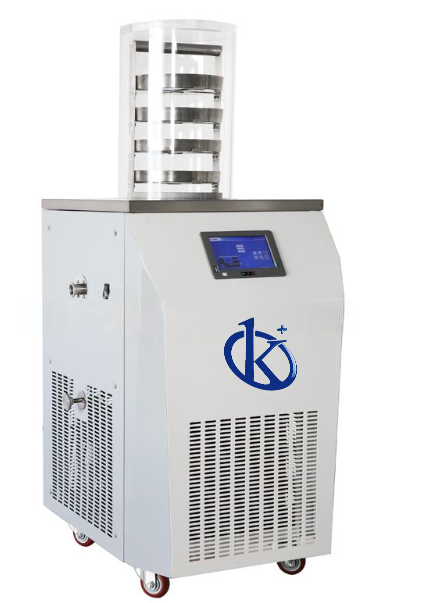
How Vertical Laboratory Freeze Dryers Support Academic Research and University Projects
In the realm of academic research, the tools and equipment used can significantly influence the outcomes of experiments and studies. Vertical laboratory freeze dryers have emerged as essential devices in this domain, facilitating the preservation of biological samples, pharmaceuticals, and various research materials. This article explores the various use cases of vertical laboratory freeze dryers in university projects, focusing on their practical applications, benefits, and factors to consider when choosing the right model.
Vertical Laboratory Freeze Dryers and Their Role in Academic Research
The vertical laboratory freeze dryer, also known as a lyophilizer, is primarily used to remove moisture from materials while maintaining their structural integrity. This is especially crucial in academic settings where reproducibility and preservation of samples are paramount. Freeze drying allows researchers to store samples for extended periods without degradation, making it an invaluable tool in fields like biology, pharmaceuticals, and chemistry.
In academic settings, vertical laboratory freeze dryers support research in various ways:
- Sample Preservation: By removing moisture, samples can be stored for longer periods without compromising their biochemical properties.
- Controlled Experimentation: Researchers can replicate experiments under controlled conditions using freeze-dried samples, ensuring reliable results.
- Versatile Applications: These dryers are suitable for various applications, including food processing, biological research, and pharmaceutical development.
Comparison of Available Models
| Model | Area for Freeze Drying (m²) | Water Capture Capacity (kg/24h) | Temperature Range (°C) | Price (USD) |
|---|---|---|---|---|
| YR05198 | 0.18/0.27 | 6 | -40 to +60 | 4392.00 |
| YR05199 | 0.09 | 6 | -40 to +60 | 4882.00 |
| YR05200 | 0.18/0.27 | 6 | -40 to +60 | 4178.00 |
| YR05201 | 0.09 | 6 | -40 to +60 | 5061.00 |
| YR05985-1 | 0.7 | 10 | -55 to +70 | 16800.00 |
| YR05985-2 | 1.04 | 15 | -55 to +70 | 21000.00 |
Common Mistakes and How to Avoid Them
Choosing the right vertical laboratory freeze dryer for academic research involves several critical considerations. Common mistakes include:
- Underestimating Sample Size: Ensure that the model selected can accommodate the expected sample volume. For instance, models like YR05985-2 offer greater area and capacity for larger projects.
- Ignoring Temperature Requirements: Different materials may require specific temperature controls. Models such as YR05985-1 can operate at lower temperatures, making them suitable for sensitive biological materials.
- Overlooking Maintenance Needs: Regular maintenance is essential to ensure longevity. Consider equipment with easy access for cleaning and repair.
Optimizing Freeze Drying for Academic Efficiency
Efficiency in freeze drying can significantly impact the productivity of academic research projects. Here are strategies to improve the process:
- Batch Processing: Utilize models with higher throughput, such as YR05985-2, to process multiple samples simultaneously, reducing overall project time.
- Automate Monitoring: Implement automated systems for monitoring temperature and vacuum levels, allowing researchers to focus on analysis rather than manual checks.
- Regular Training: Ensure that all lab personnel are trained on the use and maintenance of freeze dryers to prevent errors and enhance operational efficiency.
Freeze Drying Protocols for University Research
Implementing standardized protocols for freeze drying is vital for ensuring reproducibility and reliability in research. Some key aspects include:
- Pre-Freezing: Samples should be pre-frozen to enhance the efficiency of the drying process. This step is crucial for maintaining sample integrity.
- Vacuum Levels: Maintaining the appropriate vacuum level is critical. Establish protocols to monitor and adjust the vacuum throughout the drying cycle.
- Post-Drying Storage: Proper storage of freeze-dried samples is essential. Use airtight containers and store them in a cool, dry environment to prevent moisture reabsorption.
Frequently Asked Questions
What are the benefits of using vertical laboratory freeze dryers in academic research?
Vertical laboratory freeze dryers, such as the YR05198, are essential for preserving the integrity of samples over time. They allow researchers to store biological and chemical materials without degradation, which is crucial for replicable academic studies.
How do I choose the right vertical freeze dryer for my university project?
When selecting a vertical freeze dryer, consider factors like sample size, required temperature range, and water capture capacity. For larger projects, models like YR05985-2, with a capacity of 15 kg/24h, are ideal.
Which vertical laboratory freeze dryer is best for sensitive biological materials?
The YR05985-1 model is particularly suited for sensitive biological materials, as it operates within a temperature range of -55 to +70 °C, ensuring optimal preservation of biochemical characteristics.
How does the performance of vertical freeze dryers vary among different models?
Performance varies based on specifications like area for freeze drying and water capture capacity. For instance, the YR05985-2 offers a larger freeze area and higher water capture, making it ideal for extensive research applications.
Can vertical freeze dryers be integrated into existing laboratory workflows?
Yes, many models can be seamlessly integrated into laboratory workflows. For example, the YR05199 can be connected to automated systems to enhance efficiency during the drying process.
What maintenance is required for vertical laboratory freeze dryers?
Regular maintenance includes cleaning the chamber, checking seals, and monitoring vacuum levels. Ensuring that equipment, like the YR05200, is well-maintained prolongs its operational life and reliability in research applications.
What is the cost of a vertical laboratory freeze dryer suitable for academic research?
The cost can range significantly based on capacity and features. For example, the YR05201 model is priced at $5061.00, making it an economical choice for universities with specific research needs.
How does freeze drying impact the longevity of research samples?
Freeze drying significantly extends the longevity of research samples by removing moisture and preventing degradation. For instance, samples processed with the YR05198 can remain viable for years when stored correctly.
If you are considering incorporating a vertical laboratory freeze dryer into your research, we invite you to request a quote to explore the best options for your needs.
If you are looking for a fusion of innovation and quality, you have come to the right place. At Kalstein, we offer you the luxury of exploring our exclusive catalog of laboratory equipment. We manufacture every device to the highest standards of excellence. Our intuitive and seamless online purchasing channels are designed for your convenience, securing the most competitive prices. Hesitate no longer — we bring science to life, it is time to become part of our community.